
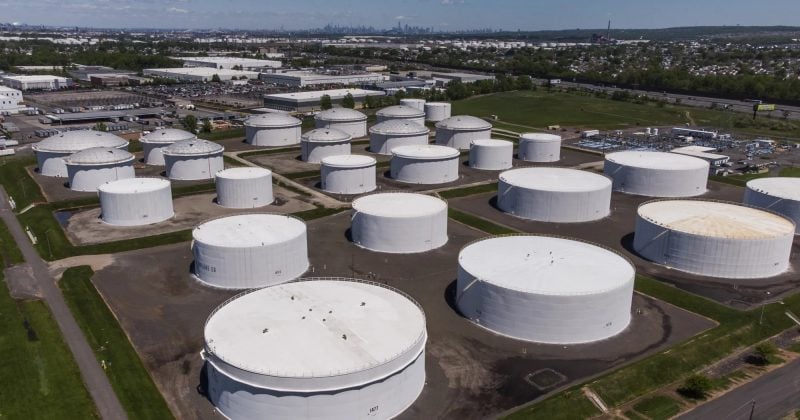
US Strategic Petroleum Reserve hits lowest level since 1983 as Iran tensions drain emergency stockpiles
The SPR has shed roughly 75 million barrels since late February, and the ripple effects are reaching well beyond oil markets
America’s emergency oil piggy bank is running dangerously low. The Strategic Petroleum Reserve dropped to 340.3 million barrels as of June 12, 2026, according to Department of Energy data, a level the country hasn’t seen since the summer of 1983, when Ronald Reagan was in office and the internet was still a DARPA project.
The reserve has shed approximately 75 million barrels, an 18% decline, since the US-Iran conflict erupted in late February 2026. Those barrels were released to counteract supply disruptions, particularly the choking of tanker traffic through the Strait of Hormuz, the narrow waterway that serves as the world’s most important oil bottleneck.
How we got here
The SPR was created in 1975 in the aftermath of the Arab oil embargo, designed as a cushion against exactly the kind of geopolitical shock that just played out. At full capacity, the reserve can hold more than 700 million barrels. Sitting at 340.3 million barrels, the US is operating with less than half its theoretical buffer.
Overall US oil inventories, combining commercial stockpiles and the SPR, have fallen by 79 million barrels to just 77.6 million barrels, the lowest combined level since 2023.
A reported US-Iran agreement reached around mid-June 2026 to cease hostilities and reopen the Strait of Hormuz offers some relief.
Macro, rates, and crypto—what moved markets and what matters next.
Daily. Free. Join 34,000+ readers across crypto, finance, and policy.
Why crypto investors should care about an oil reserve
Early in 2026, Bitcoin price movements displayed an inverse relationship with oil price fluctuations. When oil spiked on supply fears, Bitcoin often moved in the opposite direction, behaving less like a risk-on tech bet and more like a hedge against energy-driven inflation anxiety.
Diminished physical reserves like the SPR are generally seen as elevating tail risks across markets. When you pair that with persistent outflows from Bitcoin ETFs and stress in private credit markets, the backdrop starts looking like the kind of environment where correlations break down and surprises multiply.
The Strategic Bitcoin Reserve parallel
The Trump administration initiated a Strategic Bitcoin Reserve in March 2025, directing that seized Bitcoin be treated as a long-term strategic asset rather than auctioned off immediately.
The philosophical argument was straightforward: if the US maintains strategic reserves of oil, why not maintain reserves of a scarce digital asset? The SPR’s current depletion adds an uncomfortable layer to that debate. Physical commodity reserves can be drawn down in a crisis, and clearly they have been. Bitcoin, whatever its flaws, cannot be burned as fuel or released to suppress prices.
What’s worth watching now is whether the reported US-Iran deal holds, how quickly, if at all, the administration moves to refill the SPR, and whether oil prices stabilize enough to take some pressure off the inflation outlook.