
US Strategic Petroleum Reserve stocks fall to lowest since 1983
America's emergency oil cushion has shrunk to 340.3 million barrels as Iran conflict drawdowns accelerate the drain
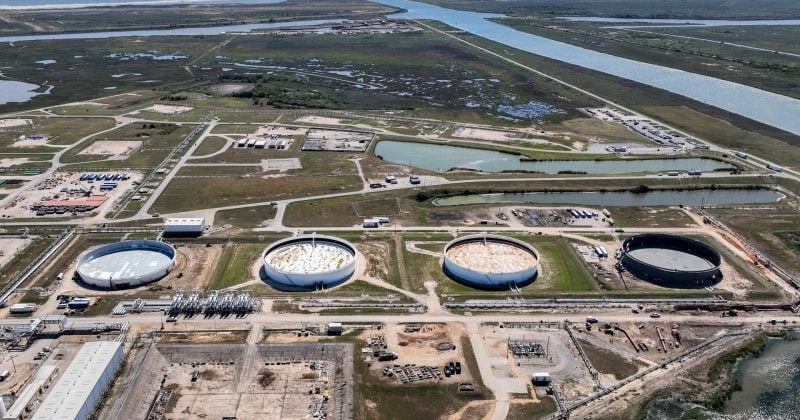
The US Strategic Petroleum Reserve, the country’s emergency oil stockpile built to shield the economy from supply shocks, has dropped to 340.3 million barrels. That’s the lowest level since August 1983, when Reagan was in office and the reserve was still being filled for the first time.
Here’s the thing: a reserve designed to hold 714 million barrels is now less than half full. And the drawdowns are accelerating.
The Iran conflict is draining the tank
The primary culprit behind the current depletion is the US-Iran conflict, which has prompted the Trump administration to authorize aggressive releases from the SPR. Roughly 50 million barrels have been pulled from the reserve since that conflict began, with recent weekly drawdowns averaging around 9 million barrels.
The total decline amounts to approximately 75 million barrels, an 18% drop in SPR crude stocks tied directly to the geopolitical crisis.
For context, the previous post-Cold War low was 346.7 million barrels, hit in July 2023 after the Biden administration tapped the reserve extensively in response to the Russia-Ukraine war. The current level undercuts that mark by more than 6 million barrels, setting a new floor for the modern era of energy policy.
A brief history of America’s oil piggy bank
The SPR was established after the 1973 Arab oil embargo, when OPEC’s supply cutoff sent gas prices soaring and Americans waited in lines that wrapped around city blocks. The idea was simple: stockpile enough crude oil underground in salt caverns along the Gulf Coast so that no foreign supplier could ever hold the US economy hostage again.
Macro, rates, and crypto—what moved markets and what matters next.
Daily. Free. Join 34,000+ readers across crypto, finance, and policy.
The reserve reached its peak fill in 2009 and has been on a broadly downward trajectory since, punctuated by periodic releases during geopolitical crises. The 2022 release tied to the Russia-Ukraine war was the largest in the reserve’s history at the time.
In 1983, when the SPR was last at this level, US energy demand was substantially lower. The economy was smaller, the population was smaller, and the country’s daily oil consumption was a fraction of what it is today. Sitting at 340.3 million barrels in 2026 is a fundamentally different proposition than sitting at 340 million barrels in 1983.
What this means for energy markets and your wallet
A release of 10 million barrels from a 700-million-barrel stockpile barely registers as a percentage. A release of 10 million barrels from a 340-million-barrel stockpile is almost 3% of what’s left.
The Biden administration found this out when it tried to replenish the SPR after the 2022 releases. Buying crude at higher prices to refill a reserve you emptied to keep prices low is the kind of policy irony that writes itself.
If weekly drawdowns continue at their current pace, the SPR could breach 300 million barrels before the end of summer. Energy investors and macro-focused traders should be positioning for elevated volatility in crude markets, because America’s oil safety net has never been this thin in the modern era.