
US strikes Iranian missile and drone sites as Bitcoin slides toward $61K

US strikes Iranian missile and drone sites as Bitcoin slides toward $61K

Escalating US-Iran military conflict is rattling crypto markets, with Bitcoin already down sharply from May highs amid fresh geopolitical pressure.

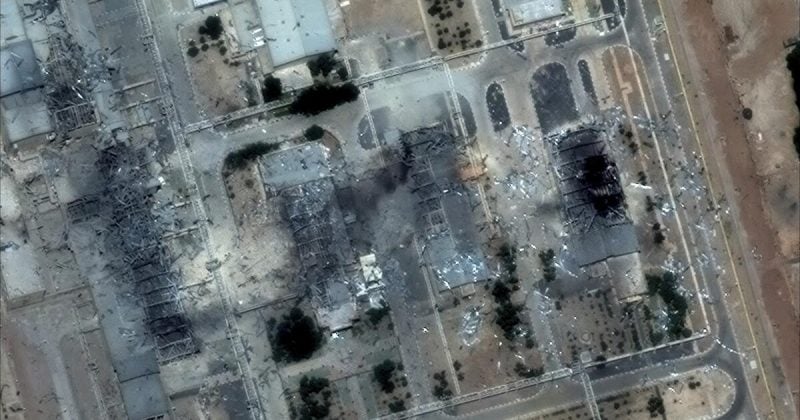
The US military struck Iranian missile and drone storage facilities on June 26, 2026, following a drone attack on a Singapore-flagged commercial vessel in the Strait of Hormuz. The vessel, the M/V Ever Lovely, was targeted on June 25, 2026, in one of the most strategically sensitive waterways on the planet.

Iran’s Islamic Revolutionary Guard Corps did not sit quietly. The IRGC announced it had retaliated by targeting US military positions across the region, accusing Washington of violating previously established ceasefire conditions.

What happened and why it matters

The US strikes hit missile and drone storage sites as well as coastal radar installations inside Iran. That last target is significant: coastal radar is what Iran uses to track shipping traffic through the Strait of Hormuz.

Advertisement

This exchange is part of a broader pattern of escalating tit-for-tat actions between Washington and Tehran that has accelerated through 2026, erupting following extensive US-Israeli military operations targeting Iranian military and leadership enclaves in late February 2026.

Bitcoin dropped below $73,000 during the initial US strikes on Iran in May 2026, triggering nearly $1 billion in leveraged liquidations across the market.

Bitcoin as a geopolitical barometer

By the time the June escalation unfolded, Bitcoin was already trading in the $61,000 to $62,000 range, a meaningful retreat from the levels it held before the conflict intensified.

The nearly $1 billion in liquidations during the May strikes underscores how leveraged the crypto market remains. Leveraged positions amplify both gains and losses, and when a macro shock hits, margin calls cascade through the system rapidly.

The Strait of Hormuz angle adds an oil price dimension to the equation. If maritime traffic through the strait faces sustained disruption, energy prices climb. Higher energy prices feed inflation concerns, which complicate the Federal Reserve’s policy posture, which in turn affects how investors weigh risk assets including crypto.

Disclosure: This article was edited by Editorial Team. For more information on how we create and review content, see our Editorial Policy.

US strikes Iranian missile and drone sites as Bitcoin slides toward $61K

US strikes Iranian missile and drone sites as Bitcoin slides toward $61K

Escalating US-Iran military conflict is rattling crypto markets, with Bitcoin already down sharply from May highs amid fresh geopolitical pressure.

The US military struck Iranian missile and drone storage facilities on June 26, 2026, following a drone attack on a Singapore-flagged commercial vessel in the Strait of Hormuz. The vessel, the M/V Ever Lovely, was targeted on June 25, 2026, in one of the most strategically sensitive waterways on the planet.

Iran’s Islamic Revolutionary Guard Corps did not sit quietly. The IRGC announced it had retaliated by targeting US military positions across the region, accusing Washington of violating previously established ceasefire conditions.

What happened and why it matters

The US strikes hit missile and drone storage sites as well as coastal radar installations inside Iran. That last target is significant: coastal radar is what Iran uses to track shipping traffic through the Strait of Hormuz.

Advertisement

This exchange is part of a broader pattern of escalating tit-for-tat actions between Washington and Tehran that has accelerated through 2026, erupting following extensive US-Israeli military operations targeting Iranian military and leadership enclaves in late February 2026.

Bitcoin dropped below $73,000 during the initial US strikes on Iran in May 2026, triggering nearly $1 billion in leveraged liquidations across the market.

Bitcoin as a geopolitical barometer

By the time the June escalation unfolded, Bitcoin was already trading in the $61,000 to $62,000 range, a meaningful retreat from the levels it held before the conflict intensified.

The nearly $1 billion in liquidations during the May strikes underscores how leveraged the crypto market remains. Leveraged positions amplify both gains and losses, and when a macro shock hits, margin calls cascade through the system rapidly.

The Strait of Hormuz angle adds an oil price dimension to the equation. If maritime traffic through the strait faces sustained disruption, energy prices climb. Higher energy prices feed inflation concerns, which complicate the Federal Reserve’s policy posture, which in turn affects how investors weigh risk assets including crypto.

Disclosure: This article was edited by Editorial Team. For more information on how we create and review content, see our Editorial Policy.