
US strikes Iranian coastal defenses and missile sites at Chabahar port

US strikes Iranian coastal defenses and missile sites at Chabahar port

American military action targeting Iran's Gulf of Oman facilities adds a new layer of tension to an already fragile geopolitical landscape with direct implications for crypto risk sentiment

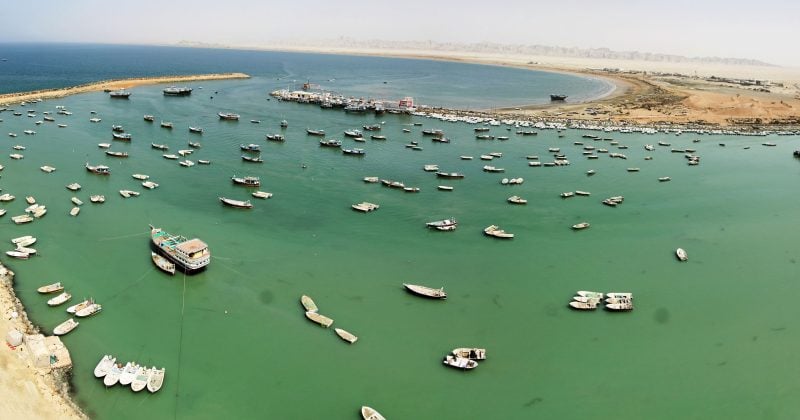
Chabahar is Iran’s primary deep-water port, sitting on the Gulf of Oman. Most people know the Strait of Hormuz as the chokepoint through which a significant share of global oil supply passes. Chabahar sits just outside that strait, which makes it Iran’s most important facility for operations that do not depend on navigating the strait itself.

Advertisement

The January 2020 killing of Iranian General Qasem Soleimani is the clearest historical reference point for how crypto markets respond to US-Iran escalation. Bitcoin dropped sharply in the immediate aftermath before recovering, a sequence that illustrated how crypto markets, despite their decentralized nature, are not immune to the same fear-and-flight behavior that governs traditional finance during geopolitical crises.

Iran has demonstrated in the past that it possesses asymmetric response options, including cyberattacks, proxy operations, and the ability to threaten commercial shipping in ways that spike oil prices globally. An oil price shock, if one materializes, introduces inflationary pressure that complicates the monetary policy backdrop crypto markets have been navigating. Higher oil prices, stickier inflation, and a Federal Reserve that feels constrained in its ability to cut rates is not a friendly environment for risk assets of any kind.

Disclosure: This article was edited by Editorial Team. For more information on how we create and review content, see our Editorial Policy.

US strikes Iranian coastal defenses and missile sites at Chabahar port

US strikes Iranian coastal defenses and missile sites at Chabahar port

American military action targeting Iran's Gulf of Oman facilities adds a new layer of tension to an already fragile geopolitical landscape with direct implications for crypto risk sentiment

Chabahar is Iran’s primary deep-water port, sitting on the Gulf of Oman. Most people know the Strait of Hormuz as the chokepoint through which a significant share of global oil supply passes. Chabahar sits just outside that strait, which makes it Iran’s most important facility for operations that do not depend on navigating the strait itself.

Advertisement

The January 2020 killing of Iranian General Qasem Soleimani is the clearest historical reference point for how crypto markets respond to US-Iran escalation. Bitcoin dropped sharply in the immediate aftermath before recovering, a sequence that illustrated how crypto markets, despite their decentralized nature, are not immune to the same fear-and-flight behavior that governs traditional finance during geopolitical crises.

Iran has demonstrated in the past that it possesses asymmetric response options, including cyberattacks, proxy operations, and the ability to threaten commercial shipping in ways that spike oil prices globally. An oil price shock, if one materializes, introduces inflationary pressure that complicates the monetary policy backdrop crypto markets have been navigating. Higher oil prices, stickier inflation, and a Federal Reserve that feels constrained in its ability to cut rates is not a friendly environment for risk assets of any kind.

Disclosure: This article was edited by Editorial Team. For more information on how we create and review content, see our Editorial Policy.