
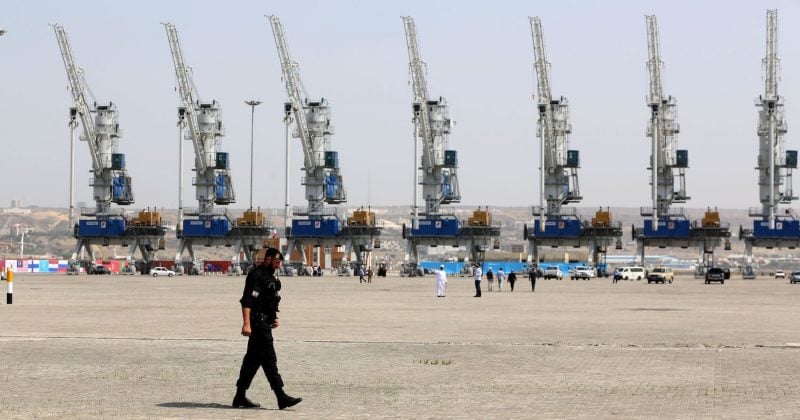
Smoke rises over Iran’s Chabahar port amid US military strikes

Smoke rises over Iran’s Chabahar port amid US military strikes

US Central Command hits Iran's only deep-water Indian Ocean port for the second time in a week, raising the stakes for global shipping and energy markets

On July 15, 2026, US military strikes hit Iran’s Chabahar port, damaging the maritime traffic control tower in an operation confirmed by CBS News and Al Arabiya. It was the second time in under a week that the port had been targeted, following initial strikes reported around July 8 and 9.

US Central Command conducted attacks on dozens of Iranian military sites over a seven-hour window, with Chabahar representing one of the most strategically sensitive targets on the list.

Why Chabahar matters

Chabahar is Iran’s only major deep-water port with direct access to the Indian Ocean. Unlike Iran’s Persian Gulf ports, which funnel traffic through the Strait of Hormuz, Chabahar sits on the Gulf of Oman and connects directly to open ocean shipping lanes.

India has invested heavily in Chabahar as a deep-water alternative to Pakistani ports, using it to route goods into Afghanistan and Central Asia without crossing Pakistani territory.

Advertisement

Reports indicate no confirmed disruptions to major cargo traffic at Chabahar so far.

The broader escalation timeline

The strikes on Chabahar are part of an escalation arc that traces back to nuclear negotiations that began in April 2025 and subsequently stalled. Alongside the diplomatic breakdown, a series of shipping-related incidents in 2026 added military pressure to an already fragile situation.

Roughly a fifth of global oil supply transits the Strait of Hormuz. US Central Command’s stated aim is undermining Iran’s capacity to threaten commercial shipping in the strait.

Eyewitness videos and footage from Iranian media confirmed smoke rising over the port following the July 15 strikes, consistent with the damage to the control tower. Reports also indicate potential civilian casualties from ongoing shipping-related incidents in the wider region, though specific figures have not been independently confirmed.

What this means for energy and shipping markets

Insurance costs for shipping companies operating in the region are almost certain to rise as the conflict intensifies. War risk premiums respond quickly to visible escalation, and those costs eventually pass through to freight rates.

If Chabahar’s operational capacity is genuinely degraded over a sustained period, Indian logistics chains routing through the port face rerouting costs and delays.

So far, there are no confirmed reports of strait closure or significant disruption to tanker traffic.

Disclosure: This article was edited by Editorial Team. For more information on how we create and review content, see our Editorial Policy.

Smoke rises over Iran’s Chabahar port amid US military strikes

Smoke rises over Iran’s Chabahar port amid US military strikes

US Central Command hits Iran's only deep-water Indian Ocean port for the second time in a week, raising the stakes for global shipping and energy markets

On July 15, 2026, US military strikes hit Iran’s Chabahar port, damaging the maritime traffic control tower in an operation confirmed by CBS News and Al Arabiya. It was the second time in under a week that the port had been targeted, following initial strikes reported around July 8 and 9.

US Central Command conducted attacks on dozens of Iranian military sites over a seven-hour window, with Chabahar representing one of the most strategically sensitive targets on the list.

Why Chabahar matters

Chabahar is Iran’s only major deep-water port with direct access to the Indian Ocean. Unlike Iran’s Persian Gulf ports, which funnel traffic through the Strait of Hormuz, Chabahar sits on the Gulf of Oman and connects directly to open ocean shipping lanes.

India has invested heavily in Chabahar as a deep-water alternative to Pakistani ports, using it to route goods into Afghanistan and Central Asia without crossing Pakistani territory.

Advertisement

Reports indicate no confirmed disruptions to major cargo traffic at Chabahar so far.

The broader escalation timeline

The strikes on Chabahar are part of an escalation arc that traces back to nuclear negotiations that began in April 2025 and subsequently stalled. Alongside the diplomatic breakdown, a series of shipping-related incidents in 2026 added military pressure to an already fragile situation.

Roughly a fifth of global oil supply transits the Strait of Hormuz. US Central Command’s stated aim is undermining Iran’s capacity to threaten commercial shipping in the strait.

Eyewitness videos and footage from Iranian media confirmed smoke rising over the port following the July 15 strikes, consistent with the damage to the control tower. Reports also indicate potential civilian casualties from ongoing shipping-related incidents in the wider region, though specific figures have not been independently confirmed.

What this means for energy and shipping markets

Insurance costs for shipping companies operating in the region are almost certain to rise as the conflict intensifies. War risk premiums respond quickly to visible escalation, and those costs eventually pass through to freight rates.

If Chabahar’s operational capacity is genuinely degraded over a sustained period, Indian logistics chains routing through the port face rerouting costs and delays.

So far, there are no confirmed reports of strait closure or significant disruption to tanker traffic.

Disclosure: This article was edited by Editorial Team. For more information on how we create and review content, see our Editorial Policy.