
Nexo Earn with Nexo
US postpones $14B arms sales to Taiwan, raising semiconductor supply chain fears for crypto miners

US postpones $14B arms sales to Taiwan, raising semiconductor supply chain fears for crypto miners

The delayed weapons package follows Trump-Xi negotiations and could ripple through TSMC's chip production, with downstream effects on crypto mining hardware.

The United States has hit pause on a $14 billion arms package to Taiwan, a move that carries implications well beyond the geopolitical chess match between Washington and Beijing. For the crypto industry, the calculus is simple: Taiwan makes the chips that power everything, including the specialized hardware that secures blockchain networks.

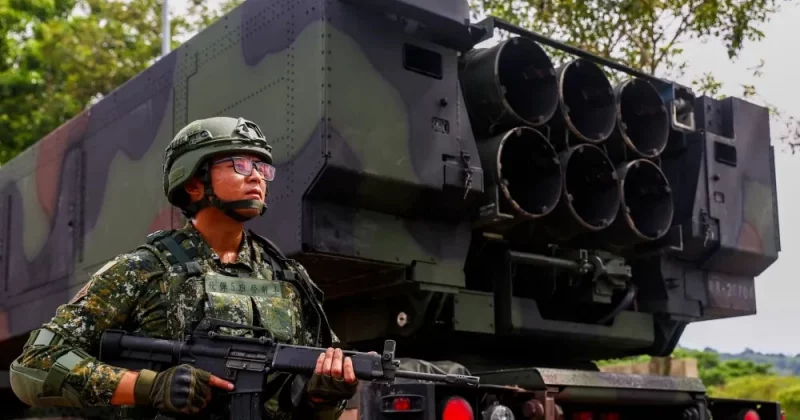
The delayed deal reportedly focuses on advanced interceptors and follows a record $11.1 billion arms notification that was approved in December 2025. That earlier package included 82 HIMARS systems and ATACMS missiles, representing a significant escalation in US military support for the island.

A bargaining chip, not an inventory problem

While inventory shortages have been cited as a reason for the postponement, the timing tells a different story. The hold came after high-stakes discussions between President Donald Trump and Chinese President Xi Jinping in May 2026. Trump stated that the arms package’s approval “depends on China,” framing the deal less as a defense commitment and more as leverage for broader negotiations.

Advertisement

China’s response has been predictable but consequential. Beijing has suspended high-level Pentagon visits in reaction to the arms negotiations, a familiar move in its playbook whenever Taiwan becomes a friction point.

As of May 22, 2026, no official confirmation from Taiwanese authorities has materialized regarding the status of the delayed package, despite it sitting in limbo for months.

The TSMC problem nobody in crypto wants to talk about

Taiwan Semiconductor Manufacturing Company remains the world’s most important chipmaker. The company fabricates the advanced processors that power everything from iPhones to the ASIC miners that secure Bitcoin’s network. When geopolitical tensions flare around the Taiwan Strait, TSMC’s production capabilities become a single point of failure for multiple global industries simultaneously.

The semiconductor supply chain crunch of 2021-2022 demonstrated exactly how quickly chip shortages can cascade through crypto mining economics. Graphics cards became scarce, ASIC delivery times stretched to absurd lengths, and the cost of setting up new mining operations ballooned.

What this means for crypto investors

TSMC has been building fabrication capacity in Arizona and Japan to diversify its geographic risk, but those facilities won’t fully offset Taiwan’s dominant production volumes for years. In the meantime, any serious disruption to the island’s chip output would create bottlenecks that ripple through mining equipment availability, data center buildouts, and the broader tech supply chain that digital asset infrastructure relies on.

Technology stocks tied to the semiconductor supply chain tend to see increased risk premiums during periods of US-China tension, and those same sentiment shifts can bleed into digital asset markets through institutional portfolios that treat crypto as a tech-adjacent allocation.

Trump’s framing of the package as contingent on Chinese behavior suggests it will remain an active variable in the diplomatic equation for the foreseeable future. Crypto investors with exposure to mining companies, hardware manufacturers, or any protocol dependent on compute-intensive infrastructure should factor that ongoing uncertainty into their risk models.

Disclosure: This article was edited by Editorial Team. For more information on how we create and review content, see our Editorial Policy.

US postpones $14B arms sales to Taiwan, raising semiconductor supply chain fears for crypto miners

US postpones $14B arms sales to Taiwan, raising semiconductor supply chain fears for crypto miners

The delayed weapons package follows Trump-Xi negotiations and could ripple through TSMC's chip production, with downstream effects on crypto mining hardware.

The United States has hit pause on a $14 billion arms package to Taiwan, a move that carries implications well beyond the geopolitical chess match between Washington and Beijing. For the crypto industry, the calculus is simple: Taiwan makes the chips that power everything, including the specialized hardware that secures blockchain networks.

The delayed deal reportedly focuses on advanced interceptors and follows a record $11.1 billion arms notification that was approved in December 2025. That earlier package included 82 HIMARS systems and ATACMS missiles, representing a significant escalation in US military support for the island.

A bargaining chip, not an inventory problem

While inventory shortages have been cited as a reason for the postponement, the timing tells a different story. The hold came after high-stakes discussions between President Donald Trump and Chinese President Xi Jinping in May 2026. Trump stated that the arms package’s approval “depends on China,” framing the deal less as a defense commitment and more as leverage for broader negotiations.

Advertisement

China’s response has been predictable but consequential. Beijing has suspended high-level Pentagon visits in reaction to the arms negotiations, a familiar move in its playbook whenever Taiwan becomes a friction point.

As of May 22, 2026, no official confirmation from Taiwanese authorities has materialized regarding the status of the delayed package, despite it sitting in limbo for months.

The TSMC problem nobody in crypto wants to talk about

Taiwan Semiconductor Manufacturing Company remains the world’s most important chipmaker. The company fabricates the advanced processors that power everything from iPhones to the ASIC miners that secure Bitcoin’s network. When geopolitical tensions flare around the Taiwan Strait, TSMC’s production capabilities become a single point of failure for multiple global industries simultaneously.

The semiconductor supply chain crunch of 2021-2022 demonstrated exactly how quickly chip shortages can cascade through crypto mining economics. Graphics cards became scarce, ASIC delivery times stretched to absurd lengths, and the cost of setting up new mining operations ballooned.

What this means for crypto investors

TSMC has been building fabrication capacity in Arizona and Japan to diversify its geographic risk, but those facilities won’t fully offset Taiwan’s dominant production volumes for years. In the meantime, any serious disruption to the island’s chip output would create bottlenecks that ripple through mining equipment availability, data center buildouts, and the broader tech supply chain that digital asset infrastructure relies on.

Technology stocks tied to the semiconductor supply chain tend to see increased risk premiums during periods of US-China tension, and those same sentiment shifts can bleed into digital asset markets through institutional portfolios that treat crypto as a tech-adjacent allocation.

Trump’s framing of the package as contingent on Chinese behavior suggests it will remain an active variable in the diplomatic equation for the foreseeable future. Crypto investors with exposure to mining companies, hardware manufacturers, or any protocol dependent on compute-intensive infrastructure should factor that ongoing uncertainty into their risk models.

Disclosure: This article was edited by Editorial Team. For more information on how we create and review content, see our Editorial Policy.