
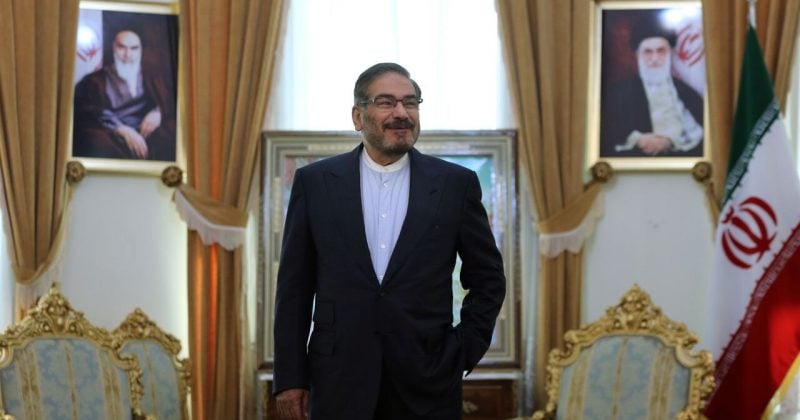
United States targets financial network linked to Ali Shamkhani in largest sanctions push since 2018
OFAC sanctioned over 50 individuals and 50 vessels tied to Iranian oil smuggling, but the network's complete absence of crypto ties tells its own story about sanctions evasion in 2025.
The US Treasury just dropped a hammer on the financial empire run by the family of former Iranian security official Ali Shamkhani. The Office of Foreign Assets Control (OFAC) rolled out its largest sanctions package since 2018, targeting more than 50 individuals and entities, along with over 50 vessels connected to a sprawling network designed to funnel illicit oil revenues back to Tehran.
The primary target is Mohammad Hossein Shamkhani, son of Ali Shamkhani, who served as a senior advisor to Iran’s Supreme Leader before his death in February 2026. Ali Shamkhani himself was sanctioned by the US back in 2020.
How the network operates
The operation relies on front companies, frequent vessel reflagging, falsified documents, and shell companies to mask the origins and destinations of Iranian crude oil shipments. Companies like House of Shipping Investment FZCO and Taylor Shipping FZCO sit at the center of the web, reportedly controlling a significant portion of Iran’s crude oil exports. The buyers, according to investigators, are primarily based in China.
The Department of Justice filed civil forfeiture complaints on March 6, 2026, against $15.3 million in funds allegedly used for sanctions evasion by the Shamkhani network.
OFAC followed up on April 15, 2026, with additional sanctions targeting more than two dozen further individuals and entities connected to the same network, alongside a separate gold scheme linked to Hizballah.
The news moving money, markets, and the world—before your day starts.
Daily. Free. Join 34,000+ readers across crypto, finance, and policy.
The crypto angle that isn’t there
As of July 2, 2026, investigations revealed zero connections between the Shamkhani network and cryptocurrency or blockchain technology. The entire operation ran exclusively on traditional financial rails.
This doesn’t mean crypto is never used for illicit purposes. But the Shamkhani case reinforces what on-chain analytics firms have been saying for years: traditional finance remains the dominant channel for large-scale sanctions evasion and money laundering.
What this means for investors
Traders should watch for secondary sanctions risk. Companies and financial institutions with exposure to Chinese buyers of Iranian crude could face collateral damage as OFAC continues to expand its target list. Any entity even tangentially connected to the vessels or shell companies in the Shamkhani network is now operating under a microscope.
The competitive landscape for sanctions compliance technology is also worth monitoring. Firms specializing in vessel tracking, trade finance screening, and beneficial ownership analysis stand to benefit as enforcement intensifies.