
US threatens military action against Iran over nuclear deal as framework signing looms

US threatens military action against Iran over nuclear deal as framework signing looms

Trump warned at the G7 summit that airstrikes would resume if Iran doesn't abandon its nuclear weapons program, with a framework agreement expected within days.

President Donald Trump issued a blunt warning to Iran on June 17, 2026: agree to dismantle your nuclear weapons capabilities, or the US will go back to dropping bombs.

The threat came during the G7 summit in Evian-les-Bains, France, where Trump told world leaders that if he disapproves of the final terms of an ongoing nuclear agreement, the US would revert to a military strategy centered on airstrikes.

A framework agreement between the two countries is expected to be signed around June 19 in Switzerland, setting the stage for what would be months of detailed follow-up negotiations covering nuclear inspections, sanctions timelines, and verification protocols.

Advertisement

What’s actually on the table

The current draft deal, structured as a memorandum of understanding, would require Iran to eliminate its nuclear weapons capabilities and phase out its enriched uranium stockpiles. In return, Iran would receive sanctions relief and reconstruction payments. The deal also aims to reopen the Strait of Hormuz, the narrow waterway through which roughly a fifth of the world’s oil supply passes.

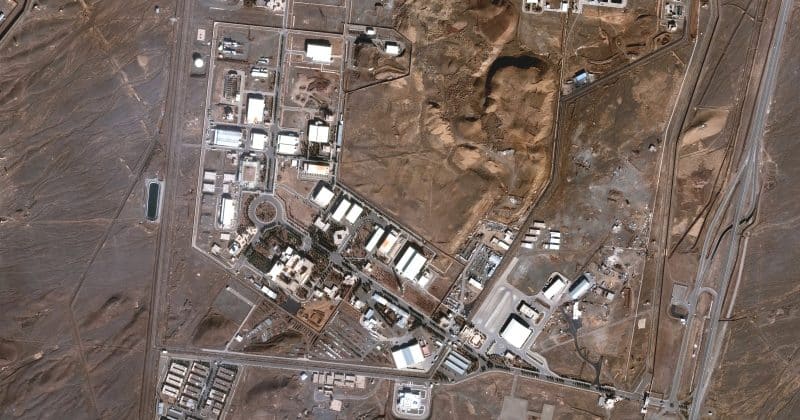
Since 2025, the US and Israel have conducted military strikes targeting Iranian nuclear facilities, including the deeply buried Fordo enrichment plant and the Natanz complex. Those operations, which began under what was dubbed Operation Midnight Hammer, have cost an estimated $25 billion as of June 2026.

Countries like Pakistan have stepped in to mediate, attempting to bridge the gap between Washington’s maximalist demands and Tehran’s insistence that certain conditions are non-starters. Iran has called various US proposals unrealistic.

The history that got us here

The original Iran nuclear deal, the JCPOA, was signed in 2015 under President Obama and abandoned by Trump during his first term in 2018. Iran subsequently ramped up enrichment activities, and by the time military action escalated in 2025, the country had advanced its nuclear program well beyond the limits the original deal imposed.

Where the JCPOA focused on limiting enrichment and extending breakout timelines, the new framework reportedly demands Iran eliminate its weapons capabilities outright.

What this means for investors

Energy markets are the most obvious pressure point. The Strait of Hormuz’s status is literally part of the negotiation, and any disruption to that waterway would send oil prices surging.

The framework signing expected around June 19 is the next inflection point. If talks break down, or if Trump signals dissatisfaction with the terms, expect volatility across energy, equities, and digital assets alike. The $25 billion already spent on military operations reflects the stakes involved for both sides.

Disclosure: This article was edited by Editorial Team. For more information on how we create and review content, see our Editorial Policy.

US threatens military action against Iran over nuclear deal as framework signing looms

US threatens military action against Iran over nuclear deal as framework signing looms

Trump warned at the G7 summit that airstrikes would resume if Iran doesn't abandon its nuclear weapons program, with a framework agreement expected within days.

President Donald Trump issued a blunt warning to Iran on June 17, 2026: agree to dismantle your nuclear weapons capabilities, or the US will go back to dropping bombs.

The threat came during the G7 summit in Evian-les-Bains, France, where Trump told world leaders that if he disapproves of the final terms of an ongoing nuclear agreement, the US would revert to a military strategy centered on airstrikes.

A framework agreement between the two countries is expected to be signed around June 19 in Switzerland, setting the stage for what would be months of detailed follow-up negotiations covering nuclear inspections, sanctions timelines, and verification protocols.

Advertisement

What’s actually on the table

The current draft deal, structured as a memorandum of understanding, would require Iran to eliminate its nuclear weapons capabilities and phase out its enriched uranium stockpiles. In return, Iran would receive sanctions relief and reconstruction payments. The deal also aims to reopen the Strait of Hormuz, the narrow waterway through which roughly a fifth of the world’s oil supply passes.

Since 2025, the US and Israel have conducted military strikes targeting Iranian nuclear facilities, including the deeply buried Fordo enrichment plant and the Natanz complex. Those operations, which began under what was dubbed Operation Midnight Hammer, have cost an estimated $25 billion as of June 2026.

Countries like Pakistan have stepped in to mediate, attempting to bridge the gap between Washington’s maximalist demands and Tehran’s insistence that certain conditions are non-starters. Iran has called various US proposals unrealistic.

The history that got us here

The original Iran nuclear deal, the JCPOA, was signed in 2015 under President Obama and abandoned by Trump during his first term in 2018. Iran subsequently ramped up enrichment activities, and by the time military action escalated in 2025, the country had advanced its nuclear program well beyond the limits the original deal imposed.

Where the JCPOA focused on limiting enrichment and extending breakout timelines, the new framework reportedly demands Iran eliminate its weapons capabilities outright.

What this means for investors

Energy markets are the most obvious pressure point. The Strait of Hormuz’s status is literally part of the negotiation, and any disruption to that waterway would send oil prices surging.

The framework signing expected around June 19 is the next inflection point. If talks break down, or if Trump signals dissatisfaction with the terms, expect volatility across energy, equities, and digital assets alike. The $25 billion already spent on military operations reflects the stakes involved for both sides.

Disclosure: This article was edited by Editorial Team. For more information on how we create and review content, see our Editorial Policy.