
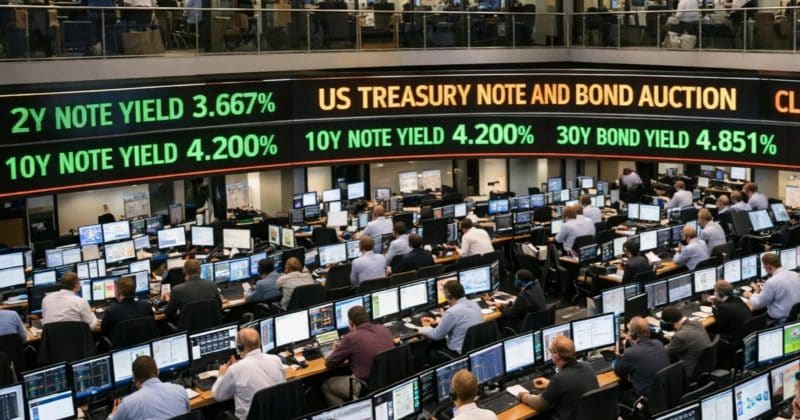
US Treasury sells 7-year note at 4.29% yield as direct bidders step up, foreign demand slips
The auction posted a 2.5 bid-to-cover ratio with a notable shift in who's actually buying American debt.
The US Treasury just auctioned off its latest batch of 7-year notes, and the results tell a story about who still wants to lend money to Uncle Sam. The high yield came in at 4.290%, with a bid-to-cover ratio of 2.5 that suggests adequate but hardly enthusiastic demand.
Direct bidders, which include domestic institutions and primary dealers, increased their share of the auction. Meanwhile, indirect bidders, a category that typically captures foreign central banks and international investment funds, pulled back.
What the numbers actually mean
A 4.290% high yield on a 7-year note means the US government is paying investors roughly $4.29 per year for every $100 they lend, over a seven-year horizon. That’s a meaningful cost of borrowing for intermediate-term debt, and it serves as a benchmark that ripples through everything from mortgage rates to corporate bond pricing.
The bid-to-cover ratio of 2.5 means that for every dollar of notes the Treasury was selling, investors collectively offered to buy $2.50 worth. A bid-to-cover ratio below 2.0 would start raising eyebrows about weak demand. Anything above 2.5 to 3.0 typically signals strong appetite. This one lands squarely in the “fine, nothing to see here” zone.
The direct vs. indirect bidder divergence
Treasury auctions break down bidders into three main categories: direct bidders, indirect bidders, and primary dealers (who are obligated to participate). Direct bidders submit their own bids without going through a dealer, and they’re usually domestic institutions, fund managers, or other US-based entities. Indirect bidders are the proxy for foreign demand, primarily central banks from countries like Japan, China, and various European nations that hold massive US Treasury portfolios.
The news moving money, markets, and the world—before your day starts.
Daily. Free. Join 34,000+ readers across crypto, finance, and policy.
In this auction, direct acceptance rose while indirect acceptance fell.
Why crypto investors should care about bond auctions
When risk-free yields are running near 4.3% on a 7-year horizon, every other asset class has to justify why an investor should accept additional risk instead of just clipping coupons on government bonds. If you can earn 4.29% per year doing literally nothing risky, Bitcoin and other crypto assets need to offer a compelling reason to accept their volatility.
The fact that this auction didn’t generate much coverage from crypto-native media outlets is itself informative. It suggests the market isn’t treating a 4.29% 7-year yield as a shock event.
For investors allocating across both traditional and digital assets, the 7-year part of the yield curve occupies a sweet spot. It’s long enough to reflect medium-term growth and inflation expectations, but short enough that it responds relatively quickly to shifts in monetary policy outlook.