
US Treasury agencies issue joint guidance on credit risk for unauthorized borrowers after Trump executive order

US Treasury agencies issue joint guidance on credit risk for unauthorized borrowers after Trump executive order

The OCC, FDIC, and NCUA are reminding banks and credit unions to tighten their lending standards for unauthorized borrowers, a move that could ripple through credit markets and digital asset access.

Three of the most powerful US banking regulators just sent a clear message to every financial institution under their watch: get your house in order on unauthorized borrower risk. The Office of the Comptroller of the Currency (OCC), the Federal Deposit Insurance Corporation (FDIC), and the National Credit Union Administration (NCUA) issued joint guidance directing banks and credit unions to revisit how they assess and manage credit risk tied to unauthorized US borrowers.

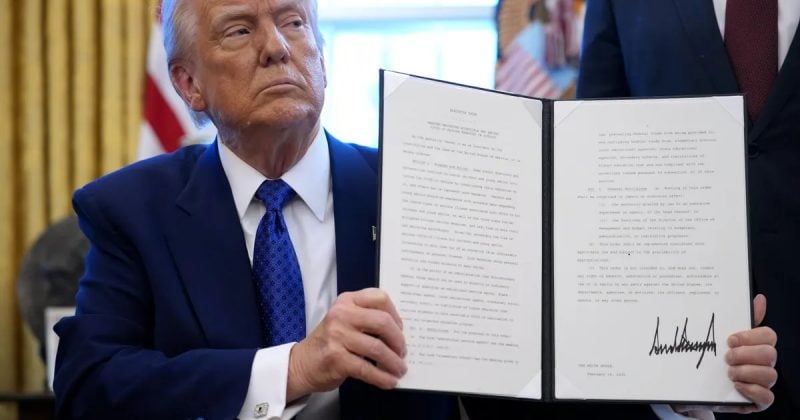
The guidance follows a recent executive order from President Trump, and while it technically functions as a reminder rather than a brand-new rule, the coordinated nature of the announcement suggests regulators are serious about enforcement.

What the guidance actually says

The joint statement targets all financial institutions supervised by the OCC, FDIC, and NCUA. That covers the vast majority of US banks, thrifts, and credit unions, essentially the entire traditional lending infrastructure of the country.

Advertisement

At its core, the guidance asks these institutions to reassess their practices around lending to individuals or entities classified as unauthorized borrowers. The Trump executive order that preceded this guidance provided agencies a clear mandate to tighten oversight in this area.

Here’s what’s notably absent from the guidance: specific metrics, clear enforcement timelines, or detailed compliance benchmarks. The agencies haven’t published granular requirements for how institutions should restructure their credit risk models.

Why this matters for lending and credit markets

For the broader credit market, this could mean reduced lending volumes in certain segments. Banks operating near the margins of compliance might pull back entirely from categories of lending they view as risky under the new guidance. Others might simply increase the documentation and verification requirements, making the process slower and more expensive for all borrowers.

The crypto and fintech angle

The direct connection to digital assets might not be obvious at first glance, but it’s there if you look closely enough. The research notes that the direct impact on the market for crypto assets remains minimal, but the uncertainty surrounding compliance and potential penalties could lead financial institutions to adopt a more cautious approach to lending, which may ripple through various asset markets.

The lack of specific enforcement mechanisms in the current guidance cuts both ways. It could mean this is largely performative, a regulatory checkbox following an executive order. Or it could mean the agencies are leaving themselves room to interpret compliance broadly when examination time comes around.

Disclosure: This article was edited by Editorial Team. For more information on how we create and review content, see our Editorial Policy.

US Treasury agencies issue joint guidance on credit risk for unauthorized borrowers after Trump executive order

US Treasury agencies issue joint guidance on credit risk for unauthorized borrowers after Trump executive order

The OCC, FDIC, and NCUA are reminding banks and credit unions to tighten their lending standards for unauthorized borrowers, a move that could ripple through credit markets and digital asset access.

Three of the most powerful US banking regulators just sent a clear message to every financial institution under their watch: get your house in order on unauthorized borrower risk. The Office of the Comptroller of the Currency (OCC), the Federal Deposit Insurance Corporation (FDIC), and the National Credit Union Administration (NCUA) issued joint guidance directing banks and credit unions to revisit how they assess and manage credit risk tied to unauthorized US borrowers.

The guidance follows a recent executive order from President Trump, and while it technically functions as a reminder rather than a brand-new rule, the coordinated nature of the announcement suggests regulators are serious about enforcement.

What the guidance actually says

The joint statement targets all financial institutions supervised by the OCC, FDIC, and NCUA. That covers the vast majority of US banks, thrifts, and credit unions, essentially the entire traditional lending infrastructure of the country.

Advertisement

At its core, the guidance asks these institutions to reassess their practices around lending to individuals or entities classified as unauthorized borrowers. The Trump executive order that preceded this guidance provided agencies a clear mandate to tighten oversight in this area.

Here’s what’s notably absent from the guidance: specific metrics, clear enforcement timelines, or detailed compliance benchmarks. The agencies haven’t published granular requirements for how institutions should restructure their credit risk models.

Why this matters for lending and credit markets

For the broader credit market, this could mean reduced lending volumes in certain segments. Banks operating near the margins of compliance might pull back entirely from categories of lending they view as risky under the new guidance. Others might simply increase the documentation and verification requirements, making the process slower and more expensive for all borrowers.

The crypto and fintech angle

The direct connection to digital assets might not be obvious at first glance, but it’s there if you look closely enough. The research notes that the direct impact on the market for crypto assets remains minimal, but the uncertainty surrounding compliance and potential penalties could lead financial institutions to adopt a more cautious approach to lending, which may ripple through various asset markets.

The lack of specific enforcement mechanisms in the current guidance cuts both ways. It could mean this is largely performative, a regulatory checkbox following an executive order. Or it could mean the agencies are leaving themselves room to interpret compliance broadly when examination time comes around.

Disclosure: This article was edited by Editorial Team. For more information on how we create and review content, see our Editorial Policy.