
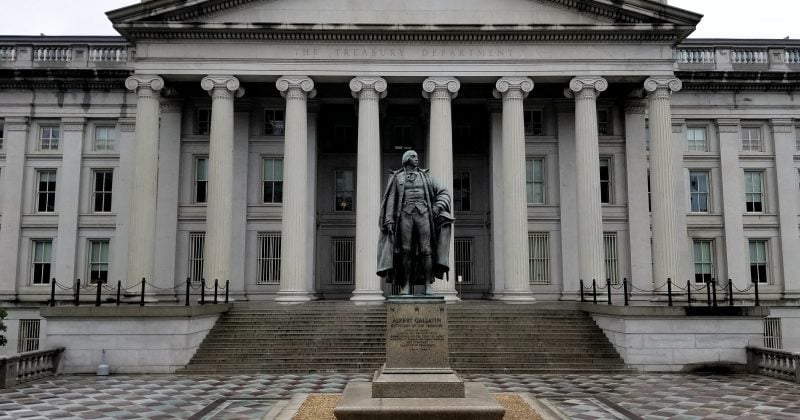
https://en.wikipedia.org/wiki/Treasury_Building_(Washington,_D.C.)
US Treasury imposes new sanctions on Iran, straining recent MoU agreement
US-Iran final nuclear deal
The United States Treasury has imposed new sanctions on Iranian entities, individuals, and vessels, marking a significant development in U.S.-Iran relations. This move comes shortly after a Memorandum of Understanding (MoU) was signed between the two countries, which included a U.S. commitment not to impose new sanctions. The sanctions target Iran’s “shadow fleet” involved in illicit oil exports and networks supplying materials for ballistic missile and advanced weapons production. This development raises questions about the stability of recent diplomatic agreements and suggests potential renegotiation or breakdown of the ceasefire framework, amid ongoing tensions in the Strait of Hormuz and concerns over nuclear inspection commitments.
Key Takeaways
- The new sanctions by the US Treasury appear to suggest increased tensions between the United States and Iran, potentially affecting the likelihood of a final nuclear deal.
- Market pricing suggests a decreased probability of a US-Iran nuclear agreement by the deadlines, with odds for an August 13, 2026, agreement currently at 1.7% YES.
- This action may indicate a hardening U.S. stance against Iran, as it contradicts recent diplomatic efforts embodied in the June MoU.
What to Watch
Observers will watch for any new statements from key actors such as President Donald J. Trump or Iran’s Foreign Minister Abbas Araghchi, which could provide further clarity on the situation. Developments in the Strait of Hormuz or additional violations of the MoU could further impact market perceptions. Additionally, any public statements from the IAEA or changes in military presence in the region could serve as indicators of the evolving geopolitical landscape and its impact on the likelihood of reaching a final nuclear agreement.
Get live prediction-market analysis, powered by Vera. Sign up for Vera.