
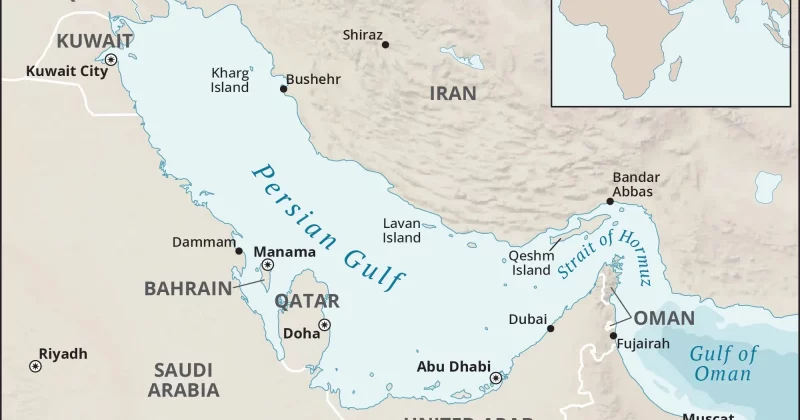
US Treasury sanctions Iran’s Persian Gulf Strait Authority amid oil export pressure campaign
Iran demanded transit fees in Bitcoin and USDT from ships passing through the Strait of Hormuz, prompting OFAC to designate the authority as an IRGC-linked entity.
The US Treasury Department has sanctioned Iran’s Persian Gulf Strait Authority, a body that reportedly tried to shake down commercial vessels for transit tolls payable in Bitcoin and USDT as they passed through one of the world’s most critical shipping lanes.
Treasury Secretary Scott Bessent said the sanctions, combined with an ongoing naval blockade, have significantly reduced Iran’s oil shipments and airline access. He also stressed that negotiations remain necessary to wind down the broader pressure campaign.
What Iran built, and what it charged
The Persian Gulf Strait Authority was established on May 18, 2026, as tensions between the US, Israel, and Iran continued escalating from a flashpoint that began in late February 2026.
The Strait of Hormuz is a narrow waterway through which roughly a fifth of the world’s daily oil supply passes. Iran’s geographic position along its northern shore gave it leverage, and the PGSA was the mechanism for monetizing that leverage.
The tolls weren’t trivial. Reports from April 2026 indicated Iran was seeking fees of around $1 per barrel, which could translate to as much as $2 million per vessel transit. Iran allegedly demanded these payments in digital currencies, specifically Bitcoin and USDT.
On May 27, the Office of Foreign Assets Control designated the PGSA as an entity linked to the Islamic Revolutionary Guard Corps, accusing it of extorting tolls from vessels passing through the strait. That designation means any person or company making payments to the PGSA, even in crypto, could face secondary sanctions from the United States.
The crypto enforcement angle
Prior enforcement actions have resulted in the freezing of between $344 million and $500 million in digital assets linked to Iranian interests. The PGSA sanctions represent the latest chapter in that effort.
If a shipping company, a payment processor, or even a crypto exchange facilitates a transaction that ends up in the PGSA’s wallets, they risk being caught in the secondary sanctions net. OFAC has shown repeatedly that it will trace blockchain transactions and hold intermediaries accountable.
For the broader crypto market, the immediate impact has been muted. No major token saw a significant price move directly tied to the announcement.
Why this matters for crypto investors
The secondary sanctions warning creates a ripple effect that extends well beyond direct transactions with the PGSA. Any wallet addresses associated with the PGSA or its intermediaries will end up on OFAC’s Specially Designated Nationals list, and compliance teams will need to update their systems accordingly.
The $344 million to $500 million in previously frozen Iran-linked crypto assets represents a meaningful chunk of enforcement activity, but it’s a fraction of what flows through crypto markets daily.