
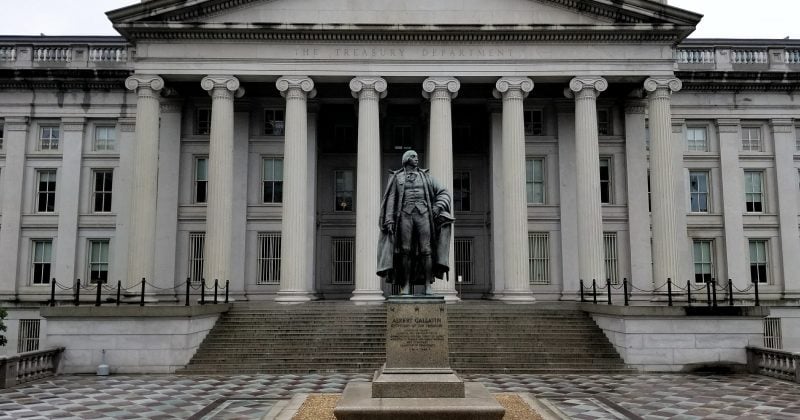
US Treasury sanctions over 100 ISIS-K crypto addresses, blocking $1.4M in funds
OFAC added 134 wallet addresses tied to the terrorist group, with Tether freezing stablecoin balances on the same day
The US Treasury just put 134 crypto wallet addresses on its blacklist, all tied to ISIS-K, the Islamic State’s affiliate operating across Afghanistan, Pakistan, and Central Asia. The wallets collectively moved over $1.4 million since 2023, and Tether didn’t wait around to respond.
On July 1, the Office of Foreign Assets Control (OFAC) added the addresses to its Specially Designated Nationals (SDN) list. Within the same day, Tether froze USDT balances across 131 of those wallets. The remaining three addresses were on Monero, a privacy-focused network where freezing isn’t really an option.
Follow the money, find the network
Of the 134 designated addresses, 131 sit on the TRON network, and just 3 are Monero wallets. TRON has become the go-to network for stablecoin transfers in regions where traditional banking infrastructure is limited or nonexistent. Monero, meanwhile, serves a different purpose: obfuscation for smaller, harder-to-trace flows.
Blockchain analytics firm Chainalysis provided the forensic backbone for this action. Their analysis found the TRON wallets had received over $1.4 million and sent more than $880,000 since 2023. Some of those transactions showed exposure to Syria-based crypto exchangers and mainstream services, suggesting the network wasn’t operating in total isolation from the broader crypto ecosystem.
A pattern, not a one-off
This isn’t the first time OFAC has gone after ISIS-linked crypto infrastructure. ISIS-K was originally designated as a Specially Designated Global Terrorist back in September 2015. Its media arm, al-Azaim Media Foundation, has openly solicited cryptocurrency donations.
Macro, rates, and crypto—what moved markets and what matters next.
Daily. Free. Join 34,000+ readers across crypto, finance, and policy.
The July 1 action follows a separate OFAC designation in June 2026 targeting a different ISIS financial facilitator network. And before that, Treasury went after closed networks of ISIS-affiliated financial operatives in 2023. Any US person, or any foreign entity that transacts with these addresses, faces potential sanctions exposure. That secondary sanctions risk is what gives these designations teeth internationally.
What this means for the crypto market
Tether’s same-day freeze is the headline within the headline. The largest stablecoin issuer in the world, responsible for over $100 billion in circulating supply, demonstrated it can and will act as an enforcement partner when OFAC comes calling.
The inclusion of Monero addresses is worth watching closely. Monero can’t be frozen the way USDT on TRON can. That asymmetry is exactly what makes regulators uncomfortable, and exactly what makes privacy advocates argue these tools are necessary for legitimate financial privacy.
For virtual asset service providers, or VASPs, the compliance burden just got heavier. Every exchange, every on-ramp, every custodial wallet provider now needs to screen against 134 new addresses. Failure to do so carries real legal risk, not just in the US but potentially in any jurisdiction that recognizes OFAC designations.