
USMNT World Cup exit highlights the chaos that follows high-stakes officiating controversy

USMNT World Cup exit highlights the chaos that follows high-stakes officiating controversy

Folarin Balogun's red card saga, a FIFA reversal, and a Round of 16 loss to Belgium underscore how referee decisions can ripple through tournament outcomes.

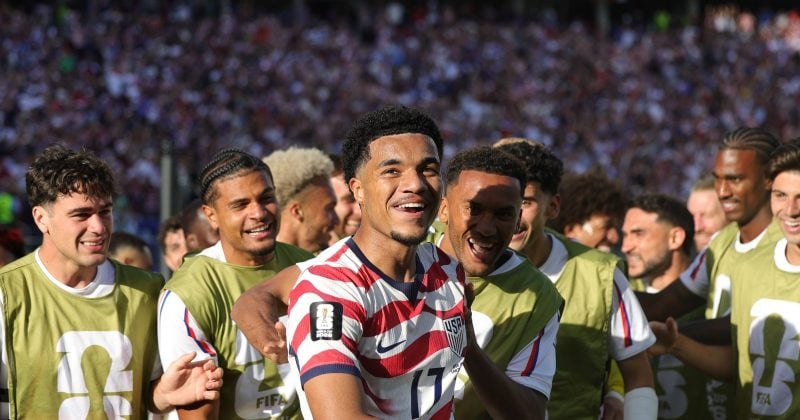
The US Men’s National Team’s 2026 World Cup run ended with a Round of 16 loss to Belgium, and striker Folarin Balogun isn’t shy about pointing to the chaos that preceded it. A red card issued during the group stage, later overturned by FIFA, created a cloud of uncertainty that Balogun says affected the entire squad’s preparation and performance heading into the knockout round.

For a team playing a home World Cup with legitimate aspirations of a deep run, the manner of the exit stung. Balogun called the loss a “huge disappointment,” and the officiating controversy that defined the group stage only amplified the frustration.

The red card and its fallout

Balogun was shown a red card during a group-stage match reportedly against Bosnia-Herzegovina. The decision was immediately controversial. Coach Mauricio Pochettino argued the contact was incidental and did not warrant such a severe punishment. Balogun himself stated that a yellow card would have been a fairer outcome.

Advertisement

FIFA ultimately agreed, at least partially. The governing body suspended the one-game ban on or around July 5, 2026, clearing Balogun to feature in the Belgium match.

The incident even attracted attention from President Donald Trump, who reportedly made inquiries about the situation.

A home World Cup that ended too soon

The 2026 World Cup, co-hosted across North America, featured an expanded 48-team format. Balogun acknowledged that several decisions throughout the group stage negatively impacted the team’s performance, suggesting the red card was part of a broader pattern rather than an isolated incident.

Pochettino backed his player publicly, describing the contact as incidental and questioning the referee’s judgment.

What this means for the broader landscape

For Balogun personally, the experience adds a complicated chapter to his international career. Balogun chose to represent the United States over England and Nigeria, having previously represented England at youth levels and developed through the Arsenal academy.

The fact that FIFA reversed the ban suggests the original decision lacked sufficient justification. If the governing body can acknowledge a red card was excessive after the fact, why can’t the system catch these errors in real time? VAR was supposed to solve exactly this kind of problem.

Disclosure: This article was edited by Editorial Team. For more information on how we create and review content, see our Editorial Policy.

USMNT World Cup exit highlights the chaos that follows high-stakes officiating controversy

USMNT World Cup exit highlights the chaos that follows high-stakes officiating controversy

Folarin Balogun's red card saga, a FIFA reversal, and a Round of 16 loss to Belgium underscore how referee decisions can ripple through tournament outcomes.

The US Men’s National Team’s 2026 World Cup run ended with a Round of 16 loss to Belgium, and striker Folarin Balogun isn’t shy about pointing to the chaos that preceded it. A red card issued during the group stage, later overturned by FIFA, created a cloud of uncertainty that Balogun says affected the entire squad’s preparation and performance heading into the knockout round.

For a team playing a home World Cup with legitimate aspirations of a deep run, the manner of the exit stung. Balogun called the loss a “huge disappointment,” and the officiating controversy that defined the group stage only amplified the frustration.

The red card and its fallout

Balogun was shown a red card during a group-stage match reportedly against Bosnia-Herzegovina. The decision was immediately controversial. Coach Mauricio Pochettino argued the contact was incidental and did not warrant such a severe punishment. Balogun himself stated that a yellow card would have been a fairer outcome.

Advertisement

FIFA ultimately agreed, at least partially. The governing body suspended the one-game ban on or around July 5, 2026, clearing Balogun to feature in the Belgium match.

The incident even attracted attention from President Donald Trump, who reportedly made inquiries about the situation.

A home World Cup that ended too soon

The 2026 World Cup, co-hosted across North America, featured an expanded 48-team format. Balogun acknowledged that several decisions throughout the group stage negatively impacted the team’s performance, suggesting the red card was part of a broader pattern rather than an isolated incident.

Pochettino backed his player publicly, describing the contact as incidental and questioning the referee’s judgment.

What this means for the broader landscape

For Balogun personally, the experience adds a complicated chapter to his international career. Balogun chose to represent the United States over England and Nigeria, having previously represented England at youth levels and developed through the Arsenal academy.

The fact that FIFA reversed the ban suggests the original decision lacked sufficient justification. If the governing body can acknowledge a red card was excessive after the fact, why can’t the system catch these errors in real time? VAR was supposed to solve exactly this kind of problem.

Disclosure: This article was edited by Editorial Team. For more information on how we create and review content, see our Editorial Policy.