
Nexo Earn with Nexo
United States men’s national team embraces pressure ahead of 2026 World Cup

United States men’s national team embraces pressure ahead of 2026 World Cup

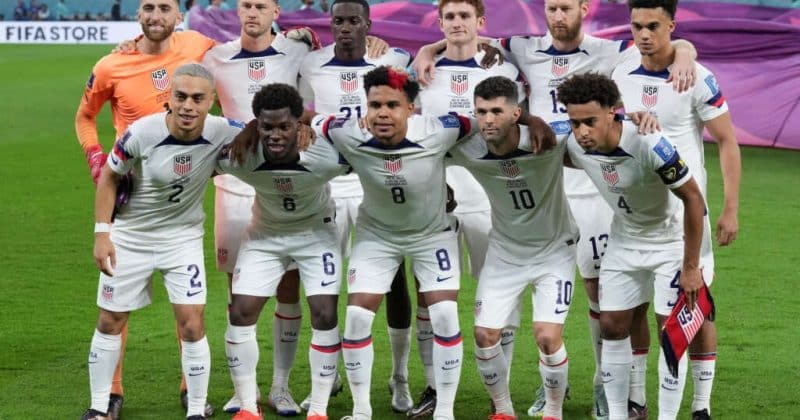
With the tournament on home soil, USMNT players are leaning into the weight of expectations rather than running from it.

During a press conference on March 28, the word “pressure” came up 16 times. Not from reporters lobbing gotcha questions, but from the players themselves. The US men’s national team isn’t just acknowledging the enormity of co-hosting the 2026 FIFA World Cup. They’re treating it like a feature, not a bug.

The tournament, shared with Canada and Mexico, represents the kind of opportunity that comes around roughly never for American soccer. A home World Cup with a roster that, on paper and in recent form, looks capable of making genuine noise on the global stage.

The Pochettino factor

Coach Mauricio Pochettino has been tasked with something deceptively difficult: building a coherent identity for a squad that has talent but has historically lacked a defining tactical philosophy at major tournaments.

Advertisement

The Argentine manager, who built his reputation turning Tottenham Hotspur into Champions League finalists with a fraction of their rivals’ budgets, is now working to define the team’s core lineup and strategic approach. Analysts project the USMNT could reach at least the quarterfinals based on current squad capabilities and recent results.

Why the pressure talk matters

Players like Weston McKennie and Christian Pulisic were among those leaning into the pressure narrative at the March press conference. That’s notable because of what it signals about the team’s mentality heading into the tournament.

International soccer history is littered with host nations that crumbled under expectations. South Korea in 2002 is the positive counterexample, a team that rode home energy to the semifinals. South Africa in 2010 is the cautionary tale, becoming the first host nation eliminated in the group stage.

The USMNT’s best World Cup result remains their third-place finish in 1930. More recently, the team reached the quarterfinals in 2002 and the Round of 16 in 2014 before the embarrassment of failing to qualify for the 2018 tournament entirely.

What this means for American soccer and the broader ecosystem

The 2026 World Cup sits at an interesting intersection of sports, technology, and fan engagement. FIFA has been expanding its blockchain initiatives, primarily focused on digital collectibles and fan experiences built on the Avalanche network.

No specific USMNT fan tokens or cryptocurrency partnerships have emerged in recent coverage. That absence is itself worth noting. Unlike many European clubs that have launched fan tokens through platforms like Chiliz, the US national team program has kept its focus squarely on performance rather than commercialization through digital assets.

Disclosure: This article was edited by Editorial Team. For more information on how we create and review content, see our Editorial Policy.

United States men’s national team embraces pressure ahead of 2026 World Cup

United States men’s national team embraces pressure ahead of 2026 World Cup

With the tournament on home soil, USMNT players are leaning into the weight of expectations rather than running from it.

During a press conference on March 28, the word “pressure” came up 16 times. Not from reporters lobbing gotcha questions, but from the players themselves. The US men’s national team isn’t just acknowledging the enormity of co-hosting the 2026 FIFA World Cup. They’re treating it like a feature, not a bug.

The tournament, shared with Canada and Mexico, represents the kind of opportunity that comes around roughly never for American soccer. A home World Cup with a roster that, on paper and in recent form, looks capable of making genuine noise on the global stage.

The Pochettino factor

Coach Mauricio Pochettino has been tasked with something deceptively difficult: building a coherent identity for a squad that has talent but has historically lacked a defining tactical philosophy at major tournaments.

Advertisement

The Argentine manager, who built his reputation turning Tottenham Hotspur into Champions League finalists with a fraction of their rivals’ budgets, is now working to define the team’s core lineup and strategic approach. Analysts project the USMNT could reach at least the quarterfinals based on current squad capabilities and recent results.

Why the pressure talk matters

Players like Weston McKennie and Christian Pulisic were among those leaning into the pressure narrative at the March press conference. That’s notable because of what it signals about the team’s mentality heading into the tournament.

International soccer history is littered with host nations that crumbled under expectations. South Korea in 2002 is the positive counterexample, a team that rode home energy to the semifinals. South Africa in 2010 is the cautionary tale, becoming the first host nation eliminated in the group stage.

The USMNT’s best World Cup result remains their third-place finish in 1930. More recently, the team reached the quarterfinals in 2002 and the Round of 16 in 2014 before the embarrassment of failing to qualify for the 2018 tournament entirely.

What this means for American soccer and the broader ecosystem

The 2026 World Cup sits at an interesting intersection of sports, technology, and fan engagement. FIFA has been expanding its blockchain initiatives, primarily focused on digital collectibles and fan experiences built on the Avalanche network.

No specific USMNT fan tokens or cryptocurrency partnerships have emerged in recent coverage. That absence is itself worth noting. Unlike many European clubs that have launched fan tokens through platforms like Chiliz, the US national team program has kept its focus squarely on performance rather than commercialization through digital assets.

Disclosure: This article was edited by Editorial Team. For more information on how we create and review content, see our Editorial Policy.