
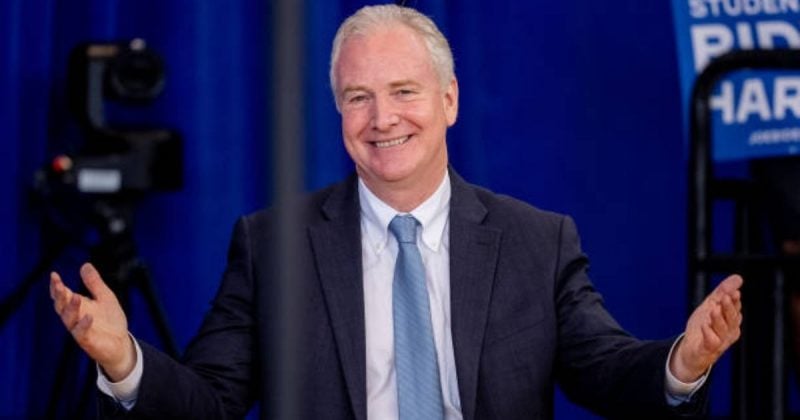
Sen. Van Hollen draws a line: no crypto clarity act without ethics provisions

Sen. Van Hollen draws a line: no crypto clarity act without ethics provisions

A Senate Democrat is blocking crypto's biggest regulatory bill until Trump family conflict-of-interest concerns are addressed.

The bill that was supposed to finally give crypto its regulatory rulebook is stuck. And the reason is not a technical disagreement over blockchain definitions or custody rules. It is a Senator from Maryland drawing a line over presidential profit.

Senator Chris Van Hollen (D-MD) has made his position clear: Democrats should block the Digital Asset Market Clarity Act, commonly called the CLARITY Act, until it includes provisions addressing potential conflicts of interest tied to President Donald Trump and his family’s involvement in digital assets.

What happened in committee

On May 14, 2026, the Senate Banking Committee held a markup session on the CLARITY Act. Van Hollen introduced an amendment that would bar senior federal officials from owning or promoting digital asset platforms. The committee rejected it, narrowly, by a 13-to-11 vote.

Van Hollen’s central argument is straightforward: you cannot write the rules for a market while one of the most powerful figures in government is allegedly profiting from that same market. He has pointed specifically to World Liberty Financial, a crypto venture with reported Trump family ties, as well as two memecoins, TRUMP and MELANIA, that generated significant controversy after their launch.

Advertisement

According to figures Van Hollen cited, the Trump family’s crypto-related gains amount to at least $1.4 billion, with $636 million attributed to one memecoin in 2025 alone. On the other side of those trades, he said nearly one million investors lost a combined $3.8 billion in related projects.

The CLARITY Act and what is actually at stake

The CLARITY Act is the most ambitious attempt yet to build a comprehensive federal regulatory framework for digital assets. The crypto industry has spent years operating in a legal gray zone, with the SEC and CFTC arguing over jurisdiction while enforcement actions substituted for actual rulemaking.

Senator Kirsten Gillibrand, who has been one of the more crypto-friendly voices among Democrats, made the stakes explicit. She said,

“There will be no one voting for this bill if we don’t have an ethics provision.”

As of mid-July 2026, discussions over ethics language in the CLARITY Act remained unresolved. Trump’s crypto holdings continue to be the central sticking point, with neither side apparently willing to move far enough to bridge the gap.

What this means for the market

Without a clear timeline for the CLARITY Act, institutional investors face a familiar problem: they cannot deploy capital at scale into an asset class where the rules might change dramatically depending on how a political dispute resolves.

The GENIUS Act, which addressed stablecoin regulation, spent months in a similar back-and-forth before eventually advancing. The CLARITY Act covers significantly more ground and involves a more politically charged conflict of interest.

Van Hollen’s position also raises a broader issue that the industry will have to contend with regardless of how this particular bill resolves. If senior officials can freely hold, promote, and profit from digital assets while simultaneously writing the rules governing those assets, the regulatory framework that eventually emerges will carry a credibility problem.

Disclosure: This article was edited by Editorial Team. For more information on how we create and review content, see our Editorial Policy.

Sen. Van Hollen draws a line: no crypto clarity act without ethics provisions

Sen. Van Hollen draws a line: no crypto clarity act without ethics provisions

A Senate Democrat is blocking crypto's biggest regulatory bill until Trump family conflict-of-interest concerns are addressed.

The bill that was supposed to finally give crypto its regulatory rulebook is stuck. And the reason is not a technical disagreement over blockchain definitions or custody rules. It is a Senator from Maryland drawing a line over presidential profit.

Senator Chris Van Hollen (D-MD) has made his position clear: Democrats should block the Digital Asset Market Clarity Act, commonly called the CLARITY Act, until it includes provisions addressing potential conflicts of interest tied to President Donald Trump and his family’s involvement in digital assets.

What happened in committee

On May 14, 2026, the Senate Banking Committee held a markup session on the CLARITY Act. Van Hollen introduced an amendment that would bar senior federal officials from owning or promoting digital asset platforms. The committee rejected it, narrowly, by a 13-to-11 vote.

Van Hollen’s central argument is straightforward: you cannot write the rules for a market while one of the most powerful figures in government is allegedly profiting from that same market. He has pointed specifically to World Liberty Financial, a crypto venture with reported Trump family ties, as well as two memecoins, TRUMP and MELANIA, that generated significant controversy after their launch.

Advertisement

According to figures Van Hollen cited, the Trump family’s crypto-related gains amount to at least $1.4 billion, with $636 million attributed to one memecoin in 2025 alone. On the other side of those trades, he said nearly one million investors lost a combined $3.8 billion in related projects.

The CLARITY Act and what is actually at stake

The CLARITY Act is the most ambitious attempt yet to build a comprehensive federal regulatory framework for digital assets. The crypto industry has spent years operating in a legal gray zone, with the SEC and CFTC arguing over jurisdiction while enforcement actions substituted for actual rulemaking.

Senator Kirsten Gillibrand, who has been one of the more crypto-friendly voices among Democrats, made the stakes explicit. She said,

“There will be no one voting for this bill if we don’t have an ethics provision.”

As of mid-July 2026, discussions over ethics language in the CLARITY Act remained unresolved. Trump’s crypto holdings continue to be the central sticking point, with neither side apparently willing to move far enough to bridge the gap.

What this means for the market

Without a clear timeline for the CLARITY Act, institutional investors face a familiar problem: they cannot deploy capital at scale into an asset class where the rules might change dramatically depending on how a political dispute resolves.

The GENIUS Act, which addressed stablecoin regulation, spent months in a similar back-and-forth before eventually advancing. The CLARITY Act covers significantly more ground and involves a more politically charged conflict of interest.

Van Hollen’s position also raises a broader issue that the industry will have to contend with regardless of how this particular bill resolves. If senior officials can freely hold, promote, and profit from digital assets while simultaneously writing the rules governing those assets, the regulatory framework that eventually emerges will carry a credibility problem.

Disclosure: This article was edited by Editorial Team. For more information on how we create and review content, see our Editorial Policy.