
Venice AI hits $1B valuation as Erik Voorhees bets big on privacy

Venice AI hits $1B valuation as Erik Voorhees bets big on privacy

A $65M Series A led by Dragonfly gives the privacy-focused AI platform unicorn status, with 3 million users and a token that noticed.

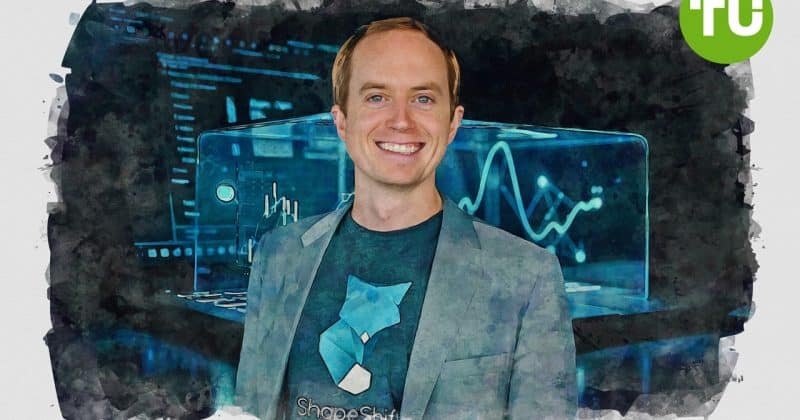
Erik Voorhees has spent most of his career arguing that people deserve financial privacy. Now he’s making the same argument about their conversations with AI, and venture capital is listening.

Venice AI, the generative AI platform Voorhees founded in mid-2024, officially crossed the unicorn threshold on July 1, 2026, closing a $65 million Series A at a $1 billion post-money valuation. The round was led by Dragonfly, the crypto-native venture firm, with Coinbase Ventures and North Island Ventures also participating.

What Venice actually does differently

Most AI platforms store your conversations on servers. Venice does not.

The platform encrypts user prompts at the client side before they ever leave the device, routes them through decentralized infrastructure, and keeps no server-side record of what was discussed. In plain terms: Venice is architected so that even Venice can’t read your chat history.

Advertisement

The platform currently processes roughly 1.7 million API calls per day across more than 200 models covering text, images, audio, and video. Venice also integrates with NEAR AI to support verifiable private inference, which is the technical mechanism that lets the platform make credible claims about what it doesn’t do with your data.

The numbers behind the valuation

The company reports an annualized run-rate revenue exceeding $70 million, putting its revenue multiple at roughly 14x ARR. The user base stands at over 3 million active users. About 8% of transactions on the platform are processed via crypto payments.

The VVV token, Venice’s native asset, functions as more than a governance instrument. Users can stake VVV to generate DIEM credits, which can then be redeemed for access to the platform’s AI services. Following the Series A announcement, VVV surged approximately 20%.

Where the money is going

The $65 million isn’t earmarked for marketing or headcount alone. Venice is directing a significant portion toward physical infrastructure: GPU purchases and the development of owned data centers.

Most AI startups rent compute from hyperscalers like AWS or Google Cloud, which keeps upfront costs low but compresses margins over time as usage scales. For a platform with over $70 million in ARR, owning infrastructure delivers better unit economics. Owning the compute stack also reinforces the privacy architecture, giving Venice a more defensible answer to the question of who has access to the hardware running user queries.

Voorhees built his reputation in crypto partly through ShapeShift, the non-custodial exchange he founded and later decentralized via a DAO transition. Venice is that thesis applied to AI, and the $1 billion valuation suggests he’s found an audience beyond the crypto-native crowd.

Traders watching VVV should track whether the crypto payment share of Venice’s revenue grows meaningfully from its current 8%, which would signal that the token economy is becoming a genuine driver rather than a marketing layer.

Disclosure: This article was edited by Editorial Team. For more information on how we create and review content, see our Editorial Policy.

Venice AI hits $1B valuation as Erik Voorhees bets big on privacy

Venice AI hits $1B valuation as Erik Voorhees bets big on privacy

A $65M Series A led by Dragonfly gives the privacy-focused AI platform unicorn status, with 3 million users and a token that noticed.

Erik Voorhees has spent most of his career arguing that people deserve financial privacy. Now he’s making the same argument about their conversations with AI, and venture capital is listening.

Venice AI, the generative AI platform Voorhees founded in mid-2024, officially crossed the unicorn threshold on July 1, 2026, closing a $65 million Series A at a $1 billion post-money valuation. The round was led by Dragonfly, the crypto-native venture firm, with Coinbase Ventures and North Island Ventures also participating.

What Venice actually does differently

Most AI platforms store your conversations on servers. Venice does not.

The platform encrypts user prompts at the client side before they ever leave the device, routes them through decentralized infrastructure, and keeps no server-side record of what was discussed. In plain terms: Venice is architected so that even Venice can’t read your chat history.

Advertisement

The platform currently processes roughly 1.7 million API calls per day across more than 200 models covering text, images, audio, and video. Venice also integrates with NEAR AI to support verifiable private inference, which is the technical mechanism that lets the platform make credible claims about what it doesn’t do with your data.

The numbers behind the valuation

The company reports an annualized run-rate revenue exceeding $70 million, putting its revenue multiple at roughly 14x ARR. The user base stands at over 3 million active users. About 8% of transactions on the platform are processed via crypto payments.

The VVV token, Venice’s native asset, functions as more than a governance instrument. Users can stake VVV to generate DIEM credits, which can then be redeemed for access to the platform’s AI services. Following the Series A announcement, VVV surged approximately 20%.

Where the money is going

The $65 million isn’t earmarked for marketing or headcount alone. Venice is directing a significant portion toward physical infrastructure: GPU purchases and the development of owned data centers.

Most AI startups rent compute from hyperscalers like AWS or Google Cloud, which keeps upfront costs low but compresses margins over time as usage scales. For a platform with over $70 million in ARR, owning infrastructure delivers better unit economics. Owning the compute stack also reinforces the privacy architecture, giving Venice a more defensible answer to the question of who has access to the hardware running user queries.

Voorhees built his reputation in crypto partly through ShapeShift, the non-custodial exchange he founded and later decentralized via a DAO transition. Venice is that thesis applied to AI, and the $1 billion valuation suggests he’s found an audience beyond the crypto-native crowd.

Traders watching VVV should track whether the crypto payment share of Venice’s revenue grows meaningfully from its current 8%, which would signal that the token economy is becoming a genuine driver rather than a marketing layer.

Disclosure: This article was edited by Editorial Team. For more information on how we create and review content, see our Editorial Policy.