
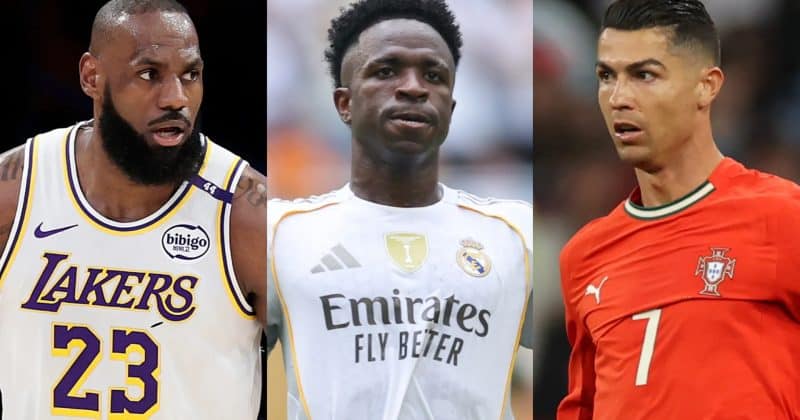
Vinicius Júnior draws inspiration from LeBron James as World Cup 2026 spotlight grows
The Brazilian forward's anti-racism advocacy and LeBron-inspired legacy-building are shaping conversations well beyond the pitch.
Vinicius Júnior is not just preparing to be one of the most watched footballers at the 2026 World Cup. He’s positioning himself as one of the most consequential athletes of his generation, and LeBron James is the blueprint.
The 25-year-old Brazilian forward, who plays for Real Madrid, has been vocal about drawing inspiration from LeBron’s approach to legacy-building and social advocacy. He’s specifically referenced LeBron’s I Promise School as a model for what athletes can accomplish off the field.
The weight of 26 incidents
Between October 2021 and February 2026, there were 26 reported incidents of racist abuse directed at him across ten different Spanish stadiums.
In February 2026, UEFA applied its anti-racism protocol during a Champions League match after Vinicius alleged racial remarks from an opposing player.
FIFA has responded ahead of the 2026 World Cup with expanded anti-racism measures. Among them is a new regulation that penalizes players who cover their mouths during on-pitch disputes. The rule has been informally dubbed the “Vinicius rule,” a direct nod to the Brazilian’s own encounters with discrimination and the way confrontations over racist language tend to play out on the field.
If a player cups their hand over their mouth while speaking to an opponent, referees can now intervene. The idea is transparency: if you wouldn’t say it on camera, maybe don’t say it at all.
Why LeBron, specifically
He hasn’t just said “LeBron inspires me” and moved on. He’s pointed to concrete projects, particularly the I Promise School in Akron, Ohio, as examples of how an athlete can build something that outlasts their playing career. LeBron opened that school in 2018, and it has since become a symbol of what happens when an elite athlete channels resources and attention toward systemic problems rather than just personal branding.
The parallel isn’t perfect. LeBron’s activism has operated in the American context, where athlete advocacy has a long lineage from Muhammad Ali to Colin Kaepernick. European football’s relationship with player activism, particularly around racism, is more fraught. Leagues have historically preferred quiet sanctions and behind-the-scenes conversations to the kind of loud, public accountability that Vinicius has demanded.
The World Cup as amplifier
The 2026 World Cup is co-hosted by the US, Mexico, and Canada. The expanded format means more matches, more venues, and more opportunities for incidents that test FIFA’s new anti-racism protocols. Vinicius’s presence as both a player and an advocate creates a dual pressure point: he’s someone opposing fans have targeted before, and he’s now the namesake of a rule designed to prevent exactly that targeting.