
Nexo Earn with Nexo
Vinícius Law mandates red card for players covering mouths from World Cup

Vinícius Law mandates red card for players covering mouths from World Cup

FIFA's new rule targeting concealed speech on the pitch will debut at the 2026 World Cup, backed by a red card penalty

Starting at the 2026 World Cup, football players who cover their mouths during confrontations with opponents will risk an immediate red card. The International Football Association Board (IFAB) approved the rule on April 28, 2026, during a meeting in Vancouver, British Columbia, in what amounts to one of the most unusual disciplinary measures the sport has ever seen.

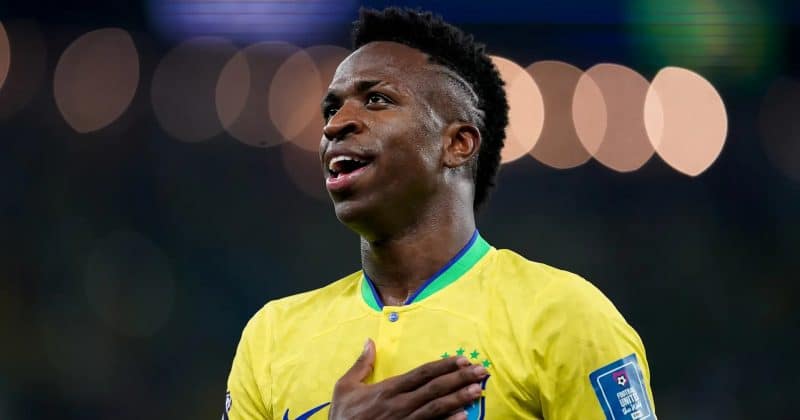
The regulation, informally dubbed the “Vinícius Law,” allows referees to send off any player who obscures their mouth with their hands, arms, or jerseys while engaged in verbal exchanges with opponents.

The incident that started it all

The rule traces directly back to a February 2026 UEFA Champions League match involving Brazilian forward Vinícius Júnior. During that game, Vinícius accused Benfica’s Gianluca Prestianni of directing racial abuse at him. The critical detail: Prestianni was covering his mouth while speaking to Vinícius, making it nearly impossible for officials or broadcast cameras to determine exactly what was said in real time.

Prestianni ultimately received a six-match ban, with three of those matches suspended, for his conduct.

Advertisement

FIFA President Gianni Infantino put it plainly, noting that covering the mouth suggests the player has said something inappropriate.

How the rule actually works

The mechanics are straightforward but aggressive. If a referee observes a player covering their mouth during an argument or confrontation with an opponent, that official now has the authority to issue a straight red card. No yellow card warning. No progressive discipline. Just an ejection.

IFAB’s decision was unanimous. The board, which is the sole body authorized to determine the Laws of the Game, will debut the rule at the 2026 World Cup, co-hosted by the United States, Canada, and Mexico.

Separately, IFAB also approved regulations allowing red cards for players who leave the pitch in protest.

What this means for the sport and its stakeholders

On the anti-racism front, the rule is a direct response to incidents that have plagued European and international football. Vinícius Júnior himself has been at the center of multiple high-profile racist abuse cases in Spain’s La Liga. The February 2026 Champions League incident was the final catalyst for a regulatory response.

But the rule also raises legitimate questions about enforcement consistency. Referees are already tasked with monitoring fouls, offsides, simulation, time-wasting, and dozens of other infractions in real time. Adding a subjective judgment about whether a player’s hand gesture during a heated exchange constitutes “covering their mouth” introduces another layer of interpretation.

There’s also the question of whether the punishment fits the infraction. A red card is one of the most severe penalties in football. Issuing one for a hand gesture puts that offense on the same level as a violent tackle or deliberate handball on the goal line.

Disclosure: This article was edited by Editorial Team. For more information on how we create and review content, see our Editorial Policy.

Vinícius Law mandates red card for players covering mouths from World Cup

Vinícius Law mandates red card for players covering mouths from World Cup

FIFA's new rule targeting concealed speech on the pitch will debut at the 2026 World Cup, backed by a red card penalty

Starting at the 2026 World Cup, football players who cover their mouths during confrontations with opponents will risk an immediate red card. The International Football Association Board (IFAB) approved the rule on April 28, 2026, during a meeting in Vancouver, British Columbia, in what amounts to one of the most unusual disciplinary measures the sport has ever seen.

The regulation, informally dubbed the “Vinícius Law,” allows referees to send off any player who obscures their mouth with their hands, arms, or jerseys while engaged in verbal exchanges with opponents.

The incident that started it all

The rule traces directly back to a February 2026 UEFA Champions League match involving Brazilian forward Vinícius Júnior. During that game, Vinícius accused Benfica’s Gianluca Prestianni of directing racial abuse at him. The critical detail: Prestianni was covering his mouth while speaking to Vinícius, making it nearly impossible for officials or broadcast cameras to determine exactly what was said in real time.

Prestianni ultimately received a six-match ban, with three of those matches suspended, for his conduct.

Advertisement

FIFA President Gianni Infantino put it plainly, noting that covering the mouth suggests the player has said something inappropriate.

How the rule actually works

The mechanics are straightforward but aggressive. If a referee observes a player covering their mouth during an argument or confrontation with an opponent, that official now has the authority to issue a straight red card. No yellow card warning. No progressive discipline. Just an ejection.

IFAB’s decision was unanimous. The board, which is the sole body authorized to determine the Laws of the Game, will debut the rule at the 2026 World Cup, co-hosted by the United States, Canada, and Mexico.

Separately, IFAB also approved regulations allowing red cards for players who leave the pitch in protest.

What this means for the sport and its stakeholders

On the anti-racism front, the rule is a direct response to incidents that have plagued European and international football. Vinícius Júnior himself has been at the center of multiple high-profile racist abuse cases in Spain’s La Liga. The February 2026 Champions League incident was the final catalyst for a regulatory response.

But the rule also raises legitimate questions about enforcement consistency. Referees are already tasked with monitoring fouls, offsides, simulation, time-wasting, and dozens of other infractions in real time. Adding a subjective judgment about whether a player’s hand gesture during a heated exchange constitutes “covering their mouth” introduces another layer of interpretation.

There’s also the question of whether the punishment fits the infraction. A red card is one of the most severe penalties in football. Issuing one for a hand gesture puts that offense on the same level as a violent tackle or deliberate handball on the goal line.

Disclosure: This article was edited by Editorial Team. For more information on how we create and review content, see our Editorial Policy.