
Vistra selected as preferred power provider for $10B KKR-backed AI venture
Helix Digital Infrastructure launches with backing from KKR, Kuwait's sovereign fund, Nvidia, and Vistra to tackle AI's biggest bottleneck: electricity
The AI boom has a dirty little secret. It’s not a compute problem anymore. It’s a power problem.
KKR just put over $10 billion behind that thesis. The private equity giant officially launched Helix Digital Infrastructure on June 11, a new venture designed to be a one-stop shop for hyperscale data centers, power supply, and connectivity. Vistra, one of the largest power producers in the US, has been tapped as the preferred electricity provider for the whole operation.
What Helix actually is
Think of Helix as a coordination layer sitting between the companies that need AI compute and the messy reality of actually building and powering the facilities that deliver it. The venture is led by Adam Selipsky, former CEO of Amazon Web Services, which is about as credible a hire as you can make for something like this.
The investor list reads like a who’s-who of deep pockets. KKR, the Kuwait Investment Authority (Kuwait’s sovereign wealth fund), Nvidia, and Vistra itself all contributed to the $10 billion-plus capital commitment.
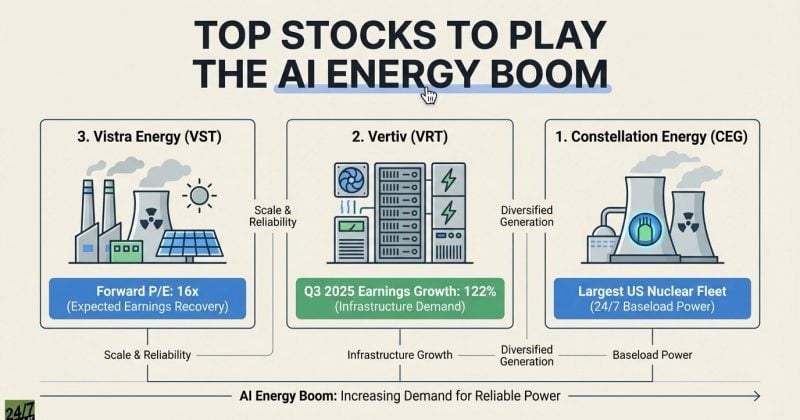
Vistra’s role is arguably the most critical. The company operates a generation fleet of approximately 50 GW across 18 US states and Washington, D.C. For context, 50 GW is roughly enough to power 37 million homes. It also already has power purchase agreements totaling over 5,000 MW with hyperscaler clients, meaning it has existing relationships with the exact customers Helix is targeting.
Nvidia’s contribution focuses on what it calls maximizing “tokens per watt,” a metric that captures how much useful AI output you can squeeze from each unit of electricity consumed.
Why power is the real AI bottleneck
Helix’s bet is that by bundling power procurement, data center development, and connectivity into a single coordinated platform, it can move faster than companies trying to solve each piece independently. Vistra’s existing fleet and PPA track record give Helix a head start that greenfield power projects simply can’t match.
The structure also de-risks the equation for hyperscalers. Instead of negotiating separately with utilities, construction firms, and network providers, they get a single counterparty.
What this means for investors
The 5,000 MW in existing hyperscaler PPAs is a significant data point. Power purchase agreements are long-term contracts, often spanning 10 to 15 years, that provide revenue visibility Wall Street loves. Adding Helix’s pipeline on top of that existing book of business could meaningfully extend Vistra’s growth runway.
The risk, as with any infrastructure mega-project, is execution. Over $10 billion sounds impressive until you realize that a single large-scale data center campus can cost $5 billion or more. Investors should watch for early project milestones, particularly how fast Helix can move from announcement to operational capacity, because that’s where most infrastructure ventures succeed or stumble.