
Volkswagen plans to cut 100,000 jobs and close four German plants in largest overhaul ever

Volkswagen plans to cut 100,000 jobs and close four German plants in largest overhaul ever

The 89-year-old automaker is slashing 15% of its global workforce as Chinese competition and declining EV demand force a dramatic reckoning

Volkswagen just announced the most aggressive restructuring in the company’s 89-year history. The plan: eliminate up to 100,000 jobs globally and shutter four manufacturing plants in Germany.

That’s roughly 15% of VW’s entire workforce of about 657,000 people, gone.

What’s actually happening

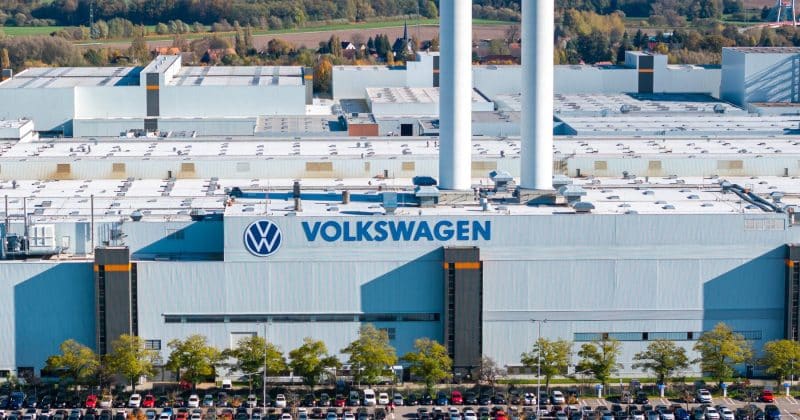
CEO Oliver Blume unveiled the restructuring on June 26, targeting four specific German facilities: Hanover, Zwickau, Emden, and Audi’s plant in Neckarsulm. The closures alone could eliminate more than 45,000 jobs in Germany, with the remainder of cuts spread across VW’s global operations.

The motivation is straightforward, even if the execution won’t be. VW is getting crushed on two fronts simultaneously: Chinese automakers are eating into its market share with cheaper, increasingly sophisticated electric vehicles, while European demand for EVs has softened considerably. The company is producing fewer cars but still carrying the operational costs of a manufacturer built for a different era.

Advertisement

VW’s stock tells the story more efficiently than any press release could. Shares have plummeted 60% over the past three years.

The political and labor minefield

Germany’s automotive sector isn’t just an industry. It’s a national institution. Volkswagen in particular occupies a unique position: the state of Lower Saxony holds a significant stake in the company, and the automaker is the economic backbone of entire regions.

Unions and the Lower Saxony state government have already pledged to fight the plan. German labor law and VW’s corporate governance structure give workers and their representatives substantial power to block or reshape restructuring efforts.

The social implications extend well beyond VW’s factory floors. When you pull 45,000 jobs out of German communities, the ripple effects hit local businesses, housing markets, tax revenues, and consumer spending. Cities like Zwickau and Emden aren’t Berlin or Munich. They don’t have diversified economies that can easily absorb that kind of shock.

Why this matters beyond Volkswagen

VW’s restructuring isn’t happening in isolation. It’s the most dramatic example yet of a trend reshaping the global auto industry: legacy manufacturers struggling to pivot toward electrification while simultaneously fending off competition from Chinese companies like BYD that were born in the EV era.

VW’s high production costs in Germany, driven by labor agreements, energy prices, and regulatory overhead, make the gap even harder to close.

There’s also a supply chain dimension worth watching. VW’s supplier network is vast, and plant closures will force parts makers and logistics companies to adapt. Some suppliers heavily dependent on the targeted facilities may face their own financial pressures, creating secondary investment risks that aren’t immediately obvious from the headline numbers.

Disclosure: This article was edited by Editorial Team. For more information on how we create and review content, see our Editorial Policy.

Volkswagen plans to cut 100,000 jobs and close four German plants in largest overhaul ever

Volkswagen plans to cut 100,000 jobs and close four German plants in largest overhaul ever

The 89-year-old automaker is slashing 15% of its global workforce as Chinese competition and declining EV demand force a dramatic reckoning

Volkswagen just announced the most aggressive restructuring in the company’s 89-year history. The plan: eliminate up to 100,000 jobs globally and shutter four manufacturing plants in Germany.

That’s roughly 15% of VW’s entire workforce of about 657,000 people, gone.

What’s actually happening

CEO Oliver Blume unveiled the restructuring on June 26, targeting four specific German facilities: Hanover, Zwickau, Emden, and Audi’s plant in Neckarsulm. The closures alone could eliminate more than 45,000 jobs in Germany, with the remainder of cuts spread across VW’s global operations.

The motivation is straightforward, even if the execution won’t be. VW is getting crushed on two fronts simultaneously: Chinese automakers are eating into its market share with cheaper, increasingly sophisticated electric vehicles, while European demand for EVs has softened considerably. The company is producing fewer cars but still carrying the operational costs of a manufacturer built for a different era.

Advertisement

VW’s stock tells the story more efficiently than any press release could. Shares have plummeted 60% over the past three years.

The political and labor minefield

Germany’s automotive sector isn’t just an industry. It’s a national institution. Volkswagen in particular occupies a unique position: the state of Lower Saxony holds a significant stake in the company, and the automaker is the economic backbone of entire regions.

Unions and the Lower Saxony state government have already pledged to fight the plan. German labor law and VW’s corporate governance structure give workers and their representatives substantial power to block or reshape restructuring efforts.

The social implications extend well beyond VW’s factory floors. When you pull 45,000 jobs out of German communities, the ripple effects hit local businesses, housing markets, tax revenues, and consumer spending. Cities like Zwickau and Emden aren’t Berlin or Munich. They don’t have diversified economies that can easily absorb that kind of shock.

Why this matters beyond Volkswagen

VW’s restructuring isn’t happening in isolation. It’s the most dramatic example yet of a trend reshaping the global auto industry: legacy manufacturers struggling to pivot toward electrification while simultaneously fending off competition from Chinese companies like BYD that were born in the EV era.

VW’s high production costs in Germany, driven by labor agreements, energy prices, and regulatory overhead, make the gap even harder to close.

There’s also a supply chain dimension worth watching. VW’s supplier network is vast, and plant closures will force parts makers and logistics companies to adapt. Some suppliers heavily dependent on the targeted facilities may face their own financial pressures, creating secondary investment risks that aren’t immediately obvious from the headline numbers.

Disclosure: This article was edited by Editorial Team. For more information on how we create and review content, see our Editorial Policy.