
US State Department steps in to help Vozinha’s mother attend World Cup after visa barriers kept her away

US State Department steps in to help Vozinha’s mother attend World Cup after visa barriers kept her away

The 40-year-old Cape Verde goalkeeper became a global sensation after his historic debut, but his mother couldn't be there to see it

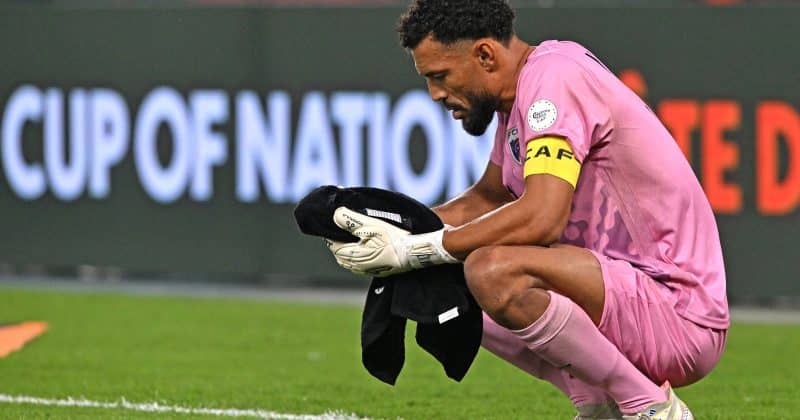
A 40-year-old goalkeeper from Cape Verde held Spain scoreless in his country’s first-ever World Cup match. His mother watched from home because she couldn’t afford the visa bond to enter the United States.

Now the US State Department is working to change that. Following a wave of public attention around Vozinha’s remarkable debut on June 15, 2026, officials announced efforts to assist his mother with her visa application so she can attend Cape Verde’s upcoming matches in the tournament.

The performance that broke the internet

Vozinha, whose full name is Josimar José Évora Dias, turned 40 on June 3. Twelve days later, he walked onto the pitch against Spain and made seven saves to preserve a 0-0 draw. He was named Player of the Match.

That makes him the oldest player to feature in a nation’s inaugural World Cup appearance. Cape Verde, a volcanic archipelago of roughly half a million people off the west coast of Africa, had never qualified for the tournament before this year.

Advertisement

Vozinha’s Instagram following jumped from approximately 50,000 to over 5.8 million in less than 24 hours. He currently plays for GD Chaves in Liga Portugal 2, which is Portugal’s second division. He’s also the second-most-capped player in Cape Verde’s history and has represented his country in four Africa Cup of Nations tournaments.

A $15,000 barrier to watching your son play

After the match, Vozinha shared emotional sentiments about family members who couldn’t attend due to financial and visa barriers. His mother was among them. The US visa bond requirement for Cape Verde nationals was reportedly up to $15,000, a sum that represents a significant financial hurdle for families from smaller nations.

The 2026 World Cup is being hosted across the United States, Canada, and Mexico, and the US visa process has created friction for fans and families from dozens of participating countries. The bond system is designed to ensure visitors return home after their stay, but the practical effect is that it prices out many people from lower-income nations entirely.

Democratic House leader Hakeem Jeffries publicly requested that Secretary of State Marco Rubio expedite assistance for Vozinha’s family ahead of Cape Verde’s next match on June 21, 2026. The State Department followed up by announcing it would help facilitate the visa process for Vozinha’s mother.

What this moment means beyond the pitch

When you award a World Cup to a country with restrictive immigration policies, you create a two-tier system where wealthy nations’ supporters travel freely while fans from qualifying countries in Africa, Asia, and the Caribbean face significant bureaucratic and financial obstacles. The bond requirement is the most visible version of this, but processing times, embassy access, and documentation requirements all tilt the playing field.

The State Department’s intervention on behalf of Vozinha’s mother highlights that individual cases get resolved when they generate enough public pressure, while systemic barriers remain intact for the thousands of families who don’t have 5.8 million Instagram followers advocating for them.

Cape Verde’s next match on June 21 represents another chance for the island nation to make history. Vozinha has spent two decades building a career that most of the world ignored. It took one match, seven saves, and a viral moment of vulnerability about his mother’s absence to turn him into the most talked-about athlete on the planet.

Disclosure: This article was edited by Editorial Team. For more information on how we create and review content, see our Editorial Policy.

US State Department steps in to help Vozinha’s mother attend World Cup after visa barriers kept her away

US State Department steps in to help Vozinha’s mother attend World Cup after visa barriers kept her away

The 40-year-old Cape Verde goalkeeper became a global sensation after his historic debut, but his mother couldn't be there to see it

A 40-year-old goalkeeper from Cape Verde held Spain scoreless in his country’s first-ever World Cup match. His mother watched from home because she couldn’t afford the visa bond to enter the United States.

Now the US State Department is working to change that. Following a wave of public attention around Vozinha’s remarkable debut on June 15, 2026, officials announced efforts to assist his mother with her visa application so she can attend Cape Verde’s upcoming matches in the tournament.

The performance that broke the internet

Vozinha, whose full name is Josimar José Évora Dias, turned 40 on June 3. Twelve days later, he walked onto the pitch against Spain and made seven saves to preserve a 0-0 draw. He was named Player of the Match.

That makes him the oldest player to feature in a nation’s inaugural World Cup appearance. Cape Verde, a volcanic archipelago of roughly half a million people off the west coast of Africa, had never qualified for the tournament before this year.

Advertisement

Vozinha’s Instagram following jumped from approximately 50,000 to over 5.8 million in less than 24 hours. He currently plays for GD Chaves in Liga Portugal 2, which is Portugal’s second division. He’s also the second-most-capped player in Cape Verde’s history and has represented his country in four Africa Cup of Nations tournaments.

A $15,000 barrier to watching your son play

After the match, Vozinha shared emotional sentiments about family members who couldn’t attend due to financial and visa barriers. His mother was among them. The US visa bond requirement for Cape Verde nationals was reportedly up to $15,000, a sum that represents a significant financial hurdle for families from smaller nations.

The 2026 World Cup is being hosted across the United States, Canada, and Mexico, and the US visa process has created friction for fans and families from dozens of participating countries. The bond system is designed to ensure visitors return home after their stay, but the practical effect is that it prices out many people from lower-income nations entirely.

Democratic House leader Hakeem Jeffries publicly requested that Secretary of State Marco Rubio expedite assistance for Vozinha’s family ahead of Cape Verde’s next match on June 21, 2026. The State Department followed up by announcing it would help facilitate the visa process for Vozinha’s mother.

What this moment means beyond the pitch

When you award a World Cup to a country with restrictive immigration policies, you create a two-tier system where wealthy nations’ supporters travel freely while fans from qualifying countries in Africa, Asia, and the Caribbean face significant bureaucratic and financial obstacles. The bond requirement is the most visible version of this, but processing times, embassy access, and documentation requirements all tilt the playing field.

The State Department’s intervention on behalf of Vozinha’s mother highlights that individual cases get resolved when they generate enough public pressure, while systemic barriers remain intact for the thousands of families who don’t have 5.8 million Instagram followers advocating for them.

Cape Verde’s next match on June 21 represents another chance for the island nation to make history. Vozinha has spent two decades building a career that most of the world ignored. It took one match, seven saves, and a viral moment of vulnerability about his mother’s absence to turn him into the most talked-about athlete on the planet.

Disclosure: This article was edited by Editorial Team. For more information on how we create and review content, see our Editorial Policy.