
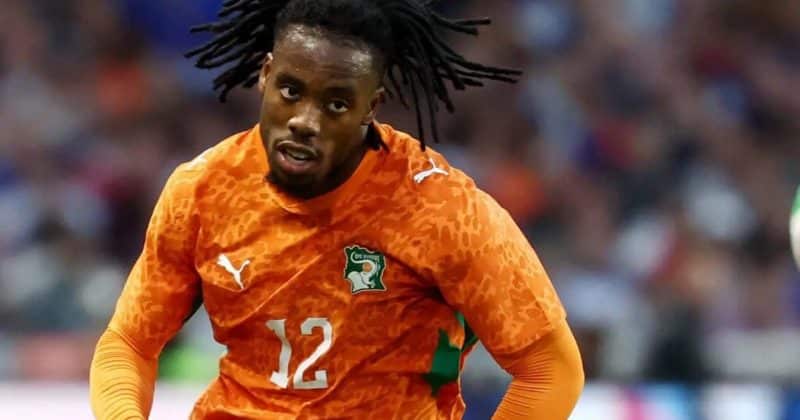
Ivory Coast striker Elye Wahi denied entry to Canada for World Cup match against Germany
A match-fixing investigation in France has followed the 23-year-old forward across the Atlantic, making him the second player barred from Canadian soil during the 2026 World Cup
The 2026 FIFA World Cup is being co-hosted across North America, which sounds like a logistical dream until you remember that crossing from the US into Canada involves actual border enforcement. Elye Wahi, a 23-year-old striker for OGC Nice and the Ivory Coast national team, just learned that lesson the hard way.
Wahi has been denied entry into Canada ahead of Ivory Coast’s Group Stage match against Germany, scheduled for June 21, 2026. The reason: an ongoing French investigation into alleged match-fixing and sports corruption that has trailed him from Ligue 1 to the biggest tournament in world football.
A yellow card that triggered an investigation
On May 17, 2026, Wahi received a yellow card during a match against Metz. An unusual volume of international bets were placed specifically on the outcome of that yellow card incident. That pattern caught the attention of French authorities.
On May 29, Wahi was arrested in France as part of the resulting investigation into match-fixing and sports corruption. He was not charged, which is an important distinction. Being arrested and being convicted are two very different things, separated by a chasm of due process.
Despite the arrest, Wahi was apparently free to travel and compete. He suited up for Ivory Coast’s opening World Cup match on June 15 in Philadelphia, where his team secured a 1-0 victory over Ecuador. No issues at the US border. No drama.
Then the tournament schedule sent Ivory Coast north.
Canada’s border, Canada’s rules
Canada’s immigration laws are notably strict when it comes to individuals under investigation for criminal matters, even if no formal charges have been filed. The ongoing French probe into sports corruption was enough for Canadian authorities to deny Wahi the necessary entry authorizations.
The Ivorian Football Federation, known as FIF, said it received no prior notice about judicial or administrative proceedings that would affect Wahi’s ability to travel. By the time the visa situation became clear, it was too late to resolve. Wahi remains in the United States while his teammates prepare for Germany without him.
Ghana’s Thomas Partey was also denied entry into Canada during the World Cup, reportedly for similar reasons tied to Canadian immigration rules and investigations into sports corruption. That makes Wahi the second player to be barred from Canadian soil during these games.
What this means for Ivory Coast and the broader tournament
For Ivory Coast, the timing is brutal. After beating Ecuador in the opener, the team now faces Germany minus a key attacking option. Wahi plays striker for OGC Nice in one of Europe’s top leagues.
The FIF’s statement about receiving no advance warning raises its own questions. Whether this was a communication breakdown or a situation that genuinely couldn’t have been flagged earlier is unclear, but the result is the same: a player sidelined by bureaucracy, not by injury or form.
Wahi’s situation also raises fairness concerns that FIFA will eventually need to address. He played in the US without issue. He hasn’t been charged with a crime. Yet the geography of the tournament schedule, something entirely outside his control, determined whether he could participate in a given match.
Whether Wahi returns to the squad for subsequent matches will depend on where those games are played and whether the French investigation progresses in a way that changes his legal status. For now, he waits in the US while his teammates take on Germany without him.