
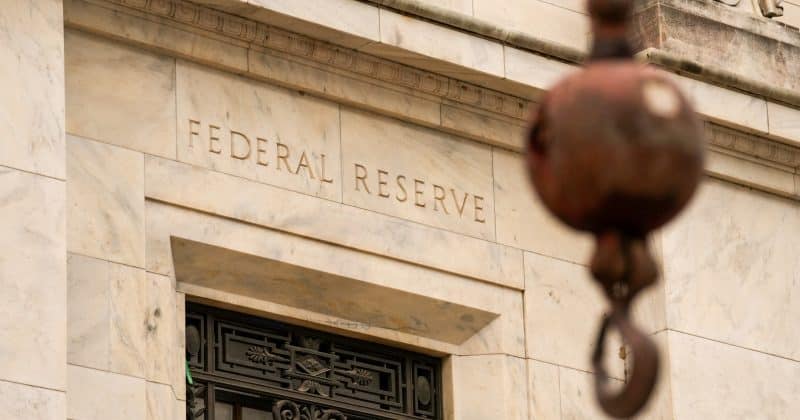
Wall Street sinks on bets Fed will hike rates this year
The Federal Reserve removed language about potential rate cuts, and half of FOMC members now forecast at least one hike by year-end
Wall Street had a rough session on June 17 after the Federal Reserve made it abundantly clear that rate cuts are no longer on the table, and rate hikes very much are.
The S&P 500 fell 1.21%, dropping 89.59 points to close at 7,421.76. The Nasdaq Composite took a harder hit, sliding 1.34% or 349.14 points to 26,027.21. The Dow Jones Industrial Average shed 0.98%, losing 499.18 points to end at 51,494.99.
The Fed’s hawkish pivot
The Fed, now led by Chair Kevin Warsh, held the federal funds rate steady. Nine out of 18 members of the Federal Open Market Committee now forecast at least one 25 basis-point rate hike before the year is out. For a market that spent much of the past year pricing in the opposite direction, this was a cold splash of reality.
Previous language that had hinted at potential rate cuts was scrubbed entirely from the policy statement. Market analysts widely interpreted this as a decisive hawkish shift in tone.
The inflation picture isn’t helping. Rising oil prices, fueled by ongoing geopolitical tensions involving US-Iran developments, have kept price pressures elevated.
The news moving money, markets, and the world—before your day starts.
Daily. Free. Join 34,000+ readers across crypto, finance, and policy.
What it means for risk assets
The Nasdaq’s steeper decline compared to the Dow tells that story clearly. Tech and growth-heavy indices are more rate-sensitive because their valuations depend heavily on discounted future cash flows. The Dow, weighted more toward industrials and financials, held up slightly better, though losing nearly 500 points is nobody’s idea of a good day.
Bitcoin was trading under pressure near $62,000 as shifting rate expectations rippled through digital asset markets. Crypto has increasingly behaved like a risk-on asset, rising when liquidity is abundant and falling when the monetary environment tightens.
The bigger picture for investors
If nine FOMC members are right and rates do move higher this year, it would mark a significant departure from what markets have been pricing in. Higher interest rates translate directly into reduced liquidity across financial markets, and risk-free alternatives like Treasury yields become more competitive.
The oil price dynamic adds another layer of complexity. If inflation proves stickier than the Fed hopes, the case for rate hikes gets stronger. That creates a potential feedback loop: persistent inflation leads to tighter policy, tighter policy pressures asset prices, and falling asset prices create their own set of economic headaches.
For crypto specifically, Bitcoin near $62,000 represents a meaningful pullback from levels seen earlier this year. Fed funds futures and options markets will reprice rapidly in the coming days. If traders move to fully price in a hike by December, the selloff in equities and crypto could deepen.