
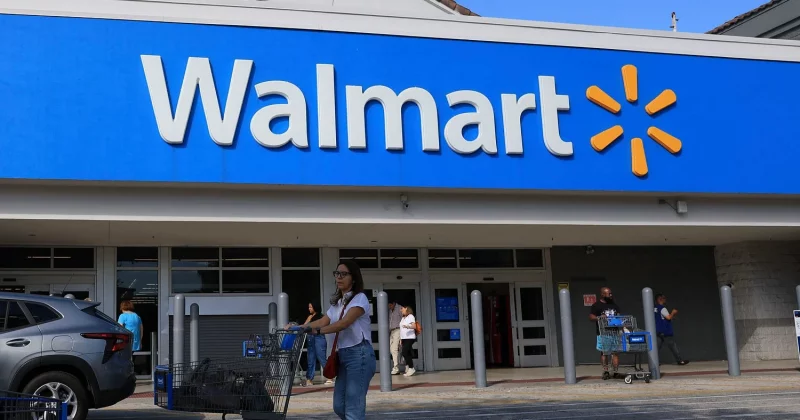
Walmart reports 7.3% revenue rise, warns of consumer pressure from rising costs and fuel prices
The world's largest retailer posted $164 billion in quarterly revenue but flagged growing strain on lower- and middle-income shoppers, a signal crypto markets should not ignore.
Walmart just posted a 7.3% year-over-year jump in quarterly revenue, landing at roughly $164 billion. By almost any measure, that is a monster quarter for a company already operating at a scale most businesses cannot fathom.
But the tone coming out of Bentonville tells a different story. Management warned that rising fuel prices and persistent inflation are squeezing lower- and middle-income consumers, the exact demographic that keeps Walmart’s registers ringing. When the company that sells everything to everyone starts worrying about its customers’ wallets, the rest of the economy should probably pay attention.
The numbers look great until you read the fine print
Full-year revenue climbed 6.7% to approximately $611 billion. US comparable store sales surged 8.3%, driven primarily by groceries and essential items. On paper, this is a retailer firing on all cylinders.
Here’s the thing. That 8.3% comp growth is heavily tilted toward necessities, not discretionary spending. Shoppers are buying more rice and paper towels, not TVs and patio furniture.
Private-label product sales rose over 160 basis points in Q4 alone. That is a clear sign consumers are trading down from name brands to store brands to save money. Walmart benefits from this trade-down effect in the short term because its margins on private-label goods tend to be higher. But the underlying behavior reveals stress.
In a subsequent quarter, revenue growth decelerated to 5.2% year-over-year at $160.8 billion, and management’s cautious commentary triggered a 7.5% drop in Walmart’s stock price. Investors read between the lines: the consumer spending engine that powered those headline numbers might be losing steam.
Why crypto investors should care about grocery bills
Look, Walmart is not a crypto company. But it is arguably the single best real-time barometer of the American consumer’s financial health. And the American consumer’s financial health has an outsized influence on risk asset markets, including Bitcoin and Ethereum.
The logic chain is straightforward. When households feel pinched by fuel costs and food inflation, they pull back on discretionary spending first. Then they reduce savings. Then they liquidate investments, starting with the riskiest ones. Crypto sits at the far end of that risk spectrum for most retail holders.
Macro, rates, and crypto—what moved markets and what matters next.
Daily. Free. Join 34,000+ readers across crypto, finance, and policy.
The Federal Reserve watches consumer spending data obsessively when calibrating interest rate decisions. If Walmart’s management is publicly flagging consumer strain, that signal feeds directly into the macro environment that shapes crypto market cycles. A Fed that sees weakening consumers might pause rate hikes or even cut, which historically has been bullish for Bitcoin. But a consumer that is actively retrenching can also drain retail liquidity from crypto markets before any rate relief arrives.
It is a timing problem, and timing problems are where portfolios get hurt.
The shift toward private-label goods also matters for inflation expectations. If consumers are actively choosing cheaper alternatives and retailers are absorbing more of the pricing pressure, that could help moderate inflation readings in coming months. Lower inflation readings give the Fed more room to ease monetary policy. That is the scenario Bitcoin bulls are banking on.
But the flip side is real too. If fuel prices keep climbing and grocery staples remain elevated, the disposable income available for speculative investments shrinks. The average American household is not thinking about Bitcoin allocations when gas is eating into their weekly budget.
Walmart’s quiet blockchain moves
While the immediate story is about consumer pressure, Walmart has been making quieter moves that put it at an interesting intersection with crypto and blockchain technology. The company has filed multiple blockchain-related patents and launched a fintech venture, positioning itself for potential token-based payment integrations down the line.
None of this is imminent or confirmed as a product roadmap. But a company processing $611 billion in annual revenue experimenting with blockchain-based payments is worth watching. Even marginal adoption of tokenized payment rails at Walmart’s scale would represent meaningful transaction volume for whatever network or protocol gets tapped.
Walmart’s heavy investment in automation also signals a broader digitization trend that could eventually create natural on-ramps for blockchain infrastructure in supply chain management and payments. The company has historically been an early mover in supply chain technology, and its sheer purchasing power means its technology choices ripple through thousands of suppliers.
What this means for investors
The Walmart earnings report is a macro signal wrapped in a retail earnings call. The revenue growth is real, but it is being driven by necessity spending and trade-down behavior, not the kind of confident consumer spending that lifts all boats.
For crypto market participants, the key variable to watch is whether consumer strain translates into softer inflation data in the coming months. If it does, the macro setup for risk assets improves materially. If fuel prices continue climbing and consumer budgets tighten further, expect retail-driven crypto volumes to soften even as institutional flows potentially increase.
The 7.5% stock drop following cautious forward guidance in a subsequent quarter shows how quickly sentiment can shift when management tone darkens. Crypto markets, which are even more sentiment-driven than equities, tend to amplify these macro mood swings rather than dampen them. Walmart’s warning is not a sell signal for Bitcoin, but it is a reminder that the retail bid underpinning crypto prices depends on the same households currently deciding between name-brand cereal and the store-brand alternative.