
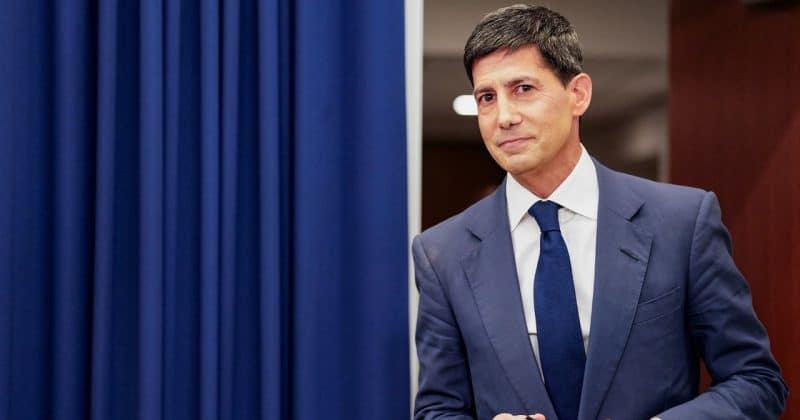
Wall Street rattled after Kevin Warsh’s first Fed meeting signals hawkish turn

Wall Street rattled after Kevin Warsh’s first Fed meeting signals hawkish turn

New Fed chair holds rates steady but leaves the door wide open for a rate hike later this year, sending equities lower and Treasury yields climbing

Kevin Warsh just finished his debut as Federal Reserve Chair, and Wall Street is already reaching for the antacids. The FOMC voted unanimously to hold interest rates steady at its June 16-17 meeting, but the tone coming out of Warsh’s first press conference was anything but reassuring for investors hoping the era of tightening was behind them.

Equities sold off broadly on the day, with the S&P 500, Nasdaq, and Russell 2000 all declining. The 2-year Treasury yield, a reliable barometer of near-term rate expectations, jumped roughly 13 basis points to 4.18%. In English: bond traders are pricing in a real chance that rates go higher before they go lower.

A new sheriff, a new style

Warsh, who was sworn in on May 22 after being nominated by President Trump in late January, wasted no time distinguishing himself from his predecessors. His first major move was rhetorical: he plans to scale back the Fed’s use of forward guidance and public communication, favoring what he called a more restrained approach.

Advertisement

“Persistently high prices are a burden for the American people, but the recent past need not be prologue.”

FOMC projections released alongside the decision showed increased support among committee members for a potential 25 basis point rate hike before year-end.

Why markets flinched

The broad equity decline reflects this tension. Growth stocks, which are particularly sensitive to interest rate expectations because their valuations depend on discounting future cash flows, bore the brunt of the selling. Higher rates make those future earnings worth less in today’s dollars, which is why the Nasdaq’s decline matters more than a surface-level read might suggest.

Meanwhile, the 2-year Treasury yield’s climb to 4.18% tells a cleaner story. Short-duration bonds are the market’s best real-time gauge of where traders think rates are headed in the near future. A 13 basis point move in a single session is not subtle. It screams that the fixed income market heard Warsh loud and clear and is repositioning accordingly.

What this means for investors

The immediate question for portfolio managers is whether to take Warsh at his word. If the new Fed chair genuinely intends to reduce forward guidance, that means more surprises at future meetings. More surprises mean more volatility.

Financials tend to benefit from higher rates because banks earn more on the spread between what they pay depositors and what they charge borrowers. Defensive sectors like utilities and consumer staples typically hold up better than high-growth names. And cash, boring as it is, becomes a more attractive asset when short-term yields are pushing above 4%.

Traders should pay close attention to upcoming economic data releases, particularly inflation readings and employment numbers, because those data points will carry even more weight in a world where the Fed chair is scaling back forward guidance.

Disclosure: This article was edited by Editorial Team. For more information on how we create and review content, see our Editorial Policy.

Wall Street rattled after Kevin Warsh’s first Fed meeting signals hawkish turn

Wall Street rattled after Kevin Warsh’s first Fed meeting signals hawkish turn

New Fed chair holds rates steady but leaves the door wide open for a rate hike later this year, sending equities lower and Treasury yields climbing

Kevin Warsh just finished his debut as Federal Reserve Chair, and Wall Street is already reaching for the antacids. The FOMC voted unanimously to hold interest rates steady at its June 16-17 meeting, but the tone coming out of Warsh’s first press conference was anything but reassuring for investors hoping the era of tightening was behind them.

Equities sold off broadly on the day, with the S&P 500, Nasdaq, and Russell 2000 all declining. The 2-year Treasury yield, a reliable barometer of near-term rate expectations, jumped roughly 13 basis points to 4.18%. In English: bond traders are pricing in a real chance that rates go higher before they go lower.

A new sheriff, a new style

Warsh, who was sworn in on May 22 after being nominated by President Trump in late January, wasted no time distinguishing himself from his predecessors. His first major move was rhetorical: he plans to scale back the Fed’s use of forward guidance and public communication, favoring what he called a more restrained approach.

Advertisement

“Persistently high prices are a burden for the American people, but the recent past need not be prologue.”

FOMC projections released alongside the decision showed increased support among committee members for a potential 25 basis point rate hike before year-end.

Why markets flinched

The broad equity decline reflects this tension. Growth stocks, which are particularly sensitive to interest rate expectations because their valuations depend on discounting future cash flows, bore the brunt of the selling. Higher rates make those future earnings worth less in today’s dollars, which is why the Nasdaq’s decline matters more than a surface-level read might suggest.

Meanwhile, the 2-year Treasury yield’s climb to 4.18% tells a cleaner story. Short-duration bonds are the market’s best real-time gauge of where traders think rates are headed in the near future. A 13 basis point move in a single session is not subtle. It screams that the fixed income market heard Warsh loud and clear and is repositioning accordingly.

What this means for investors

The immediate question for portfolio managers is whether to take Warsh at his word. If the new Fed chair genuinely intends to reduce forward guidance, that means more surprises at future meetings. More surprises mean more volatility.

Financials tend to benefit from higher rates because banks earn more on the spread between what they pay depositors and what they charge borrowers. Defensive sectors like utilities and consumer staples typically hold up better than high-growth names. And cash, boring as it is, becomes a more attractive asset when short-term yields are pushing above 4%.

Traders should pay close attention to upcoming economic data releases, particularly inflation readings and employment numbers, because those data points will carry even more weight in a world where the Fed chair is scaling back forward guidance.

Disclosure: This article was edited by Editorial Team. For more information on how we create and review content, see our Editorial Policy.