
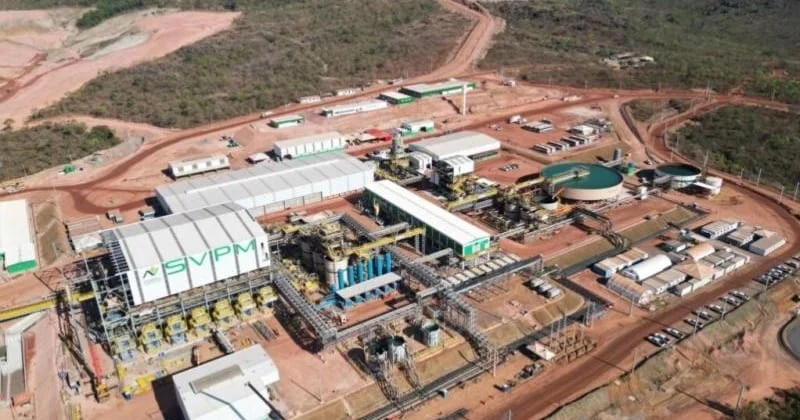
Western companies invest in Brazil’s rare-earth industry to reduce reliance on China
A $2.8 billion mine acquisition and hundreds of millions in US government funding signal a serious push to break China's chokehold on critical minerals.
For decades, the rare-earth supply chain has had one address: China. Now, Western companies and governments are writing very large checks to add a second one in Brazil.
The centerpiece move came in April 2026, when USA Rare Earth announced a $2.8 billion agreement to acquire the Serra Verde mine, Brazil’s only operating rare-earth facility. The deal, structured as $300 million in cash plus $126.9 million in shares, is expected to close in the third quarter of 2026. The goal isn’t just mining. It’s building what the company calls a “mine-to-magnet” supply chain entirely outside Asia.
Why Brazil, and why now
China controls roughly 90% of global rare-earth processing capacity. Brazil, meanwhile, sits on the world’s second-largest rare-earth reserves. Yet as of late 2025, the country produced less than 1% of global output. Only one mine was even operational.
Rare earths aren’t just for magnets in your earbuds. These 17 elements are essential for guided missiles, fighter jet engines, electric vehicle motors, wind turbines, and advanced semiconductors.
The money trail
The USA Rare Earth acquisition is the splashiest deal, but it’s far from the only capital flowing into Brazilian rare earths.
Macro, rates, and crypto—what moved markets and what matters next.
Daily. Free. Join 34,000+ readers across crypto, finance, and policy.
The US Development Finance Corporation (DFC) has outlined funding initiatives that include up to $565 million for Brazilian rare-earth extraction. A separate allocation of $465 million has been earmarked for specific projects, including Aclara’s Carina project.
Brazil’s own government has skin in the game too. As of January 2025, Brazilian authorities committed $815 million toward strategic minerals financing.
Investors have noticed. Stocks of companies involved in Brazilian rare-earth projects have surged between 65% and 122% over the past year as of May 2026.
What this means for investors
The “mine-to-magnet” ambition behind the Serra Verde acquisition is exactly right in concept. Owning the mine without owning the processing is like growing wheat but having to ship it to someone else’s bakery. Finalizing the acquisition is step one. Building refining capacity, training workforces, and achieving cost competitiveness against entrenched Chinese processors could take years.
China has previously restricted rare-earth exports during diplomatic disputes, most notably against Japan in 2010. Every dollar invested in Brazilian production is partly an insurance premium against that kind of supply disruption.