
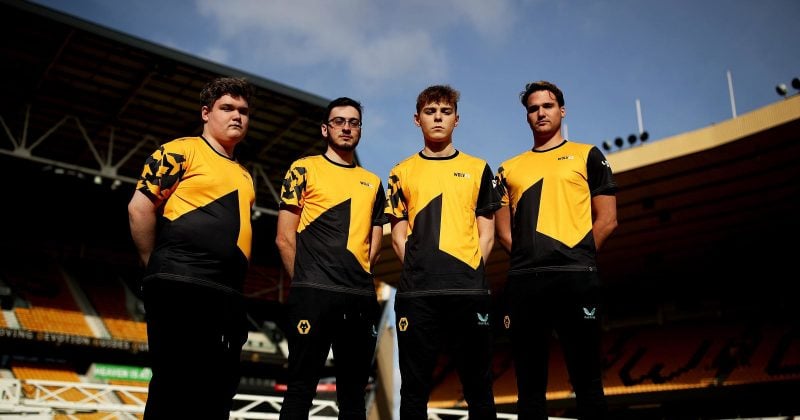
Crypto meets competitive gaming as Wolves Esports ties Bilibili Gaming in VCT China Stage 2
The esports arm of Wolverhampton Wanderers FC, which partnered with crypto project LAKE last year, leveled its series with a dominant 13-4 map win while prediction markets buzzed with activity.
Wolves Esports crushed Bilibili Gaming 13-4 on the third map of their VCT 2026 China Stage 2 group stage matchup on July 11, tying the series at 1-1.
The esports squad operates under Wolverhampton Wanderers FC, which secured a partnership with LAKE (LAK3) as its official cryptocurrency partner back in July 2024. That deal makes every Wolves Esports match a de facto showcase for a crypto-affiliated organization, and this particular series drew enough attention to generate over $5,000 in trading volume on prediction market platforms like Polymarket.
The match itself
The win was critical because Bilibili Gaming had taken the earlier map, putting Wolves in a must-respond situation. Wolves delivered one of the more lopsided results in the current VCT China stage.
VCT China Stage 2 is part of Riot Games’ broader Valorant Champions Tour, the regional league structure that feeds into international competition.
Bilibili Gaming has no reported connections to any crypto or blockchain projects.
The news moving money, markets, and the world—before your day starts.
Daily. Free. Join 34,000+ readers across crypto, finance, and policy.
Where crypto fits into the picture
Wolverhampton Wanderers FC partnered with LAKE, a project focused on the global water economy that trades as LAK3. The token sits near $0.01 with a reported market cap of around $1.75 million.
The prediction market activity generated over $5,000 in trading volume on series lines for the BLG versus Wolves match. Platforms like Polymarket and Coinbase have increasingly listed VCT China matches as targets for prediction trading, and the BLG versus Wolves encounter was one of the more actively traded lines.
What this means for investors
For traders watching tokens like LAK3, with a market cap this small, a single viral moment, a tournament win, a social media clip, could trigger volatility that larger tokens simply wouldn’t experience.
As more esports franchises establish formal connections with crypto projects, the performance of those teams on the competitive stage could start influencing token valuations in ways that traditional financial analysis doesn’t capture. Monitoring match results alongside on-chain activity for affiliated tokens is becoming a legitimate research workflow.