
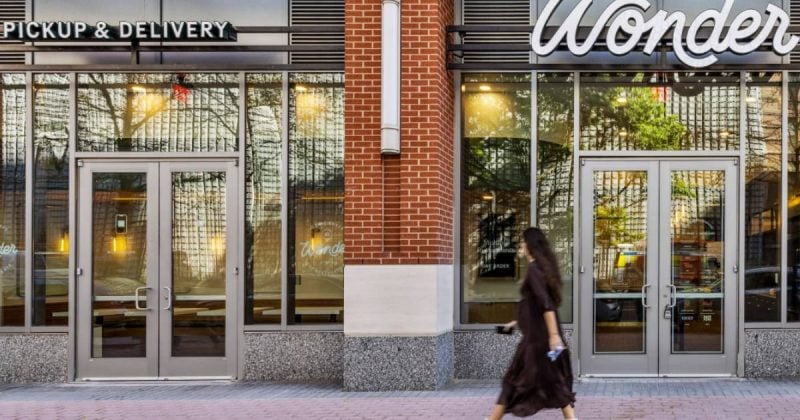
Wonder raises $200M ahead of potential $9B IPO next year
Marc Lore is putting $200 million of his own money into the food tech company he founded, positioning it for what could be the biggest food delivery IPO in years
Marc Lore, the serial entrepreneur who sold Jet.com to Walmart for $3.3B and then decided the food industry needed disrupting too, is writing a $200 million personal check into his own company. Wonder, the food technology platform that now owns both Grubhub and Blue Apron, is raising hundreds of millions at a $9 billion valuation in what could be its final private funding round.
The reason it might be the last? Lore has told staff that an IPO could come as early as 2027.
From virtual food halls to a $9B empire
Wonder raised $600 million in 2025 at a valuation exceeding $7 billion. Now it’s back for more at $9 billion, a roughly 28% jump in implied value.
Total funding raised by the company has now surpassed $2.5 billion. The investor roster includes NEA, Google Ventures, Accel, and Bain Capital Ventures.
What Wonder actually does
Wonder operates a network of virtual food halls and delivery services, an approach that combines multiple restaurant concepts under one tech-driven roof. The company’s stated ambition is to become a “super app for mealtime,” covering ordering delivery, buying meal kits, and exploring new cuisines.
AI, tech, and the markets they move—in one daily briefing.
Daily. Free. Join 34,000+ readers across crypto, finance, and policy.
Owning Grubhub gives Wonder an established delivery network and millions of existing customer relationships. Blue Apron brings the meal kit angle.
The appointment of a new CFO in March 2026 was a clear preparatory move ahead of the potential IPO.
Why this matters for investors watching the IPO pipeline
Grubhub was already struggling competitively when Wonder acquired it, and Blue Apron’s publicly traded run was a cautionary tale. Lore is essentially betting he can take two businesses that stumbled independently and make them stronger together through technology and automation.
If Wonder’s IPO materializes in 2027 as Lore has suggested, the S-1 filing will reveal the financials that have been hidden behind private funding rounds.