
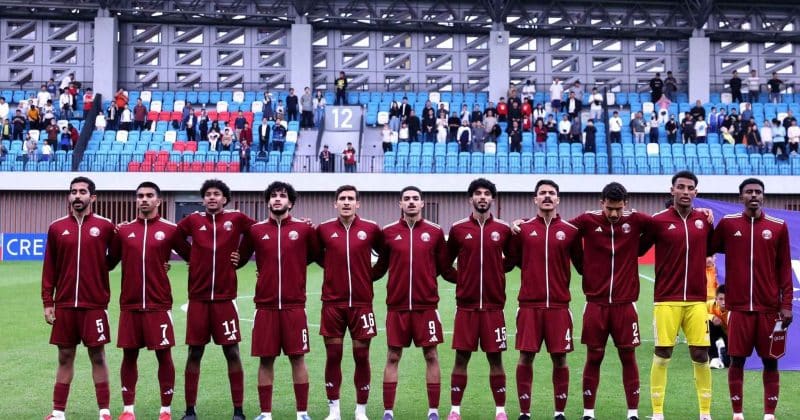
FIFA World Cup 2026 opener between Qatar and Switzerland carries big crypto implications
Kraken, Chainlink, and Chiliz fan tokens are positioning crypto at the center of the world's biggest sporting event.
Qatar and Switzerland will kick off Group B at the 2026 FIFA World Cup on June 13, 2026, at Levi’s Stadium in Santa Clara, California. It will be the first World Cup match ever played in the San Francisco Bay Area. The match is scheduled for 12:00 p.m. PT as Match 8 of the expanded 48-team tournament, which will be co-hosted across the US, Canada, and Mexico.
Crypto’s official seat at the table
Kraken has locked in the role of Official Crypto Exchange Supporter for the FIFA World Cup 2026.
Chainlink is powering FIFA’s first-ever official prediction market through a platform called ADI PredictStreet. For a tournament that will stretch across three countries and dozens of venues, having a decentralized data layer underpin predictions is a meaningful proof of concept for oracle networks beyond DeFi.
Fan tokens and the Chiliz effect
Chiliz, the blockchain network behind Socios.com, has long positioned itself as the backbone of sports fan engagement tokens. The Argentina fan token ($ARG) has been a notable beneficiary, with increased on-chain engagement as tournament hype builds. These tokens give holders voting rights on minor team decisions and access to exclusive experiences.
A low-cap token branded “WORLD CUP 2026” has also surfaced on select platforms, though it trades with minimal volume on limited venues.
The news moving money, markets, and the world—before your day starts.
Daily. Free. Join 34,000+ readers across crypto, finance, and policy.
A tale of two regulatory regimes
Qatar’s digital asset regulatory framework, which took effect in September 2024, classifies most cryptocurrencies and stablecoins as “Excluded Tokens.” In practice, that means the country that hosted the last World Cup has effectively shut its doors to the broader crypto market. Trading, issuing, and promoting most digital assets falls outside the scope of what’s permitted under the new rules.
Switzerland, meanwhile, has spent years building one of Europe’s most accommodating frameworks for digital assets. Its “Crypto Valley” in Zug remains a global hub for blockchain companies. While Switzerland doesn’t have a direct World Cup crypto sponsorship tied to this tournament, its regulatory climate means Swiss-based projects and exchanges can participate in the event’s crypto ecosystem without the legal friction their Qatari counterparts face.
What this means for investors
Chainlink’s role powering the official prediction market is a live stress test for its oracle infrastructure at massive scale across thousands of matches in a 48-team tournament.
The regulatory divergence between participating nations like Qatar and Switzerland could create uneven playing fields for crypto companies trying to activate around the World Cup. Projects operating in permissive jurisdictions will have more room to experiment with fan engagement tools, while those in restrictive markets may find themselves sidelined.