
World Cup law changes expand VAR intervention scope and crack down on timewasting
IFAB's sweeping rule overhaul for the 2026 World Cup introduces expanded video review, five-second countdowns, and a 10-second exit rule for substituted players.
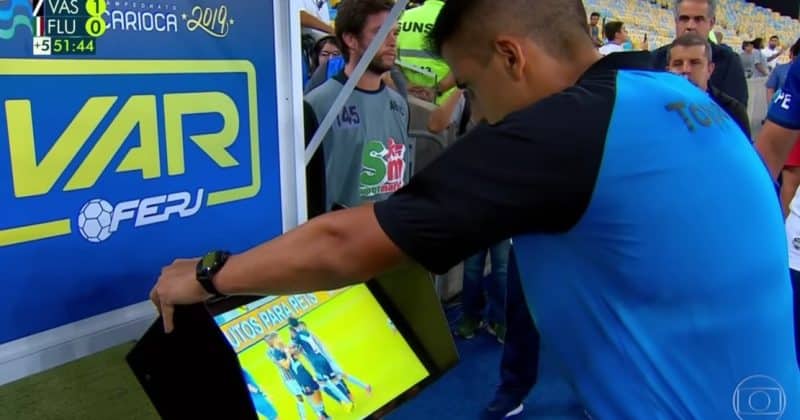
Football’s rule-making body just handed referees a significantly bigger toolbox, and the 2026 FIFA World Cup will be the proving ground. The International Football Association Board approved a package of law changes at its 140th Annual General Meeting on February 28, 2026, that expand what VAR can review, impose strict timekeeping on routine restarts, and effectively ban the theatrical slow-walk that substituted players have perfected over decades.
The changes take effect July 1, 2026, though early implementation is possible. Given that the World Cup kicks off June 11 across the US, Canada, and Mexico, these rules will almost certainly be in play from the tournament’s opening whistle.
What VAR can now review
Since its introduction, VAR has operated under a narrow mandate: clear and obvious errors involving goals, penalty decisions, direct red cards, and mistaken identity. That scope is about to get wider.
Under the new rules, VAR officials can now intervene on incorrectly awarded corner kicks. In English: if a referee points for a corner when the ball clearly came off an attacker, the video room can flag it. Corners lead to goals roughly 3-4% of the time in top-level football, which sounds small until you remember that World Cup knockout rounds are regularly decided by a single goal.
Second yellow cards are also now reviewable. Previously, a referee could send a player off with a second booking for a marginal foul, and there was no mechanism to reverse it. That changes in 2026. If the video review determines the second caution was wrongly issued, it can be overturned.
Cases of mistaken identity regarding player sanctions round out the expanded VAR scope.
The war on timewasting
Substituted players must now leave the field within 10 seconds. If they don’t, the restart goes to the opposing team.
The news moving money, markets, and the world—before your day starts.
Daily. Free. Join 34,000+ readers across crypto, finance, and policy.
Goal kicks and throw-ins must be taken within five seconds. For context, research into professional football has consistently shown that the average time to take a goal kick hovers well above 20 seconds, with some teams routinely pushing 30. Cutting that to five seconds is not a tweak. It is a fundamental change to how teams manage the tempo of a match.
Tactical timeouts, which had been experimented with in some competitions, are now explicitly banned under the new framework.
Why this matters beyond the pitch
The 2026 World Cup is the first edition with 48 teams, up from 32. That means more matches and more opportunities for controversial officiating decisions to dominate headlines.
Football has faced growing criticism that effective playing time has been shrinking. Some studies have put the figure below 55 minutes per 90-minute match. IFAB’s changes are a direct response to that trend.
For the sports betting industry, and particularly the growing number of crypto-native betting platforms, these rule changes introduce meaningful variables. Expanded VAR intervention means more potential for in-match corrections that alter outcomes. A wrongly awarded corner that leads to a goal could now be reviewed and potentially nullified.
Kraken, which was named the official crypto exchange supporter of the 2026 World Cup, sits at the intersection of these dynamics.
The five-second restart rule, if enforced consistently, could also change the statistical profile of matches. More ball-in-play time theoretically means more attacking actions, more shots, and more goals. Betting models built on historical data will need to account for a structurally different style of play.