
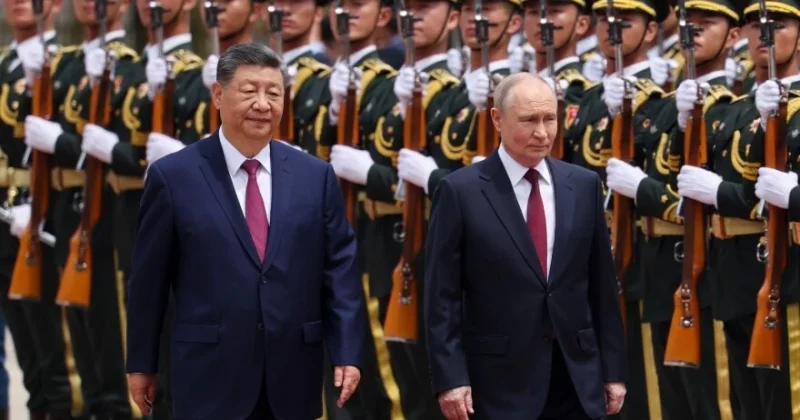
Xi Jinping and Vladimir Putin meet in Beijing, sign over 40 cooperation agreements
The summit deepens Russia-China economic ties across energy, trade, and technology, with implications for de-dollarization and digital currency adoption.
Days after Donald Trump departed Beijing, Vladimir Putin arrived. The timing was not subtle.
China’s President Xi Jinping and Russia’s Putin met in Beijing on Wednesday, signing more than 40 cooperation agreements spanning trade, energy, technology, and media. The two leaders framed their relationship as being at its highest level in history, a phrase that has become something of a diplomatic tradition at these summits but one that carries increasingly tangible economic weight.
Energy deals take center stage, but the big one remains elusive
The centerpiece of the summit was energy cooperation, and the numbers tell a clear story. Russia’s oil exports to China rose 35% year-on-year in Q1 2026, a continuation of the massive re-routing of Russian energy flows that began after Western sanctions made European markets increasingly hostile territory for Moscow.
But the deal everyone was watching for didn’t materialize. The multibillion-dollar Power of Siberia-2 gas pipeline, which would connect Russia’s vast Siberian gas fields to China through Mongolia, remains without a binding agreement. The pipeline has been discussed for years, and its absence from the final communique suggests the two sides still haven’t resolved pricing and volume terms.
The 40-plus agreements that were signed covered a wide range of cooperation areas. Technology coordination received particular emphasis, with both sides signaling deeper collaboration on sectors that Western export controls have tried to constrain. Media cooperation agreements were also included.
Macro, rates, and crypto—what moved markets and what matters next.
Daily. Free. Join 34,000+ readers across crypto, finance, and policy.
De-dollarization and the digital currency angle
Russia and China have been steadily increasing the share of bilateral trade settled in their own currencies rather than US dollars. Sanctions forced Russia’s hand, but China has been pursuing yuan internationalization as a strategic priority for over a decade.
Both nations are also developing tightly controlled central bank digital currencies. China’s digital yuan is the more advanced of the two, having undergone extensive pilot programs across major cities. Russia’s digital ruble is earlier in its development cycle but serves a similar strategic purpose: creating a financial infrastructure that can function independently of Western-controlled payment networks like SWIFT.
Both Beijing and Moscow have cracked down hard on decentralized cryptocurrencies while simultaneously building state-controlled digital alternatives. China’s ban on crypto trading remains firmly in place. Russia has oscillated between hostility and grudging tolerance, eventually carving out narrow legal frameworks for mining and cross-border settlement using digital assets.
What this means for investors
The absence of a Power of Siberia-2 deal is worth monitoring. If and when that pipeline agreement gets signed, it would lock in decades of yuan-denominated energy trade at massive scale, representing perhaps the single largest structural blow to petrodollar dynamics since the system was established in the 1970s.