
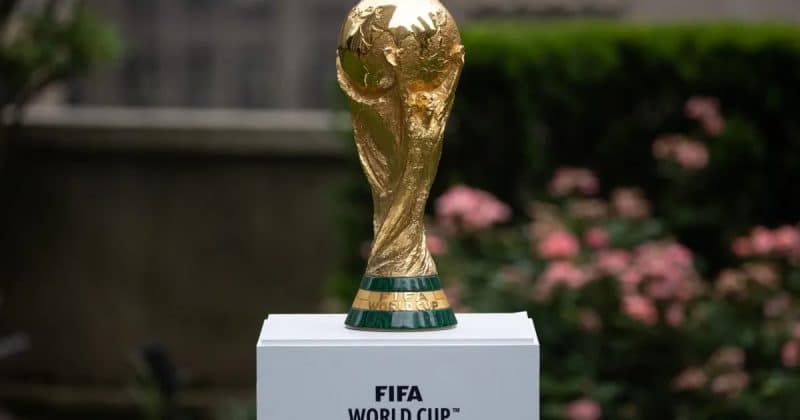
2026 World Cup’s expanded format means third-place teams can still advance, but only the best eight
FIFA's new 48-team tournament structure creates a complex survival math problem for teams that finish third in their group
The 2026 FIFA World Cup isn’t just bigger. It’s structurally different in ways that will keep managers up at night with a calculator.
With the tournament expanding from 32 to 48 teams across the United States, Canada, and Mexico, FIFA has introduced a format where 12 groups of four teams each feed into a Round of 32 knockout stage. The top two finishers from each group advance automatically, giving 24 teams a straightforward path. The remaining eight spots go to the best third-place finishers across all 12 groups, meaning four third-place teams go home while eight survive. That distinction will be decided by tiebreaker criteria that could turn a single yellow card into a tournament-ending event.
How the third-place ranking actually works
Here’s the thing about finishing third in a four-team group: it’s not inherently terrible. In a format with 12 groups, two-thirds of all third-place teams still advance.
FIFA’s tiebreaker system for ranking third-place teams operates like a cascading series of filters. Points come first, which is obvious. After that, goal difference separates the pack. If teams are still level, total goals scored becomes the deciding factor.
And if all of that produces a tie? FIFA turns to fair play scores, which account for yellow cards, red cards, and other disciplinary actions accumulated during the group stage. In English: a reckless tackle in a dead-rubber group match could literally eliminate your team from the tournament.
The final tiebreaker, if everything else fails, is FIFA World Ranking. That means a team’s pre-tournament standing, built over years of qualifying matches and friendlies, could be the thing that tips the scale in June.
The news moving money, markets, and the world—before your day starts.
Daily. Free. Join 34,000+ readers across crypto, finance, and policy.
Why this format exists in the first place
FIFA officially approved this structure in March 2023, settling on the 12-group format after considering alternatives that included groups of three.
The “best third-place” concept isn’t entirely new to international football. UEFA’s European Championship has used a similar mechanism in its expanded 24-team format since 2016, where the four best third-place teams from six groups advance to the Round of 16. But applying it across 12 groups is unprecedented at this scale.
The introduction of a Round of 32 is itself a significant departure. Previous World Cups moved directly from group play to a Round of 16. The additional knockout round means the tournament features 104 total matches, a substantial increase that stretches the event across more venues and more days.
What this means for teams and fans watching the tournament
Consider a scenario where a team has lost its first two matches. Under the old format, that team would almost certainly be eliminated before its third game. Under the 2026 rules, a strong final performance, even one that only produces a third-place finish, could still be enough to advance if the result is emphatic enough to produce a favorable goal difference.
The format hasn’t been modified since its initial announcement, with reporting as recently as June 2026 confirming the rules remain as FIFA set them three years ago. So there won’t be any last-minute surprises on structure. The surprises will come on the pitch, where the difference between going home and playing in the Round of 32 might be a single goal, or a single card, in a match happening thousands of miles away.