
Absci Corporation progresses ABS-201 into human trials, bolstering AI-driven drug discovery
The generative AI drug design company dosed its first patients in a clinical trial for an AI-designed antibody, moving from concept to clinic in roughly 24 months
Absci Corporation has begun dosing patients in the first human trial of ABS-201, a monoclonal antibody designed entirely by generative AI. The Phase 1/2a trial, dubbed HEADLINE, kicked off on December 4, 2025, in Australia, marking what may be one of the fastest concept-to-clinic timelines in biotech history: approximately 24 months.
What ABS-201 actually does
The drug targets the prolactin receptor, or PRLR, with the goal of enhancing hair follicle regeneration. In plain terms, it’s a treatment for androgenetic alopecia, the most common form of hair loss.
ABS-201 has been engineered with an extended half-life, meaning it stays active in the body longer than standard antibodies. Preclinical data showed it produced superior hair regrowth compared to existing options. The HEADLINE trial is randomized, double-blind, and placebo-controlled, involving up to 227 healthy participants, both with and without hair loss conditions.
A multi-ascending dose portion of the trial is expected in Q2 2026. Proof-of-concept data should arrive in the second half of 2026.
The AI platform behind the drug
Absci’s pitch is that its Integrated Drug Creation platform can compress the traditional drug discovery timeline from years into months. ABS-201 is the first real test of that claim in a clinical setting.
AI, tech, and the markets they move—in one daily briefing.
Daily. Free. Join 34,000+ readers across crypto, finance, and policy.
In January 2025, Absci announced a strategic collaboration with AMD that included a $20 million equity investment. The partnership is designed to optimize Absci’s AI workloads, essentially giving the company access to more powerful compute infrastructure to train and run its generative models.
Absci raised $64 million in equity financing in mid-2025, which the company said extends its operational runway through mid-2028.
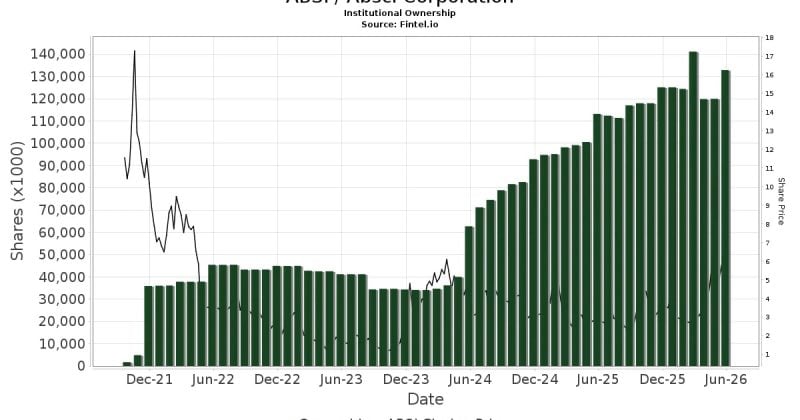
Absci trades on NASDAQ under the ticker ABSI. The risk calculus here is straightforward. Phase 1/2a trials are early-stage. The majority of drugs that enter clinical trials never reach the market. Hair regrowth endpoints, while easier to measure than many disease indications, still need to show statistically significant improvement over placebo in a controlled setting.