
AI trade shifts focus from chips to infrastructure, and two stocks are cashing in

AI trade shifts focus from chips to infrastructure, and two stocks are cashing in

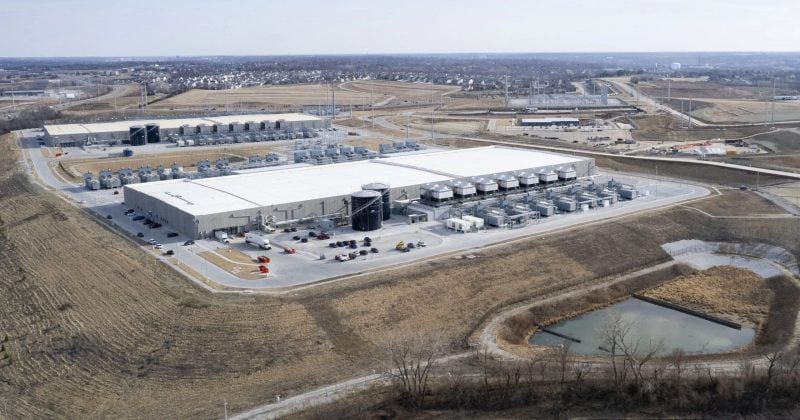
Vertiv Holdings and Bloom Energy are riding a wave of spending on power and cooling as investors look beyond Nvidia for AI exposure

Analysts now estimate that chips account for roughly 25% of total AI infrastructure spending. The other 75% goes toward power management, cooling systems, and the actual buildout of data centers. Two companies sitting squarely in that 75% zone, Vertiv Holdings and Bloom Energy, just posted quarterly results that explain why Wall Street is paying attention.

The numbers behind the pivot

Vertiv, which makes power and thermal management systems for data centers, reported Q1 2026 revenue of $2.65 billion. That’s a 30% jump year-over-year, with organic growth clocking in at 23%.

Adjusted earnings per share surged 83%. Vertiv’s backlog now exceeds $15 billion, and management raised its full-year sales guidance to approximately $13.75 billion.

Advertisement

Bloom Energy’s quarter was even more dramatic. Revenue soared 130% year-over-year to $751 million, and the company crossed into profitability territory with net income of roughly $71 million.

Bloom also expanded its partnership with Oracle to include up to 2.8 GW of capacity and secured a financing arrangement with Brookfield for up to $25 billion.

The crypto connection: Bitcoin miners find a second life

Former Bitcoin mining operations, which already possess massive high-power facilities and relationships with energy providers, are pivoting hard into AI data center hosting.

IREN, a company with roots in crypto mining, has secured a $3.4 billion deal with Nvidia for GPU cloud computing and announced a 5 GW infrastructure partnership.

For investors looking at this space, the key metric to watch isn’t chip sales anymore. It’s power capacity, measured in gigawatts, and backlog growth at companies like Vertiv and Bloom. Vertiv’s $15 billion-plus backlog suggests demand visibility stretching well into 2027 and beyond. Bloom’s Oracle expansion to 2.8 GW shows that even the largest enterprise buyers are betting on alternative power solutions.

Disclosure: This article was edited by Editorial Team. For more information on how we create and review content, see our Editorial Policy.

AI trade shifts focus from chips to infrastructure, and two stocks are cashing in

AI trade shifts focus from chips to infrastructure, and two stocks are cashing in

Vertiv Holdings and Bloom Energy are riding a wave of spending on power and cooling as investors look beyond Nvidia for AI exposure

Analysts now estimate that chips account for roughly 25% of total AI infrastructure spending. The other 75% goes toward power management, cooling systems, and the actual buildout of data centers. Two companies sitting squarely in that 75% zone, Vertiv Holdings and Bloom Energy, just posted quarterly results that explain why Wall Street is paying attention.

The numbers behind the pivot

Vertiv, which makes power and thermal management systems for data centers, reported Q1 2026 revenue of $2.65 billion. That’s a 30% jump year-over-year, with organic growth clocking in at 23%.

Adjusted earnings per share surged 83%. Vertiv’s backlog now exceeds $15 billion, and management raised its full-year sales guidance to approximately $13.75 billion.

Advertisement

Bloom Energy’s quarter was even more dramatic. Revenue soared 130% year-over-year to $751 million, and the company crossed into profitability territory with net income of roughly $71 million.

Bloom also expanded its partnership with Oracle to include up to 2.8 GW of capacity and secured a financing arrangement with Brookfield for up to $25 billion.

The crypto connection: Bitcoin miners find a second life

Former Bitcoin mining operations, which already possess massive high-power facilities and relationships with energy providers, are pivoting hard into AI data center hosting.

IREN, a company with roots in crypto mining, has secured a $3.4 billion deal with Nvidia for GPU cloud computing and announced a 5 GW infrastructure partnership.

For investors looking at this space, the key metric to watch isn’t chip sales anymore. It’s power capacity, measured in gigawatts, and backlog growth at companies like Vertiv and Bloom. Vertiv’s $15 billion-plus backlog suggests demand visibility stretching well into 2027 and beyond. Bloom’s Oracle expansion to 2.8 GW shows that even the largest enterprise buyers are betting on alternative power solutions.

Disclosure: This article was edited by Editorial Team. For more information on how we create and review content, see our Editorial Policy.