
OpenAI’s Sam Altman says AI unlikely to cause jobs apocalypse

OpenAI’s Sam Altman says AI unlikely to cause jobs apocalypse

The OpenAI CEO admits he overestimated AI's near-term impact on white-collar employment, calling the resilience of jobs a welcome surprise.

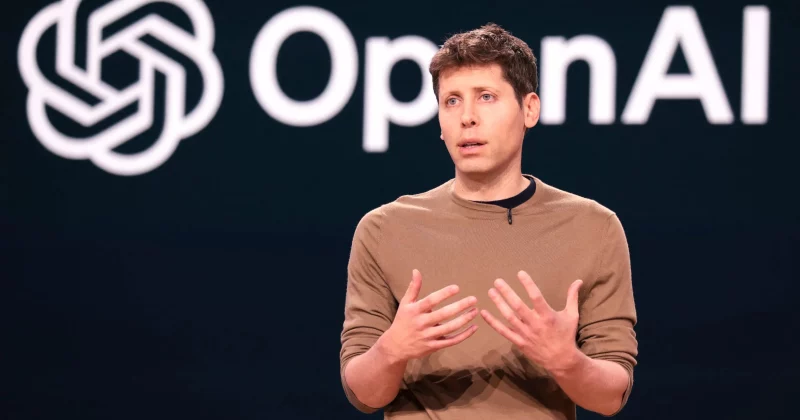
The man building what many consider the most disruptive technology in a generation just admitted it hasn’t been nearly as disruptive as he thought. OpenAI CEO Sam Altman said on May 26 that AI has not eliminated as many white-collar jobs as he expected, calling the technology’s impact on employment far less severe than earlier projections suggested.

“I’m delighted to be wrong about this,” Altman said, a notable concession from someone who projected in 2025 that AI could replace 30% to 40% of work tasks in the near future.

From doom forecasts to cautious optimism

Just last year, he was pointing to customer support roles as early targets for AI-induced disruption. The broader AI industry was buzzing with forecasts of mass white-collar unemployment, painting a picture where entry-level analysts, junior coders, and call center agents would be the first casualties of the chatbot revolution.

Advertisement

Altman now acknowledges that actual job losses in high-exposure sectors have been minimal since early 2023. Yale-linked studies corroborate this, showing no significant employment decline in occupations most exposed to AI capabilities over that same period.

This doesn’t mean AI isn’t changing how work gets done. But there’s a growing distinction between “AI handles 35% of the tasks within a job” and “AI eliminates 35% of jobs.” Those are wildly different outcomes, and the data so far points firmly toward the former.

Altman emphasized that while specific job roles may evolve or become obsolete over time, new opportunities historically emerge as society adapts to technological shifts.

What this means for investors

Altman’s involvement with the World project, which focuses on biometric identity verification in an AI-integrated world, remains a connective thread between his AI work and the crypto ecosystem. The project’s premise, that humans will need a way to prove they’re not bots as AI proliferates, still holds regardless of the employment picture.

The more nuanced reality, where AI augments workers rather than replacing them, actually points toward a different investment thesis entirely. Companies building productivity tools, workflow automation, and AI copilot features may have more durable business models than companies betting on full labor replacement.

Disclosure: This article was edited by Editorial Team. For more information on how we create and review content, see our Editorial Policy.

OpenAI’s Sam Altman says AI unlikely to cause jobs apocalypse

OpenAI’s Sam Altman says AI unlikely to cause jobs apocalypse

The OpenAI CEO admits he overestimated AI's near-term impact on white-collar employment, calling the resilience of jobs a welcome surprise.

The man building what many consider the most disruptive technology in a generation just admitted it hasn’t been nearly as disruptive as he thought. OpenAI CEO Sam Altman said on May 26 that AI has not eliminated as many white-collar jobs as he expected, calling the technology’s impact on employment far less severe than earlier projections suggested.

“I’m delighted to be wrong about this,” Altman said, a notable concession from someone who projected in 2025 that AI could replace 30% to 40% of work tasks in the near future.

From doom forecasts to cautious optimism

Just last year, he was pointing to customer support roles as early targets for AI-induced disruption. The broader AI industry was buzzing with forecasts of mass white-collar unemployment, painting a picture where entry-level analysts, junior coders, and call center agents would be the first casualties of the chatbot revolution.

Advertisement

Altman now acknowledges that actual job losses in high-exposure sectors have been minimal since early 2023. Yale-linked studies corroborate this, showing no significant employment decline in occupations most exposed to AI capabilities over that same period.

This doesn’t mean AI isn’t changing how work gets done. But there’s a growing distinction between “AI handles 35% of the tasks within a job” and “AI eliminates 35% of jobs.” Those are wildly different outcomes, and the data so far points firmly toward the former.

Altman emphasized that while specific job roles may evolve or become obsolete over time, new opportunities historically emerge as society adapts to technological shifts.

What this means for investors

Altman’s involvement with the World project, which focuses on biometric identity verification in an AI-integrated world, remains a connective thread between his AI work and the crypto ecosystem. The project’s premise, that humans will need a way to prove they’re not bots as AI proliferates, still holds regardless of the employment picture.

The more nuanced reality, where AI augments workers rather than replacing them, actually points toward a different investment thesis entirely. Companies building productivity tools, workflow automation, and AI copilot features may have more durable business models than companies betting on full labor replacement.

Disclosure: This article was edited by Editorial Team. For more information on how we create and review content, see our Editorial Policy.