
Amazon Leo deploys 396 satellites, nearing Starlink competition

Amazon Leo deploys 396 satellites, nearing Starlink competition

Amazon's rebranded satellite internet project hits a deployment milestone that puts commercial service on track for mid-2026

Amazon now has 396 satellites circling the planet in low-Earth orbit, and the company says that’s enough hardware to start delivering continuous internet service across its initial coverage zones. The milestone, achieved with a launch completed this week, puts Amazon Leo firmly on track for its mid-2026 commercial availability target.

For context, SpaceX kicked off Starlink’s famously self-deprecating “Better than nothing beta” back in 2020 with nearly 900 satellites already in orbit. Amazon is arriving to the party roughly six years late, with less than half that satellite count.

The road from Project Kuiper to Amazon Leo

The project formerly known as Project Kuiper got a rebrand in November 2025, emerging as Amazon Leo. The name change came as Amazon shifted from prototype testing into large-scale production satellite launches, which began in earnest around April 2025.

Advertisement

The full constellation plan calls for 3,236 satellites. At 396 deployed, Amazon is roughly 12% of the way there.

Chris Weber, VP heading up business and product for Amazon Leo, confirmed the current deployment is “enough to support continuous service across initial latitudes.”

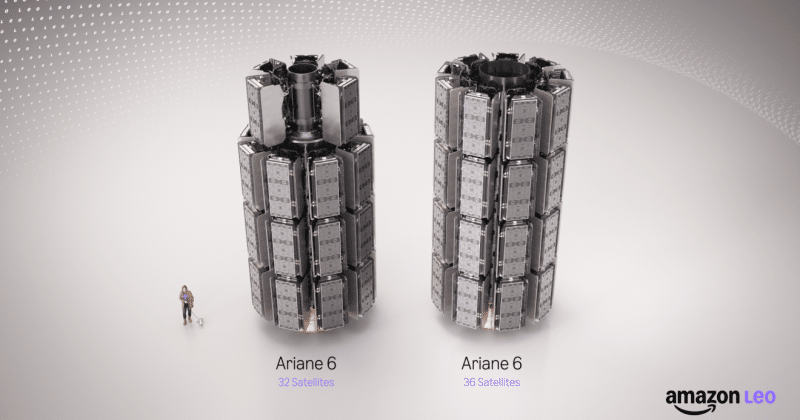
Amazon has lined up Arianespace and United Launch Alliance as key launch partners. A June 2026 mission managed to deploy 36 satellites in a single launch.

What this means for digital infrastructure and crypto

Decentralized finance protocols, crypto exchanges, and blockchain-based payment systems all require one fundamental ingredient: internet access. Amazon Leo has reportedly been exploring partnerships to develop ground infrastructure in markets like Kenya, which aligns with the broader thesis that satellite broadband could be the on-ramp for millions of new digital economy participants.

Amazon Leo itself has no direct crypto or blockchain component. This is a traditional broadband play. Adding a second major satellite broadband provider creates redundancy, drives down pricing through competition, and increases the likelihood that connectivity gaps shrink faster.

Disclosure: This article was edited by Editorial Team. For more information on how we create and review content, see our Editorial Policy.

Amazon Leo deploys 396 satellites, nearing Starlink competition

Amazon Leo deploys 396 satellites, nearing Starlink competition

Amazon's rebranded satellite internet project hits a deployment milestone that puts commercial service on track for mid-2026

Amazon now has 396 satellites circling the planet in low-Earth orbit, and the company says that’s enough hardware to start delivering continuous internet service across its initial coverage zones. The milestone, achieved with a launch completed this week, puts Amazon Leo firmly on track for its mid-2026 commercial availability target.

For context, SpaceX kicked off Starlink’s famously self-deprecating “Better than nothing beta” back in 2020 with nearly 900 satellites already in orbit. Amazon is arriving to the party roughly six years late, with less than half that satellite count.

The road from Project Kuiper to Amazon Leo

The project formerly known as Project Kuiper got a rebrand in November 2025, emerging as Amazon Leo. The name change came as Amazon shifted from prototype testing into large-scale production satellite launches, which began in earnest around April 2025.

Advertisement

The full constellation plan calls for 3,236 satellites. At 396 deployed, Amazon is roughly 12% of the way there.

Chris Weber, VP heading up business and product for Amazon Leo, confirmed the current deployment is “enough to support continuous service across initial latitudes.”

Amazon has lined up Arianespace and United Launch Alliance as key launch partners. A June 2026 mission managed to deploy 36 satellites in a single launch.

What this means for digital infrastructure and crypto

Decentralized finance protocols, crypto exchanges, and blockchain-based payment systems all require one fundamental ingredient: internet access. Amazon Leo has reportedly been exploring partnerships to develop ground infrastructure in markets like Kenya, which aligns with the broader thesis that satellite broadband could be the on-ramp for millions of new digital economy participants.

Amazon Leo itself has no direct crypto or blockchain component. This is a traditional broadband play. Adding a second major satellite broadband provider creates redundancy, drives down pricing through competition, and increases the likelihood that connectivity gaps shrink faster.

Disclosure: This article was edited by Editorial Team. For more information on how we create and review content, see our Editorial Policy.