
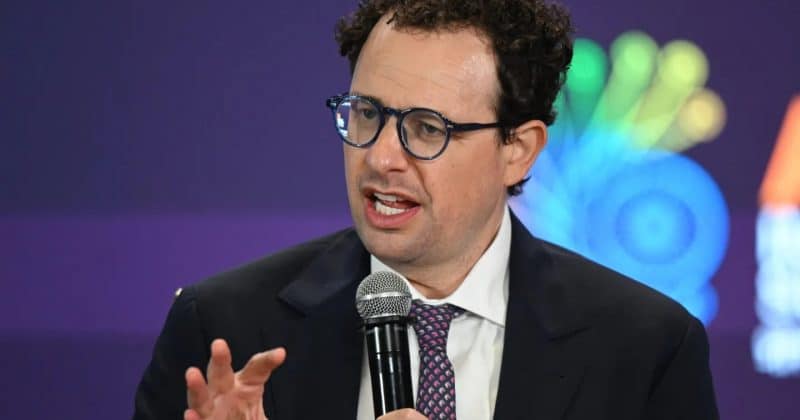
Anthropic CEO Dario Amodei calls for government power to block risky AI models
The Anthropic co-founder wants federal authorities to have veto power over dangerous AI deployments, even as his own company battles the Pentagon over safety guardrails.


Anthropic CEO Dario Amodei said governments should be able to block artificial intelligence companies from releasing powerful new models if outside testing shows they pose unacceptable risks.
In a Wednesday essay, Amodei argued that advanced AI systems should face mandatory third party evaluations before deployment, with reviewers assessing risks across areas such as cybersecurity, biological threats, and other misuse scenarios.
If a model is found to present unacceptable risks, Amodei wrote, the government should have the authority to block or deter its release.
The remarks mark one of Amodei’s strongest calls yet for binding AI regulation, moving beyond the voluntary transparency frameworks that have shaped much of the policy debate around frontier models. He compared advanced AI to cars, airplanes, and drugs, arguing that powerful technologies can be essential to the economy while still requiring strict safety rules before they reach the public.
The comments also place Anthropic in sharper contrast with the Trump administration’s current approach. Earlier this month, the White House outlined a more hands off framework for AI cybersecurity, calling for voluntary government access to models but stopping short of requiring developers to seek explicit approval before deployment.
Amodei said that approach does not go far enough.
AI, tech, and the markets they move—in one daily briefing.
Daily. Free. Join 34,000+ readers across crypto, finance, and policy.
“It is time to go beyond transparency to more serious and binding regulation of AI,” he wrote.
The push comes as Anthropic faces fresh scrutiny over Mythos, a powerful model the company said could identify and exploit vulnerabilities in critical software.
Anthropic limited the release of Mythos to select partners, citing its potential risks, before later releasing a different version without access to the same cybersecurity capabilities.
Amodei cited Mythos as an example of both AI’s promise and its danger, saying the model showed why policymakers need to move faster as capabilities improve.
The debate has become increasingly central to Anthropic’s public positioning. The company has long branded itself as a more cautious AI developer, but its calls for stronger regulation also come as rivals race to release more capable systems across coding, cybersecurity, research, and autonomous agent tasks.
Amodei said governments and AI developers need to build a stronger policy process before the risks compound further.
“We now, globally and collectively, need to activate a slow and rickety policy apparatus to deal with risks and opportunities that are going to compound surprisingly quickly from here,” he wrote.