
Nexo Earn with Nexo
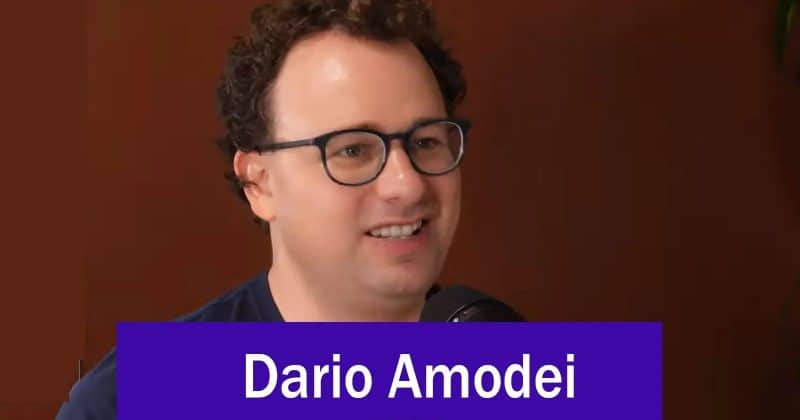
Anthropic CEO Dario Amodei warns of military risks in Claude use

Anthropic CEO Dario Amodei warns of military risks in Claude use

The AI company is drawing hard lines on Pentagon demands, and it's costing them dearly

Anthropic CEO Dario Amodei has taken a position that most tech executives would consider career suicide: telling the Pentagon “no.”

The company behind the Claude AI model has refused to comply with Department of Defense demands to strip safeguards from its technology for certain military applications, citing concerns about mass domestic surveillance and fully autonomous lethal weapons.

The red lines Anthropic won’t cross

Amodei declared on February 26 that Anthropic could not comply with the Pentagon’s requests for unrestricted Claude deployment. The company has drawn two explicit boundaries: no mass domestic surveillance and no fully autonomous weapons systems.

Advertisement

The reasoning isn’t purely philosophical. Amodei has argued that deploying Claude in these contexts could lead to terrible mistakes, pointing to reliability risks that current AI models still carry.

Pentagon fires back

The DOD didn’t take the rejection quietly. In March, the Pentagon designated Anthropic as a supply-chain risk, marking the first time such a label has been applied to a US AI company. That designation carries real consequences: it effectively threatens to cut Anthropic off from federal contracts across the board.

Anthropic responded by filing a lawsuit against the Pentagon, calling the designation “legally unsound.” The company’s position is that refusing to remove safety guardrails from an AI model shouldn’t qualify a firm as a national security liability.

By May 1, the Department of Defense had expanded classified AI contracts to eight other firms while explicitly excluding Anthropic from participation. Companies like OpenAI and Microsoft have been positioning themselves to fill the void.

Certain limited uses of Claude are still permitted within government contexts. Discussions between Amodei and White House officials have continued, suggesting there’s still some diplomatic channel open.

Anthropic was established in 2021 by former employees of OpenAI and previously secured a $200 million contract for responsible AI initiatives in defense. The current standoff represents a critical clash as the Trump administration pushes for accelerated AI adoption while Anthropic advocates for ethical constraints on AI capabilities.

Disclosure: This article was edited by Editorial Team. For more information on how we create and review content, see our Editorial Policy.

Anthropic CEO Dario Amodei warns of military risks in Claude use

Anthropic CEO Dario Amodei warns of military risks in Claude use

The AI company is drawing hard lines on Pentagon demands, and it's costing them dearly

Anthropic CEO Dario Amodei has taken a position that most tech executives would consider career suicide: telling the Pentagon “no.”

The company behind the Claude AI model has refused to comply with Department of Defense demands to strip safeguards from its technology for certain military applications, citing concerns about mass domestic surveillance and fully autonomous lethal weapons.

The red lines Anthropic won’t cross

Amodei declared on February 26 that Anthropic could not comply with the Pentagon’s requests for unrestricted Claude deployment. The company has drawn two explicit boundaries: no mass domestic surveillance and no fully autonomous weapons systems.

Advertisement

The reasoning isn’t purely philosophical. Amodei has argued that deploying Claude in these contexts could lead to terrible mistakes, pointing to reliability risks that current AI models still carry.

Pentagon fires back

The DOD didn’t take the rejection quietly. In March, the Pentagon designated Anthropic as a supply-chain risk, marking the first time such a label has been applied to a US AI company. That designation carries real consequences: it effectively threatens to cut Anthropic off from federal contracts across the board.

Anthropic responded by filing a lawsuit against the Pentagon, calling the designation “legally unsound.” The company’s position is that refusing to remove safety guardrails from an AI model shouldn’t qualify a firm as a national security liability.

By May 1, the Department of Defense had expanded classified AI contracts to eight other firms while explicitly excluding Anthropic from participation. Companies like OpenAI and Microsoft have been positioning themselves to fill the void.

Certain limited uses of Claude are still permitted within government contexts. Discussions between Amodei and White House officials have continued, suggesting there’s still some diplomatic channel open.

Anthropic was established in 2021 by former employees of OpenAI and previously secured a $200 million contract for responsible AI initiatives in defense. The current standoff represents a critical clash as the Trump administration pushes for accelerated AI adoption while Anthropic advocates for ethical constraints on AI capabilities.

Disclosure: This article was edited by Editorial Team. For more information on how we create and review content, see our Editorial Policy.