
Nexo Earn with Nexo
Apple unveils redesigned Siri AI with Gemini technology, beta launch later this year

Apple unveils redesigned Siri AI with Gemini technology, beta launch later this year

Apple's $1 billion annual deal with Google powers a rebuilt voice assistant that won't hit most global markets at launch.


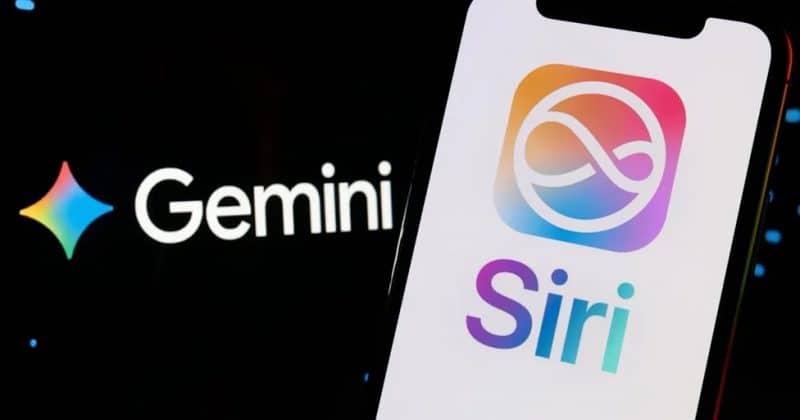
Apple unveiled a rebuilt Siri AI at WWDC 2026, turning to Google’s Gemini models to give its long criticized voice assistant a more serious role in the AI race.

The new Siri is designed to move beyond basic voice commands and behave more like a contextual AI assistant. It can understand what is on screen, answer questions based on personal context, and take actions across apps.

Apple is also giving Siri its own dedicated app, a notable break from the assistant’s old role as a floating voice interface inside iOS. The standalone experience puts Siri closer to products such as ChatGPT, Gemini, and Claude, where users expect a full AI workspace rather than a voice shortcut.

Advertisement

The upgrade is expected to launch in beta later this year alongside iOS 27 and iPadOS 27. Initial support will focus on English language users, with the EU and China excluded from the first rollout because of regulatory constraints.

The most important part of the announcement is the Google partnership. Apple is using Gemini models to power the new Siri experience, while routing requests through its Private Cloud Compute infrastructure. Apple says the system is designed so user data is not stored or exposed as part of cloud based AI processing.

The decision marks a major strategic reversal. Siri launched in 2011 as one of the first mainstream voice assistants, but Apple fell behind as generative AI reshaped consumer software. Internal AI delays and the company’s privacy first approach left it struggling to match rivals that were more aggressive with cloud based models.

Apple has worked with Google before through Safari search, but Siri is different. Search is mostly invisible to users. Siri is one of Apple’s most recognizable software products, making the use of Gemini a much more visible concession.

For Google, the deal is a major validation of Gemini as enterprise grade AI infrastructure. Its models will power AI features across Apple’s device ecosystem, even if Apple’s privacy layer limits what Google can learn from that usage.

For Apple, the risk is dependency. A better Siri could strengthen the iPhone’s AI position, but relying on Google also highlights how far Apple had fallen behind in foundation models.

Disclosure: This article was edited by Editorial Team. For more information on how we create and review content, see our Editorial Policy.

Apple unveils redesigned Siri AI with Gemini technology, beta launch later this year

Apple unveils redesigned Siri AI with Gemini technology, beta launch later this year

Apple's $1 billion annual deal with Google powers a rebuilt voice assistant that won't hit most global markets at launch.

Share

Add us on Google

Apple unveiled a rebuilt Siri AI at WWDC 2026, turning to Google’s Gemini models to give its long criticized voice assistant a more serious role in the AI race.

The new Siri is designed to move beyond basic voice commands and behave more like a contextual AI assistant. It can understand what is on screen, answer questions based on personal context, and take actions across apps.

Apple is also giving Siri its own dedicated app, a notable break from the assistant’s old role as a floating voice interface inside iOS. The standalone experience puts Siri closer to products such as ChatGPT, Gemini, and Claude, where users expect a full AI workspace rather than a voice shortcut.

Advertisement

The upgrade is expected to launch in beta later this year alongside iOS 27 and iPadOS 27. Initial support will focus on English language users, with the EU and China excluded from the first rollout because of regulatory constraints.

The most important part of the announcement is the Google partnership. Apple is using Gemini models to power the new Siri experience, while routing requests through its Private Cloud Compute infrastructure. Apple says the system is designed so user data is not stored or exposed as part of cloud based AI processing.

The decision marks a major strategic reversal. Siri launched in 2011 as one of the first mainstream voice assistants, but Apple fell behind as generative AI reshaped consumer software. Internal AI delays and the company’s privacy first approach left it struggling to match rivals that were more aggressive with cloud based models.

Apple has worked with Google before through Safari search, but Siri is different. Search is mostly invisible to users. Siri is one of Apple’s most recognizable software products, making the use of Gemini a much more visible concession.

For Google, the deal is a major validation of Gemini as enterprise grade AI infrastructure. Its models will power AI features across Apple’s device ecosystem, even if Apple’s privacy layer limits what Google can learn from that usage.

For Apple, the risk is dependency. A better Siri could strengthen the iPhone’s AI position, but relying on Google also highlights how far Apple had fallen behind in foundation models.

Disclosure: This article was edited by Editorial Team. For more information on how we create and review content, see our Editorial Policy.