
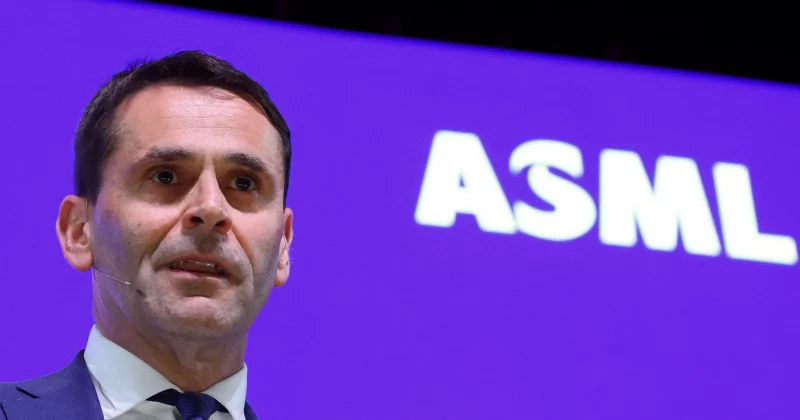
ASML CEO highlights Starlink as key driver of chip demand through 2030
Christophe Fouquet projects a $1.5 trillion global chip market by the end of the decade, with satellite constellations joining AI as a major demand engine.
The company that makes the machines that make the chips just pointed to an unexpected source of demand: satellites. ASML CEO Christophe Fouquet singled out SpaceX’s Starlink constellation as a significant and growing driver of semiconductor consumption, placing satellite infrastructure alongside AI and robotics as pillars of chip demand through 2030.
Fouquet projects the global semiconductor market will reach roughly $1.5 trillion by the end of the decade.
Why satellites eat chips for breakfast
Each Starlink satellite contains hundreds of individual chips. When you multiply that across the thousands of satellites SpaceX plans to launch, you get a demand curve that starts to look less like a niche aerospace requirement and more like a structural shift in who’s buying semiconductors and why.
ASML sits at the very center of this supply chain. The Dutch company manufactures extreme ultraviolet (EUV) lithography machines, the tools that chipmakers like TSMC, Samsung, and Intel use to print the most advanced semiconductors. ASML is the one company that every major chipmaker in the world depends on, and it currently has no real competitor in EUV technology.
Fouquet acknowledged that ASML faces supply limitations driven by high demand for its advanced lithography tools. The company is, in effect, a choke point in global chip manufacturing.
Macro, rates, and crypto—what moved markets and what matters next.
Daily. Free. Join 34,000+ readers across crypto, finance, and policy.
The geopolitical wrinkle
Fouquet also addressed US-China export controls, which limit the sale of advanced chip-making equipment to Chinese firms. ASML has been directly affected by these restrictions, which restrict certain shipments to China. The policy has forced a recalculation of revenue expectations for the China market while simultaneously accelerating investment in chip fabrication capacity in the US, Europe, and allied nations.
What this means for crypto and decentralized infrastructure
ASML doesn’t have a token. Neither does SpaceX. There’s no direct crypto play here in the conventional sense, with exposure limited to thematic plays in decentralized infrastructure and AI-compute tokens.
The risk for investors in this thematic crossover is straightforward: correlation is not causation. The fact that semiconductor demand is rising doesn’t automatically translate into higher valuations for DePIN or AI-compute tokens. These projects need to demonstrate actual utilization, revenue, and network growth, not just narrative alignment with macro trends.