
ASML’s China revenue drops sharply as US export controls reshape the semiconductor supply chain

ASML’s China revenue drops sharply as US export controls reshape the semiconductor supply chain

The world's most important chipmaking equipment company is pivoting away from its biggest growth market, and the ripple effects will hit every corner of tech.

ASML, the Dutch company that holds a near-monopoly on the machines needed to manufacture advanced semiconductors, is preparing to address two of the most consequential forces shaping the chip industry: surging AI-driven demand and tightening US export controls on China. The company’s Q2 2026 earnings report, expected around July 15, arrives at a moment when both forces are pulling the semiconductor supply chain in opposite directions.

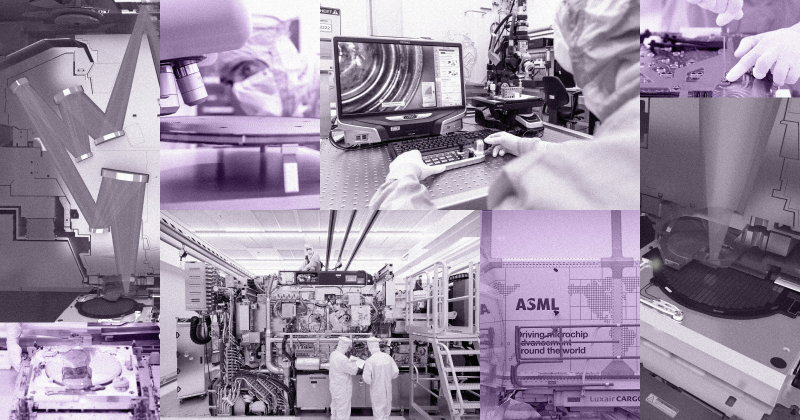
ASML is the only company on Earth that makes extreme ultraviolet (EUV) lithography machines, the tools required to produce the most advanced chips powering everything from AI data centers to next-generation smartphones.

China’s shrinking slice of the pie

The most striking number heading into the earnings call is this: China’s share of ASML’s system sales plummeted from 36% in Q4 2025 to just 19% in Q1 2026. China accounted for roughly 33% of ASML’s total revenue across all of 2025. The company now expects the region to hover around 20% for the full year 2026 under current geopolitical conditions.

Advertisement

The MATCH Act, a piece of US legislation currently working its way through Congress, aims to tighten restrictions specifically on ASML’s deep ultraviolet (DUV) tools and related services destined for China. DUV machines are less advanced than EUV systems but still critical for producing a wide range of semiconductors.

AI demand fills the gap, and then some

ASML reported Q1 2026 net sales of €8.8 billion and raised its full-year 2026 revenue guidance to €36-40 billion, up from a previous range of €34-39 billion.

To meet AI-driven demand, ASML plans to ship 60 low-NA EUV tools in 2026, representing a 25% increase compared to 2025 deliveries. The company is already looking further ahead, with plans to have capacity for up to 80 tools available in 2027.

CEO Christophe Fouquet and CFO Roger Dassen are expected to detail these capacity initiatives during the upcoming earnings call, along with updates on how supply chain partners are scaling to support the higher volumes.

Why crypto and tech investors should care

ASML sits at the very top of the semiconductor food chain, which makes its earnings reports a leading indicator for the entire AI hardware ecosystem. The same GPU clusters that power crypto mining operations, blockchain validation, and AI-driven trading algorithms all depend on chips manufactured with ASML’s equipment.

Export controls that limit Chinese access to advanced chipmaking equipment also limit China’s ability to domestically produce cutting-edge GPUs and AI accelerators. If the MATCH Act passes and further restricts DUV tool sales to China, the ripple effects could accelerate a bifurcation of the global semiconductor supply chain into US-allied and China-aligned ecosystems.

Investors watching ASML’s earnings should pay close attention to two metrics: the booking figures for new EUV orders, which indicate future demand, and any updated commentary on the timeline and impact of US export control legislation.

Disclosure: This article was edited by Editorial Team. For more information on how we create and review content, see our Editorial Policy.

ASML’s China revenue drops sharply as US export controls reshape the semiconductor supply chain

ASML’s China revenue drops sharply as US export controls reshape the semiconductor supply chain

The world's most important chipmaking equipment company is pivoting away from its biggest growth market, and the ripple effects will hit every corner of tech.

ASML, the Dutch company that holds a near-monopoly on the machines needed to manufacture advanced semiconductors, is preparing to address two of the most consequential forces shaping the chip industry: surging AI-driven demand and tightening US export controls on China. The company’s Q2 2026 earnings report, expected around July 15, arrives at a moment when both forces are pulling the semiconductor supply chain in opposite directions.

ASML is the only company on Earth that makes extreme ultraviolet (EUV) lithography machines, the tools required to produce the most advanced chips powering everything from AI data centers to next-generation smartphones.

China’s shrinking slice of the pie

The most striking number heading into the earnings call is this: China’s share of ASML’s system sales plummeted from 36% in Q4 2025 to just 19% in Q1 2026. China accounted for roughly 33% of ASML’s total revenue across all of 2025. The company now expects the region to hover around 20% for the full year 2026 under current geopolitical conditions.

Advertisement

The MATCH Act, a piece of US legislation currently working its way through Congress, aims to tighten restrictions specifically on ASML’s deep ultraviolet (DUV) tools and related services destined for China. DUV machines are less advanced than EUV systems but still critical for producing a wide range of semiconductors.

AI demand fills the gap, and then some

ASML reported Q1 2026 net sales of €8.8 billion and raised its full-year 2026 revenue guidance to €36-40 billion, up from a previous range of €34-39 billion.

To meet AI-driven demand, ASML plans to ship 60 low-NA EUV tools in 2026, representing a 25% increase compared to 2025 deliveries. The company is already looking further ahead, with plans to have capacity for up to 80 tools available in 2027.

CEO Christophe Fouquet and CFO Roger Dassen are expected to detail these capacity initiatives during the upcoming earnings call, along with updates on how supply chain partners are scaling to support the higher volumes.

Why crypto and tech investors should care

ASML sits at the very top of the semiconductor food chain, which makes its earnings reports a leading indicator for the entire AI hardware ecosystem. The same GPU clusters that power crypto mining operations, blockchain validation, and AI-driven trading algorithms all depend on chips manufactured with ASML’s equipment.

Export controls that limit Chinese access to advanced chipmaking equipment also limit China’s ability to domestically produce cutting-edge GPUs and AI accelerators. If the MATCH Act passes and further restricts DUV tool sales to China, the ripple effects could accelerate a bifurcation of the global semiconductor supply chain into US-allied and China-aligned ecosystems.

Investors watching ASML’s earnings should pay close attention to two metrics: the booking figures for new EUV orders, which indicate future demand, and any updated commentary on the timeline and impact of US export control legislation.

Disclosure: This article was edited by Editorial Team. For more information on how we create and review content, see our Editorial Policy.