
ASML scales back job cuts after union negotiations secure retraining deal
The chip equipment giant reached a social plan agreement with four unions, potentially saving several hundred positions through retraining and reassignment.
ASML, the company that essentially holds the keys to advanced semiconductor manufacturing, is walking back part of its layoff plan after unions pushed back hard enough to force a deal.
The Dutch chip equipment maker reached a social plan agreement with unions on May 13, 2026, designed to reduce the number of forced layoffs from its originally announced 1,700 management positions. The deal, negotiated with unions FNV, CNV, De Unie, and VHP2, leans on retraining and internal reassignment to potentially save several hundred jobs that were otherwise headed for elimination.
From walkouts to agreements
ASML announced the restructuring on January 28, 2026, targeting roughly 4% of its global workforce. The cuts were concentrated heavily in the Netherlands, with 1,400 positions affected there and another 300 in the United States.
The company framed the move as a strategic pivot, not a cost-cutting exercise. ASML wanted to flatten its management hierarchy and redirect resources toward engineering roles, driven by surging demand for AI-related chip technology.
Over 1,000 ASML employees staged a walkout at the company’s Veldhoven headquarters on March 24, 2026. Workers questioned why a company reporting full-year 2025 revenues of €32.7 billion and net profit of €9.6 billion needed to eliminate their positions at all.
ASML also announced a €12 billion share buyback program alongside the restructuring. The social plan agreement reached in May includes retraining programs and attempts to reassign affected employees into other roles within the organization, potentially reducing the final layoff count by several hundred positions.
AI, tech, and the markets they move—in one daily briefing.
Daily. Free. Join 34,000+ readers across crypto, finance, and policy.
Why a chip equipment maker is restructuring during a boom
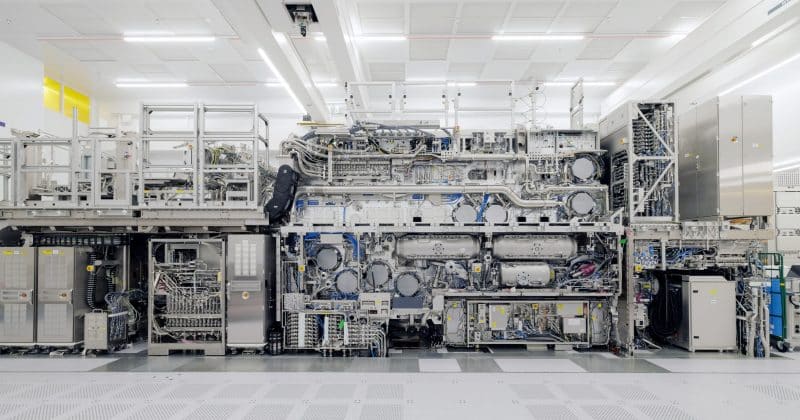
ASML manufactures the extreme ultraviolet lithography machines that are essential for producing the most advanced semiconductors on the planet, with no alternative supplier for this equipment.
Full-year 2025 revenues of €32.7 billion and net profit of €9.6 billion confirm ASML’s core business is thriving. The restructuring targets management layers in favor of engineering talent, reflecting a bet that AI-driven demand will require more technical firepower and less organizational overhead.
What this means for investors
The €12 billion share buyback program remains in play alongside the restructuring. That dual approach — returning capital to shareholders while investing in organizational change — signals confidence in sustained revenue growth.
The risk to watch is execution. Retraining programs sound clean on paper but are notoriously difficult to implement well. If the retraining pipeline underdelivers, ASML could end up with disrupted teams and unfilled engineering roles.
The Dutch labor model, where unions have genuine negotiating power and restructuring requires consensus-building, produced a softer landing here than what typically happens in US corporate layoffs. The social plan agreement with FNV, CNV, De Unie, and VHP2 reflects Dutch labor traditions that emphasize collaboration between management and labor representatives.