
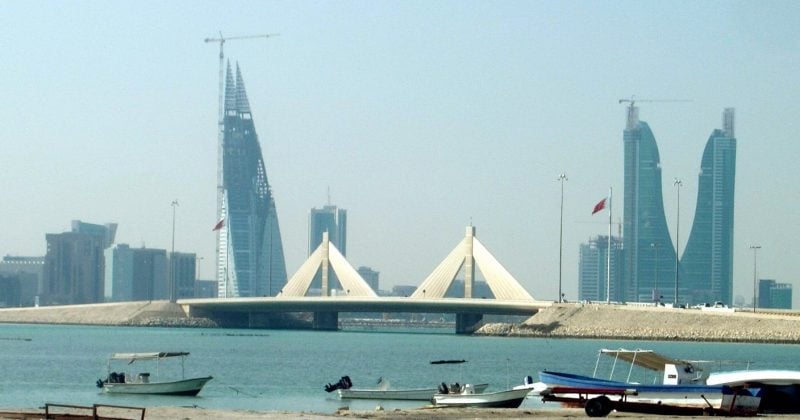
Bahrain air raid sirens signal fresh Gulf tensions with crypto markets watching nervously
Bahrain's interior ministry activated air raid sirens on July 8 amid US-Iran escalation, reviving fears of the kind of Gulf shock that wiped out $700M in crypto liquidations just weeks earlier
Bahrain’s Interior Ministry activated air raid sirens on July 8, 2026, urging residents to seek safety as regional tensions spiked following US military strikes on Iranian positions in southern Iran. The sirens sounded multiple times, and reports from the area described audible explosions consistent with aerial interceptions overhead.
For crypto markets, the timing is uncomfortable. Gulf escalations in June 2026 triggered roughly $700 million in crypto liquidations. Traders are now watching the same region light up again.
What happened and why it matters now
The siren activations in Bahrain came amid fears that Iranian drone and missile threats were directed at Gulf states, with Bahrain and Kuwait both reportedly in the threat perimeter. The Interior Ministry’s public messaging emphasized calm, a signal that authorities were trying to prevent panic even as they acknowledged a genuine security situation.
Bahrain is home to the US Navy’s Fifth Fleet, making it one of the most strategically sensitive military addresses in the entire Middle East.
The June 2026 Gulf escalation showed how quickly geopolitical shocks translate into crypto market pain. Roughly $700 million in liquidations hit the market during that earlier round of tensions, as leveraged traders were caught on the wrong side of a sudden risk-off move. That number reflects not just selling pressure but forced position closures, the kind of cascade that happens when price moves faster than margin calls.
Crypto markets and the Gulf risk premium
Bahrain has spent several years building a reputation as one of the more crypto-forward regulatory environments in the Middle East. The Central Bank of Bahrain established its digital asset framework between 2017 and 2019, putting in place governance and compliance guidelines that gave the Kingdom a head start on regional competitors.
The news moving money, markets, and the world—before your day starts.
Daily. Free. Join 34,000+ readers across crypto, finance, and policy.
No specific tokens were flagged in the immediate aftermath of the July 8 siren activations. The concern is not about any particular protocol or asset. It is a generalized risk-off posture, the kind of sentiment that depresses the whole market rather than rotating capital from one sector to another.
What investors should watch from here
The June 2026 liquidation event provides a useful benchmark for sizing the potential impact of further escalation. Seven hundred million dollars in forced liquidations is a significant market stress test, but it is also a recoverable event.
Kuwait is a significant oil producer, and reports indicated that both Bahrain and Kuwait were in the threat perimeter during the July 8 incident.
The leverage picture in crypto markets matters enormously. The June liquidation cascade was as large as it was partly because of open interest levels that left the market vulnerable to a sharp move.
Bahrain’s Central Bank framework for digital assets was built to weather regional instability as a feature, not an afterthought. But the Kingdom’s ambitions as a crypto hub sit awkwardly alongside images of air raid sirens and interception reports.