
Nexo Earn with Nexo
Bank of England holds rates at 3.75% as prior tightening does the heavy lifting

Bank of England holds rates at 3.75% as prior tightening does the heavy lifting

An 8-1 MPC vote keeps borrowing costs steady while inflation sits uncomfortably above target at 2.8%.

The Bank of England opted to keep its benchmark interest rate parked at 3.75% on April 30, choosing patience over action in a monetary policy environment that looks increasingly like a game of wait-and-see. The Monetary Policy Committee voted 8-1 to hold, with Governor Andrew Bailey framing the decision not as inaction but as a deliberate choice shaped by what prior rate hikes have already done to the economy.

The lone dissenter was Chief Economist Huw Pill, who pushed for a 25 basis point increase that would have brought the Bank Rate to 4%. That split tells you something about the internal tension at Threadneedle Street: most members think prior tightening is still working its way through the system, but at least one senior voice thinks it isn’t working fast enough.

The inflation problem hasn’t gone away

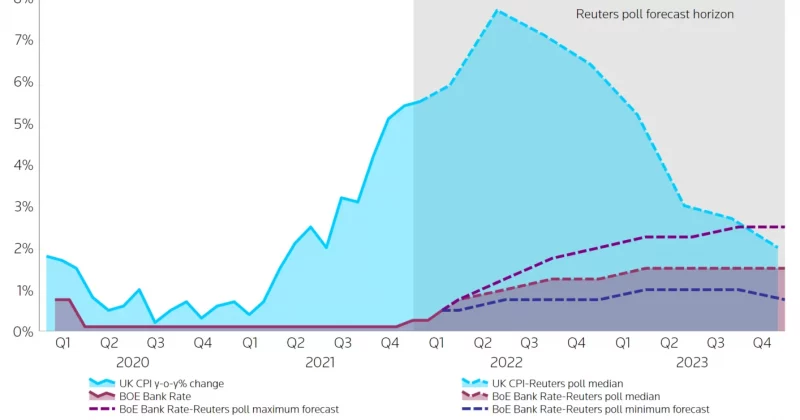
The UK’s inflation rate currently sits at 2.8%, meaningfully above the Bank’s 2% target. March figures were even worse, clocking in at 3.3% before the slight pullback.

Advertisement

The outlook isn’t exactly comforting either, with projections suggesting inflation could climb further throughout 2026. A significant driver of that upward pressure is energy costs linked to the ongoing conflict in Iran, which has disrupted supply chains and pushed up prices for fuel and utilities.

Bailey’s public comments reinforced this framing. The governor characterized the hold as an “active decision” rather than a default, emphasizing that the committee weighed current economic activity and labor market conditions before concluding that standing pat was the right call.

Why the BoE is playing defense

The Bank Rate has been stable since early 2026, following a period of aggressive adjustments that came in response to post-pandemic inflation shocks and broader market volatility.

The committee acknowledges that inflationary pressures may intensify, particularly through energy pass-through effects that take months to fully ripple through household bills and business costs. Yet the majority still concluded that holding was preferable to hiking, suggesting they’re more worried about choking economic activity than they are about inflation overshooting for a few more quarters.

The labor market appears to be a key part of that calculus. Bailey specifically cited labor market effects as a factor in the decision, indicating that employment conditions may be softening enough to give the committee confidence that wage-driven inflation won’t spiral out of control even with rates on hold.

What this means for investors

The next MPC meeting is scheduled for June 18, 2026, and between now and then, markets will be parsing every data release for signals about which way the committee leans.

The 8-1 vote split is worth watching closely. A near-unanimous hold suggests strong consensus, but consensus can shift quickly when external shocks accelerate. One meeting ago, nobody was pricing in serious hike risk. Now the Bank’s own chief economist is voting for one. If two or three more members flip to Pill’s camp by June, the market’s current assumption of stability could unravel fast.

Disclosure: This article was edited by Editorial Team. For more information on how we create and review content, see our Editorial Policy.

Bank of England holds rates at 3.75% as prior tightening does the heavy lifting

Bank of England holds rates at 3.75% as prior tightening does the heavy lifting

An 8-1 MPC vote keeps borrowing costs steady while inflation sits uncomfortably above target at 2.8%.

The Bank of England opted to keep its benchmark interest rate parked at 3.75% on April 30, choosing patience over action in a monetary policy environment that looks increasingly like a game of wait-and-see. The Monetary Policy Committee voted 8-1 to hold, with Governor Andrew Bailey framing the decision not as inaction but as a deliberate choice shaped by what prior rate hikes have already done to the economy.

The lone dissenter was Chief Economist Huw Pill, who pushed for a 25 basis point increase that would have brought the Bank Rate to 4%. That split tells you something about the internal tension at Threadneedle Street: most members think prior tightening is still working its way through the system, but at least one senior voice thinks it isn’t working fast enough.

The inflation problem hasn’t gone away

The UK’s inflation rate currently sits at 2.8%, meaningfully above the Bank’s 2% target. March figures were even worse, clocking in at 3.3% before the slight pullback.

Advertisement

The outlook isn’t exactly comforting either, with projections suggesting inflation could climb further throughout 2026. A significant driver of that upward pressure is energy costs linked to the ongoing conflict in Iran, which has disrupted supply chains and pushed up prices for fuel and utilities.

Bailey’s public comments reinforced this framing. The governor characterized the hold as an “active decision” rather than a default, emphasizing that the committee weighed current economic activity and labor market conditions before concluding that standing pat was the right call.

Why the BoE is playing defense

The Bank Rate has been stable since early 2026, following a period of aggressive adjustments that came in response to post-pandemic inflation shocks and broader market volatility.

The committee acknowledges that inflationary pressures may intensify, particularly through energy pass-through effects that take months to fully ripple through household bills and business costs. Yet the majority still concluded that holding was preferable to hiking, suggesting they’re more worried about choking economic activity than they are about inflation overshooting for a few more quarters.

The labor market appears to be a key part of that calculus. Bailey specifically cited labor market effects as a factor in the decision, indicating that employment conditions may be softening enough to give the committee confidence that wage-driven inflation won’t spiral out of control even with rates on hold.

What this means for investors

The next MPC meeting is scheduled for June 18, 2026, and between now and then, markets will be parsing every data release for signals about which way the committee leans.

The 8-1 vote split is worth watching closely. A near-unanimous hold suggests strong consensus, but consensus can shift quickly when external shocks accelerate. One meeting ago, nobody was pricing in serious hike risk. Now the Bank’s own chief economist is voting for one. If two or three more members flip to Pill’s camp by June, the market’s current assumption of stability could unravel fast.

Disclosure: This article was edited by Editorial Team. For more information on how we create and review content, see our Editorial Policy.