
Binance maintains dominance as crypto derivatives slump to 12-month low
Futures trading volume cratered to roughly $2.9 trillion in May, the weakest month since late 2023, while the biggest exchanges only tightened their grip.
Crypto derivatives trading just had its worst month in a year, and the fallout is telling us something important about where the market’s head is at. Total futures volume across major centralized exchanges dropped to approximately $2.9 trillion in May 2026, a level not seen since late 2023 and a steep fall from the $6 to $7 trillion peaks that lit up screens during more active stretches of 2025.
The silver lining, if you can call it that, belongs almost entirely to Binance. The exchange continues to command the largest share of derivatives trading, followed by OKX, Bybit, and Gate. Smaller platforms are getting squeezed hardest as traders consolidate around the deepest liquidity pools available.
The numbers behind the cooldown
In Q1 2026 alone, the derivatives market across the industry clocked roughly $18.63 trillion in total volume. Binance captured approximately $4.9 trillion of that across the top 10 exchanges, good for around 34.9% of total share.
Perpetual futures, the contracts with no expiration date that use funding rates to stay pegged to spot prices, continued to dominate. They accounted for 73% to 76% of all centralized exchange trading activity in early 2026. For every dollar traded on a major crypto exchange, roughly three out of four went to perpetual futures rather than simple spot buying and selling.
Subdued spot volumes and softening on-chain metrics heading into June reinforce the picture. This isn’t a derivatives-specific problem. It’s a broad pullback in risk appetite across the crypto ecosystem.
Why the big keep getting bigger
Binance’s roughly 35% share of derivatives trading among the top 10 exchanges is a gravitational advantage that feeds on itself. Deeper liquidity attracts more traders, which deepens liquidity further.
For smaller exchanges, trading fees are the lifeblood of exchange revenue. A market-wide volume decline of this magnitude, combined with market share erosion toward the top, creates a double squeeze on second-tier platforms. OKX, Bybit, and Gate have enough scale to weather the storm, but even they’re competing for a shrinking pie.
The CFTC wildcard and what it means for investors
Against this backdrop of declining offshore volumes, the Commodity Futures Trading Commission took steps between April and June 2026 to enable crypto perpetual futures contracts on domestic, regulated venues. Perpetual futures have historically been an offshore-only product for US-based institutions. Banks, asset managers, and hedge funds that wanted exposure either had to use traditional futures with expiration dates or find workarounds involving offshore platforms, neither of which compliance departments favor.
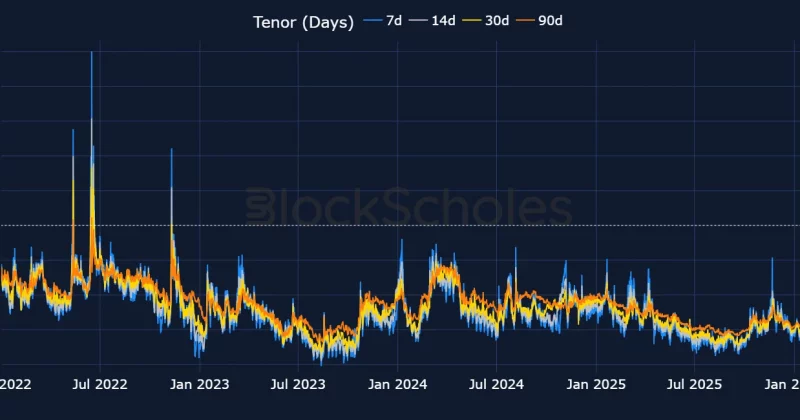
For investors watching this space, there are a few signals worth tracking. First, whether Binance’s dominance continues to grow or stabilizes. Second, how quickly US-based perpetual futures venues attract meaningful open interest. Third, keep an eye on the funding rates for perpetual futures across major exchanges. When funding rates are persistently low or negative, it signals that traders are either neutral or bearish. A sustained shift toward positive funding rates would be one of the first signs that speculative conviction is returning to the market, something that May’s $2.9 trillion figure suggests is still conspicuously absent.