
Nexo Earn with Nexo
Bank for International Settlements tests digital cross-border payments prototype with seven central banks

Bank for International Settlements tests digital cross-border payments prototype with seven central banks

Project Agorá moves from design to live testing, bringing tokenized deposits and central bank reserves onto a unified ledger for wholesale cross-border transactions.

Seven of the world’s most influential central banks are now actively testing a prototype that could fundamentally rewire how money moves across borders. The Bank for International Settlements Innovation Hub and its partners have begun real-value testing of Project Agorá, a tokenized infrastructure designed to make wholesale cross-border payments faster, cheaper, and less opaque.

What Project Agorá actually is

At its core, the project builds a multi-currency unified ledger — a single shared system where tokenized commercial bank deposits and central bank reserves can interact directly, across borders, using distributed ledger technology.

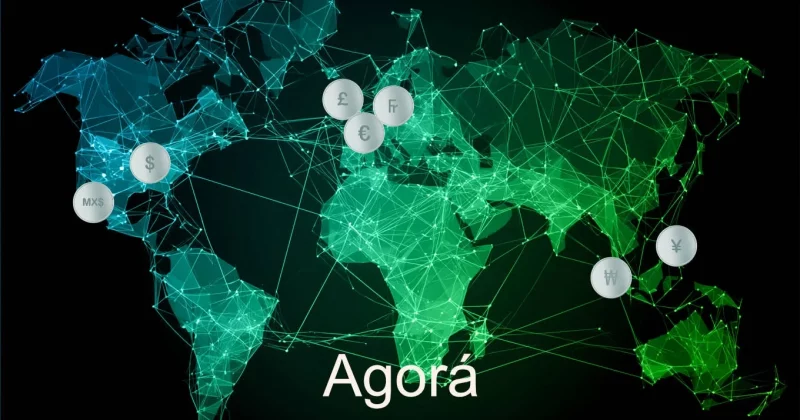
The participating central banks include the Bank of France, Bank of Japan, Bank of Korea, Bank of Mexico, Swiss National Bank, Bank of England, and the Federal Reserve Bank of New York. Over 40 private financial institutions, coordinated by the Institute of International Finance, round out the consortium.

Advertisement

Kaleido serves as the technology partner, supporting prototype design, development, testing, and deployment.

The project transitioned from its design phase into active prototype-building following progress made in 2025. Now it has entered the phase where real-value transactions are being tested. A comprehensive report on the project’s findings and lessons learned is expected in the first half of 2026.

Building on mBridge’s foundation

Project Agorá is a direct continuation of the BIS’s earlier mBridge project, which reached minimum viable product status in mid-2024. mBridge has been testing real-value digital transaction pilots since 2022, giving the BIS and its partners years of operational data to draw from.

The broader effort aligns with G20 priorities around enhancing cross-border payment efficiency. Here the project does not involve Bitcoin, Ethereum, or any standalone crypto token. It focuses entirely on tokenized forms of existing financial instruments, specifically central bank money and commercial bank deposits.

What this means for investors

The competitive landscape for cross-border payments is getting crowded. Private stablecoin issuers, crypto-native payment rails, and traditional fintech companies like Wise and Ripple have all been chipping away at the correspondent banking model. Project Agorá represents the incumbents’ response, with seven central banks and over 40 major financial institutions collaborating on a single prototype.

The report expected in the first half of 2026 will be worth watching closely. If the prototype demonstrates meaningful improvements in settlement speed and cost reduction, it could accelerate CBDC development timelines across participating nations.

The mBridge project took roughly two years to reach MVP status, and Agorá involves even more participants across more currencies. The BIS has framed this as experimentation rather than imminent rollout.

Disclosure: This article was edited by Editorial Team. For more information on how we create and review content, see our Editorial Policy.

Bank for International Settlements tests digital cross-border payments prototype with seven central banks

Bank for International Settlements tests digital cross-border payments prototype with seven central banks

Project Agorá moves from design to live testing, bringing tokenized deposits and central bank reserves onto a unified ledger for wholesale cross-border transactions.

Seven of the world’s most influential central banks are now actively testing a prototype that could fundamentally rewire how money moves across borders. The Bank for International Settlements Innovation Hub and its partners have begun real-value testing of Project Agorá, a tokenized infrastructure designed to make wholesale cross-border payments faster, cheaper, and less opaque.

What Project Agorá actually is

At its core, the project builds a multi-currency unified ledger — a single shared system where tokenized commercial bank deposits and central bank reserves can interact directly, across borders, using distributed ledger technology.

The participating central banks include the Bank of France, Bank of Japan, Bank of Korea, Bank of Mexico, Swiss National Bank, Bank of England, and the Federal Reserve Bank of New York. Over 40 private financial institutions, coordinated by the Institute of International Finance, round out the consortium.

Advertisement

Kaleido serves as the technology partner, supporting prototype design, development, testing, and deployment.

The project transitioned from its design phase into active prototype-building following progress made in 2025. Now it has entered the phase where real-value transactions are being tested. A comprehensive report on the project’s findings and lessons learned is expected in the first half of 2026.

Building on mBridge’s foundation

Project Agorá is a direct continuation of the BIS’s earlier mBridge project, which reached minimum viable product status in mid-2024. mBridge has been testing real-value digital transaction pilots since 2022, giving the BIS and its partners years of operational data to draw from.

The broader effort aligns with G20 priorities around enhancing cross-border payment efficiency. Here the project does not involve Bitcoin, Ethereum, or any standalone crypto token. It focuses entirely on tokenized forms of existing financial instruments, specifically central bank money and commercial bank deposits.

What this means for investors

The competitive landscape for cross-border payments is getting crowded. Private stablecoin issuers, crypto-native payment rails, and traditional fintech companies like Wise and Ripple have all been chipping away at the correspondent banking model. Project Agorá represents the incumbents’ response, with seven central banks and over 40 major financial institutions collaborating on a single prototype.

The report expected in the first half of 2026 will be worth watching closely. If the prototype demonstrates meaningful improvements in settlement speed and cost reduction, it could accelerate CBDC development timelines across participating nations.

The mBridge project took roughly two years to reach MVP status, and Agorá involves even more participants across more currencies. The BIS has framed this as experimentation rather than imminent rollout.

Disclosure: This article was edited by Editorial Team. For more information on how we create and review content, see our Editorial Policy.