
Nexo Earn with Nexo
BitGo launches Spark Savings for direct capital movement into credit markets

BitGo launches Spark Savings for direct capital movement into credit markets

Institutional clients can now earn yield on stablecoins through on-chain credit markets without moving assets out of BitGo's regulated custody.

BitGo Bank & Trust just made it possible for institutional investors to park stablecoins in decentralized credit markets without ever leaving the comfort of regulated custody. The firm announced the launch of Spark Savings on June 9, connecting its custodial infrastructure directly to Spark’s on-chain lending ecosystem.

What Spark Savings actually does

The product lets eligible BitGo clients deploy stablecoins, specifically USDC, USDT, and USDS, into Spark’s savings protocol. The key selling point is that funds never need to leave BitGo’s custody environment to access those yield-generating opportunities.

The integration was built through a partnership with Narval, which provides the connective tissue between BitGo’s infrastructure and Spark’s on-chain products.

Advertisement

For context on scale: Spark closed May 2026 with approximately $6.4 billion sitting in its Savings product. SparkLend, its separate lending arm, held roughly $3.4 billion in assets during the same period.

The institutional custody angle

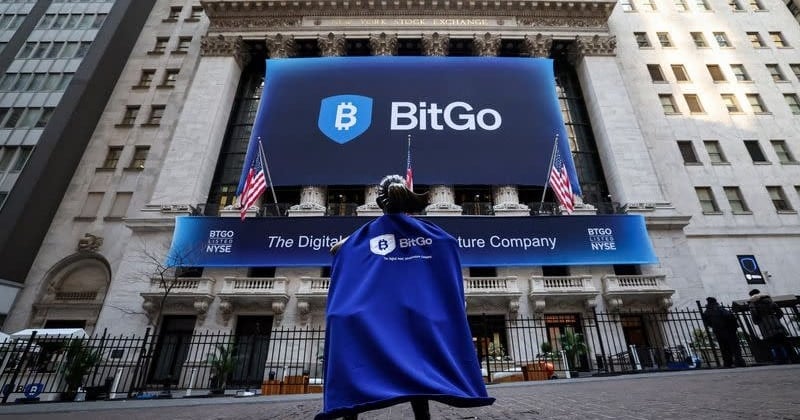
BitGo is not a small player in the custody game. As of its January 2026 NYSE IPO, the firm held approximately $104 billion in assets under custody, serving over 1,500 institutional clients.

BitGo CEO Mike Belshe has emphasized that operational security remains central to the firm’s strategy for bringing institutional capital into decentralized finance. Spark CEO Sam MacPherson has echoed similar sentiments about the importance of governance and security frameworks for driving adoption.

Spark’s place in the DeFi hierarchy

Spark operates as a sub-DAO of Sky, the protocol formerly known as MakerDAO. The rebranding happened as part of MakerDAO’s broader restructuring, which carved the ecosystem into specialized units handling different functions.

Spark’s specific mandate covers structured access to stablecoin and ETH-denominated credit markets. Its product suite includes three main components: Spark Savings for yield generation, SparkLend for borrowing and lending, and the Spark Liquidity Layer for broader capital efficiency.

USDS, one of the three stablecoins supported by Spark Savings, ranks as the third-largest stablecoin by market size at approximately $8.7 billion. Its inclusion alongside USDC and USDT gives institutional clients flexibility to deploy whichever stablecoin fits their existing treasury management approach.

Disclosure: This article was edited by Editorial Team. For more information on how we create and review content, see our Editorial Policy.

BitGo launches Spark Savings for direct capital movement into credit markets

BitGo launches Spark Savings for direct capital movement into credit markets

Institutional clients can now earn yield on stablecoins through on-chain credit markets without moving assets out of BitGo's regulated custody.

BitGo Bank & Trust just made it possible for institutional investors to park stablecoins in decentralized credit markets without ever leaving the comfort of regulated custody. The firm announced the launch of Spark Savings on June 9, connecting its custodial infrastructure directly to Spark’s on-chain lending ecosystem.

What Spark Savings actually does

The product lets eligible BitGo clients deploy stablecoins, specifically USDC, USDT, and USDS, into Spark’s savings protocol. The key selling point is that funds never need to leave BitGo’s custody environment to access those yield-generating opportunities.

The integration was built through a partnership with Narval, which provides the connective tissue between BitGo’s infrastructure and Spark’s on-chain products.

Advertisement

For context on scale: Spark closed May 2026 with approximately $6.4 billion sitting in its Savings product. SparkLend, its separate lending arm, held roughly $3.4 billion in assets during the same period.

The institutional custody angle

BitGo is not a small player in the custody game. As of its January 2026 NYSE IPO, the firm held approximately $104 billion in assets under custody, serving over 1,500 institutional clients.

BitGo CEO Mike Belshe has emphasized that operational security remains central to the firm’s strategy for bringing institutional capital into decentralized finance. Spark CEO Sam MacPherson has echoed similar sentiments about the importance of governance and security frameworks for driving adoption.

Spark’s place in the DeFi hierarchy

Spark operates as a sub-DAO of Sky, the protocol formerly known as MakerDAO. The rebranding happened as part of MakerDAO’s broader restructuring, which carved the ecosystem into specialized units handling different functions.

Spark’s specific mandate covers structured access to stablecoin and ETH-denominated credit markets. Its product suite includes three main components: Spark Savings for yield generation, SparkLend for borrowing and lending, and the Spark Liquidity Layer for broader capital efficiency.

USDS, one of the three stablecoins supported by Spark Savings, ranks as the third-largest stablecoin by market size at approximately $8.7 billion. Its inclusion alongside USDC and USDT gives institutional clients flexibility to deploy whichever stablecoin fits their existing treasury management approach.

Disclosure: This article was edited by Editorial Team. For more information on how we create and review content, see our Editorial Policy.