
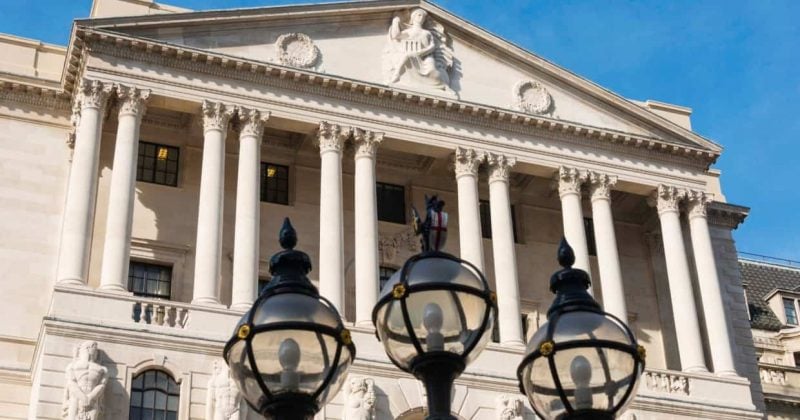
Via kingdom.bank
Bank of England’s Bailey signals tariffs could push UK goods prices lower through trade redirection
The central bank governor's comments highlight how global trade disruptions might create unexpected deflationary pressures for British consumers, with implications for monetary policy and digital asset markets.
Bank of England Governor Andrew Bailey has flagged an unconventional side effect of the global tariff wars: goods prices in the UK could actually fall. The logic is straightforward. When tariffs block products from entering one market, those goods get rerouted elsewhere, and the UK could be on the receiving end of a supply glut.
In 2025, Bailey warned that increasing tariffs risk fragmenting the global economy and could negatively impact economic activity.
The Governor’s Mansion House speech on July 14, 2026, focused broadly on UK economic growth challenges and the modernization of payment systems. He emphasized the importance of tokenization in transforming financial infrastructure.
Bailey has also weighed in on crypto assets directly, drawing a distinction between unbacked assets like Bitcoin, which he considers risky investments, and backed instruments like stablecoins.
The news moving money, markets, and the world—before your day starts.
Daily. Free. Join 34,000+ readers across crypto, finance, and policy.
Bailey has been Governor since March 2020. There are no primary sources linking Bailey to comments about tariffs lowering UK goods prices via trade redirection as of July 2026. His absence of detailed commentary on tariffs in his latest speech suggests a shift in focus toward adaptive measures through regulation and innovation rather than direct intervention on trade dynamics.
Bailey’s emphasis on payment modernization and tokenization suggests the Bank of England is building toward a financial system where digital assets play a regulated, integrated role. The lack of direct crypto discussions related to tariffs may imply that the Bank of England is intent on keeping digital asset regulations distinct from traditional economic concerns.