
Bank of Japan’s Ueda forecasts slower growth, gradual recovery amid Middle East oil shock

Bank of Japan’s Ueda forecasts slower growth, gradual recovery amid Middle East oil shock

BOJ governor's speech signals rate hike intent, but his sudden hospitalization throws Japan's monetary policy timeline into question

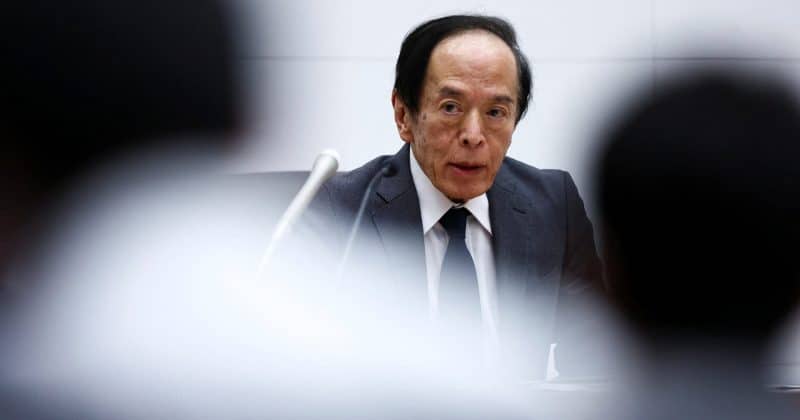
Bank of Japan Governor Kazuo Ueda told a gathering of business leaders in Tokyo on June 3 that Japan’s economy will likely grow more slowly in fiscal 2026, primarily because of surging crude oil prices tied to geopolitical tensions in the Middle East. But he maintained the recovery would continue at a moderate pace.

The speech, delivered at the Kisaragi-kai Meeting, was supposed to be a routine policy signal ahead of the BOJ’s June 15-16 meeting. Then Ueda was hospitalized shortly after delivering it, turning what should have been a straightforward macro story into something considerably more complicated.

What Ueda actually said

Japan’s economy faces a temporary growth headwind from rising energy costs, driven largely by the Iran conflict and broader instability in the Middle East. Despite that drag, Ueda pointed to several factors keeping the recovery intact: strong corporate profits, government fiscal interventions, and accommodating financial conditions.

Advertisement

On inflation, Ueda projected that underlying price growth, stripping out temporary factors, would gradually approach the BOJ’s 2% target sometime between the second half of fiscal 2026 and fiscal 2027. He also acknowledged the need to carefully weigh the pros and cons of raising interest rates further.

The rate hike that might not happen on schedule

Before Ueda’s hospitalization, markets had priced in roughly an 80% probability of a policy rate increase at the June 15-16 meeting. The governor reportedly missed the June BOJ policy meeting entirely.

Ueda has been the architect of Japan’s most significant monetary policy shift in nearly two decades. He oversaw the end of the BOJ’s negative interest rate policy and implemented rate hikes for the first time since 2007. In April 2026, the BOJ had already revised its outlook, lowering growth forecasts while simultaneously raising core inflation projections.

What this means for investors

A BOJ rate hike strengthens the yen, which puts pressure on Japanese exporters and their equities. The 80% probability that was priced in before Ueda’s hospitalization means any delay or surprise hold would likely weaken the yen and boost the Nikkei, at least in the short term.

BOJ policy normalization has historically contributed to unwinding the yen carry trade, where investors borrow cheaply in yen to fund positions in higher-yielding assets. The July 2024 episode, when a surprise BOJ move triggered a sharp sell-off across global markets including Bitcoin, is still fresh in institutional memory.

Disclosure: This article was edited by Editorial Team. For more information on how we create and review content, see our Editorial Policy.

Bank of Japan’s Ueda forecasts slower growth, gradual recovery amid Middle East oil shock

Bank of Japan’s Ueda forecasts slower growth, gradual recovery amid Middle East oil shock

BOJ governor's speech signals rate hike intent, but his sudden hospitalization throws Japan's monetary policy timeline into question

Bank of Japan Governor Kazuo Ueda told a gathering of business leaders in Tokyo on June 3 that Japan’s economy will likely grow more slowly in fiscal 2026, primarily because of surging crude oil prices tied to geopolitical tensions in the Middle East. But he maintained the recovery would continue at a moderate pace.

The speech, delivered at the Kisaragi-kai Meeting, was supposed to be a routine policy signal ahead of the BOJ’s June 15-16 meeting. Then Ueda was hospitalized shortly after delivering it, turning what should have been a straightforward macro story into something considerably more complicated.

What Ueda actually said

Japan’s economy faces a temporary growth headwind from rising energy costs, driven largely by the Iran conflict and broader instability in the Middle East. Despite that drag, Ueda pointed to several factors keeping the recovery intact: strong corporate profits, government fiscal interventions, and accommodating financial conditions.

Advertisement

On inflation, Ueda projected that underlying price growth, stripping out temporary factors, would gradually approach the BOJ’s 2% target sometime between the second half of fiscal 2026 and fiscal 2027. He also acknowledged the need to carefully weigh the pros and cons of raising interest rates further.

The rate hike that might not happen on schedule

Before Ueda’s hospitalization, markets had priced in roughly an 80% probability of a policy rate increase at the June 15-16 meeting. The governor reportedly missed the June BOJ policy meeting entirely.

Ueda has been the architect of Japan’s most significant monetary policy shift in nearly two decades. He oversaw the end of the BOJ’s negative interest rate policy and implemented rate hikes for the first time since 2007. In April 2026, the BOJ had already revised its outlook, lowering growth forecasts while simultaneously raising core inflation projections.

What this means for investors

A BOJ rate hike strengthens the yen, which puts pressure on Japanese exporters and their equities. The 80% probability that was priced in before Ueda’s hospitalization means any delay or surprise hold would likely weaken the yen and boost the Nikkei, at least in the short term.

BOJ policy normalization has historically contributed to unwinding the yen carry trade, where investors borrow cheaply in yen to fund positions in higher-yielding assets. The July 2024 episode, when a surprise BOJ move triggered a sharp sell-off across global markets including Bitcoin, is still fresh in institutional memory.

Disclosure: This article was edited by Editorial Team. For more information on how we create and review content, see our Editorial Policy.